
Reviewed · ETHIOPIA
2 Days Harar Tours
Harar rewards curious visitors. This two-day trip combines old-city walks through narrow lanes with the famous hyena feeding ritual, then adds Babile’s camel market and the Valley of Marvels. I like the clear route from Dire Dawa, with airport pickup, an air-conditioned vehicle, accommodation, meals, entrance fees, and a local guide arranged in one package. I also like the human scale of the visit: you see colorful homes, markets, mosques, museums, and daily life instead of rushing from one grand monument to another. The main drawback is timing. The trip starts at Dire Dawa Airport, and the Babile Camel Market is worth visiting only on Monday or Thursday, so your dates matter.
The experience costs $300 per person, excluding the domestic flight from Addis Ababa to Dire Dawa. That is a fair price if you value a private, organized connection between airport, hotel, Harar, and the surrounding sights. It is less appealing if you already have transport and lodging arranged, or if your schedule does not match market day.
In This Review
- The Harar experience at a glance
- Why Harar feels different from other Ethiopian cities
- Day one: from Dire Dawa Airport into Harar
- Walking Harar’s Jegol wall and narrow lanes
- The hyena feeding ritual after dark
- Day two: Babile Camel Market and the Valley of Marvels
- Balancing rocks in the Valley of Marvels
- Why photographers will enjoy this route
- What is included for $300
- Guiding and group size
- Who should book this two-day Harar tour?
- Should you book it?
- FAQ
- Where does the tour start?
- Is the flight from Addis Ababa included?
- What is included in the tour price?
- When does the Babile Camel Market take place?
- What happens if the trip is not scheduled on a market day?
- How large is the tour group?
- Can I cancel for a full refund?
The Harar experience at a glance
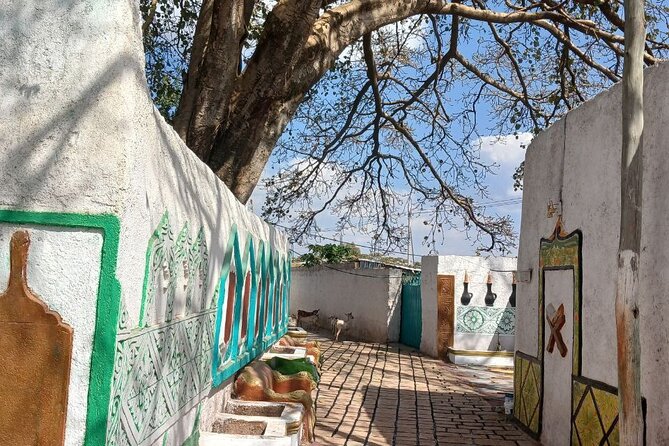
- Harar’s walled old city: Walk through the Jegol, the historic enclosure built in the 1560s under Emir Nur, with five gates and tight lanes.
- A rare wildlife encounter: Watch the nightly hyena feeding ritual just outside the city walls, where local feeders offer meat to wild hyenas.
- A strong photography stop: Colorful houses, old Peugeot cars, market stalls, city gates, and people in motion provide plenty to photograph.
- Babile on the right day: Monday and Thursday bring the region’s large camel market, with camels, goats, and cattle brought by Somali and Oromo farmers.
- A guide-led, small-group format: The maximum group size is 15, with pickup and drop-off at Dire Dawa International Airport.
- Good practical coverage: Breakfast, dinner, two lunches, air-conditioned transport, museum and wall fees, taxes, and hyena-feeding admission are included.
Why Harar feels different from other Ethiopian cities
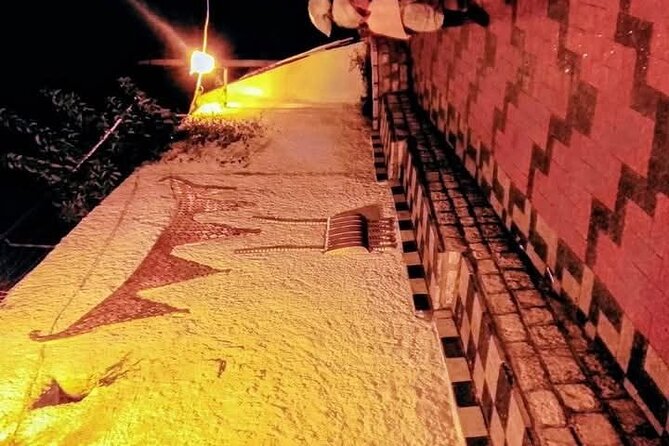
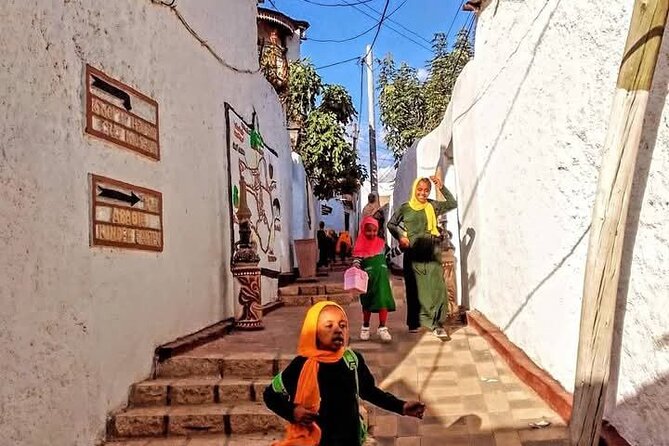
Harar is not simply an old town with a few preserved buildings. The old city remains a lived-in place, tightly packed inside the Jegol wall. Thousands of people live within roughly one square kilometer, so the streets can feel intimate, active, and pleasantly disorienting.
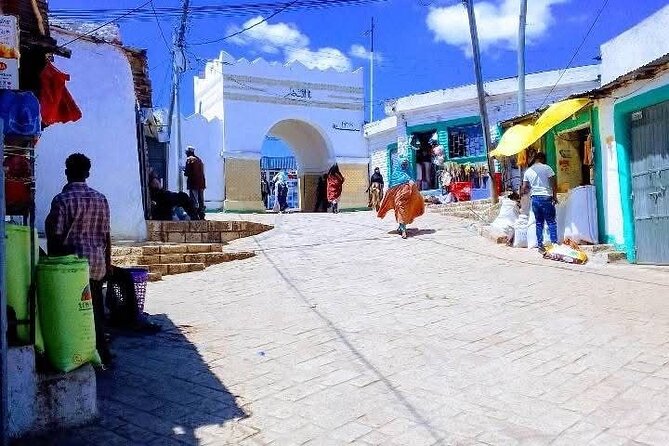
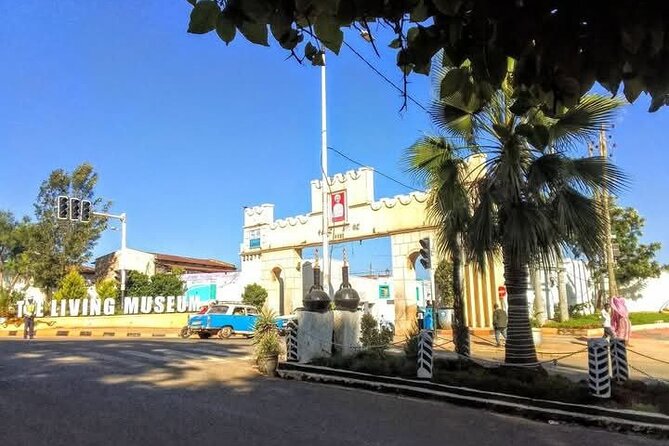
Emir Nur built the defensive wall in the 1560s to protect Harar from attacks by neighboring tribes and rulers. The wall still circles the old city, although newer development has spread beyond it. Five gates provide entry, and each one gives you a sense of moving from modern Harar into a more enclosed historic quarter.
I like that the tour allows you to explore on foot. The narrow alleyways make a car useless in the old center, and walking lets you notice details that disappear from a vehicle window: painted facades, small shrines, mosque entrances, market activity, and the way homes fit together along the lanes.
Harari people are widely known for being welcoming and quick to make friends. A short visit cannot explain an entire culture, but the walking tour gives you a useful introduction through homes, markets, museums, and local meeting places. This is a place where the everyday setting matters as much as the formal sights.
Other Ethiopia trips travellers keep going back to:
- Full Day Tour of Addis Ababa with Hotel Pickup and Drop-off
★ 5.0 · 430 reviews - Taste of Ethiopia
★ 5.0 · 406 reviews - Day Trip From Addis Ababa See Historical Monastery,Stunning Nature,Animals,Birds
★ 5.0 · 303 reviews
Day one: from Dire Dawa Airport into Harar
Your trip begins at Dire Dawa International Airport at 9:00 a.m. The domestic flight from Addis Ababa is not included, so you need to arrange that separately and plan your arrival around the pickup time. A representative waits at the airport with a sign showing your name, which is helpful after a flight and removes the usual uncertainty about finding a driver.
From Dire Dawa, you drive to Harar and check into your hotel. The schedule includes time to rest before the city tour, a sensible choice because the first day includes several hours of walking and sightseeing. The total city visit is listed at about eight hours, though the exact pace will depend on your group and the time spent at each stop.
The air-conditioned vehicle matters here. You are not only moving between the airport and Harar, but also using the vehicle for the regional outing on day two. Air conditioning makes the transfers easier, especially when you have luggage or have just arrived from Addis Ababa.
Walking Harar’s Jegol wall and narrow lanes
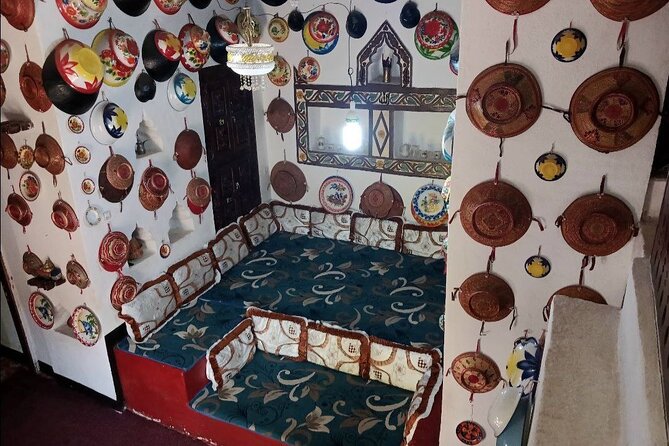
The old-city walk is the heart of the first day. You pass through the colorful houses and narrow alleyways inside the walled quarter, with stops at several cultural sites.
The Sheriff Museum is housed in the former Ras Teferi honeymoon house. That detail gives the building a personal connection to Ethiopia’s modern royal history, while the museum helps place Harar within the wider story of the region.
Rimbaud House adds another layer. The name connects the site with the French poet Arthur Rimbaud, who spent time in Harar. The tour also visits the Harari National Cultural Center, where you can learn more about local customs and household life.
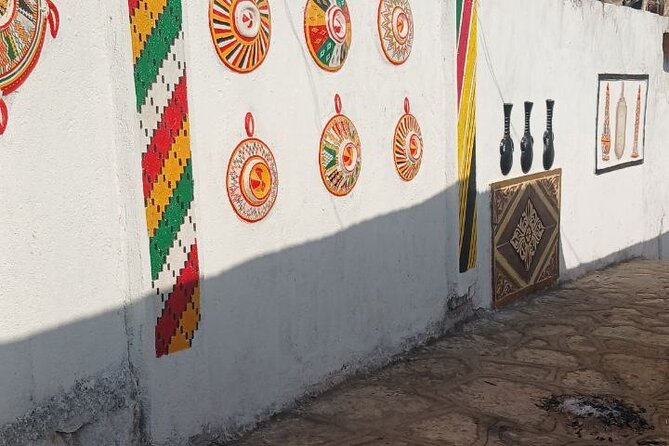
The colorful Harari houses are not just a quick photo stop. They are part of what makes the old city feel distinctive. The interiors and painted walls give the city a strong visual identity, and your guide can help you understand how these homes fit into Harari life.
The local market is another useful stop. Markets show you what people actually buy and sell, while also giving you a chance to watch daily routines unfold. Bring patience and ask before photographing people. Harar is highly photogenic, but good manners matter more than getting a perfect frame.
The hyena feeding ritual after dark
The hyena feeding is the most unusual part of the trip. It takes place daily at a designated spot outside the city walls, where local men known as hyena feeders offer pieces of meat to wild hyenas.
Hyenas are formidable African predators, so seeing them approach people calmly can feel startling. The ritual reflects a long-running relationship between the animals and the people of Harar. They are not treated as pets, yet they coexist peacefully around the city in this setting.
The actual feeding lasts about an hour and admission is included. Expect a focused experience rather than a long wildlife safari. You go to one place, watch the feeder call or draw the hyenas close, and observe the interaction.
I would treat this as a cultural event with a wildlife element, not as a substitute for a national-park animal encounter. The value lies in the local tradition and the close connection between the city and its surrounding animals. Follow the guide’s instructions and keep a respectful distance unless you are specifically invited to participate.
This part also gives the day a memorable finish. After museums and lanes, you see a very different side of Harar, one that is difficult to arrange without local help.
A different sort of day out, same part of Ethiopia:
- Addis Ababa: Debre Libanos, Blue Nile Gorge, and Cave Tour
★ 4.5 · 256 reviews - Addis Ababa Guided City Tour With Airport & Hotel Pick Up
★ 5.0 · 237 reviews - Breathtaking Nature, Wildlife and Cave Church Tour – Free Pickups
★ 5.0 · 225 reviews - Full-Day Private City Tour of Addis Ababa
★ 5.0 · 147 reviews
Day two: Babile Camel Market and the Valley of Marvels
The second morning takes you from Harar toward Babile Camel Market and the Valley of Marvels. Babile is described as the largest camel market in the region, but the timing is crucial: the market takes place on Mondays and Thursdays.
On a market day, Somali and Oromo farmers come to Babile to sell camels, goats, and cattle. This is more than a colorful stop for photographs. It shows the commercial life that links farming communities, livestock, and regional trade.
The market may be busy and visually intense, but do not expect an all-day organized attraction with fixed displays. It is a working market. Animals, sellers, buyers, and transport all share the same space, so you need to watch where you walk and stay close enough to your guide.
If your trip does not fall on Monday or Thursday, Babile is not considered worth the visit. In that case, the route changes to Koremi on the way back to Dire Dawa. Koremi is described as older than Harar, with old stone-built houses that offer a different view of the region’s past.
That flexibility is useful, but you should confirm the exact plan before booking. The alternative is not the same experience as the camel market, and the appeal of day two depends heavily on your travel date.
Balancing rocks in the Valley of Marvels
The Valley of Marvels follows the Babile visit. Its main attraction is the scenery and its unusual balancing rock formations. The tour points out large stones that appear to rest on the tip of a single smaller stone.
This is a short stop, listed at about six minutes in the schedule, so keep your expectations realistic. You are likely getting a scenic viewpoint and time for photographs, not a long hike or a full geological excursion.
Still, the stop adds variety. Day one is centered on people, buildings, and city streets. Day two moves into open country, livestock commerce, and strange natural formations. That contrast makes the two-day format work well.
The return route leads toward Dire Dawa, with a further photography stop connected to Harar. You should be prepared for a substantial amount of driving on this day. The air-conditioned vehicle and organized transfers help, but the schedule is active rather than leisurely.
Why photographers will enjoy this route
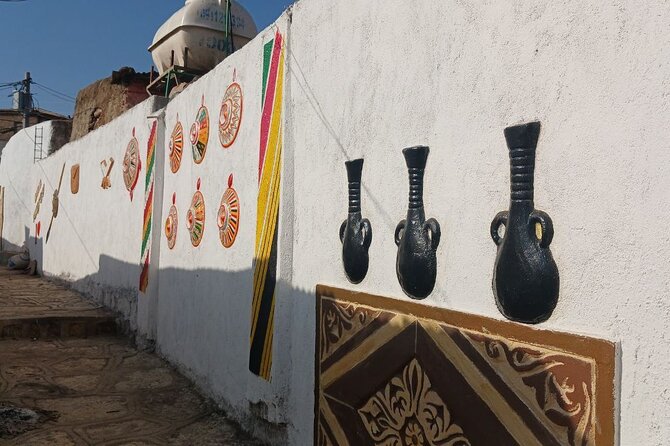
Harar may be the strongest photography destination in the trip. The city offers many subjects within a small area: colorful alleys, painted houses, old Peugeot cars, market goods, city gates, and people going about their day.
The variety is the real advantage. You can work with architecture in one lane, bright produce in the market, and street scenes near the gates a few minutes later. You do not need to spend the whole day chasing distant viewpoints.
Ask your guide about photography etiquette before taking portraits. A friendly atmosphere does not mean every person wants a camera pointed at them. The guide can also help you find better angles and understand what you are seeing, which is more useful than simply walking around with a camera.
The second day offers a different set of subjects. Camels, goats, cattle, rock formations, and open views give you more space and texture after the tight streets of Harar. If photography is your priority, market-day timing becomes even more important.
What is included for $300
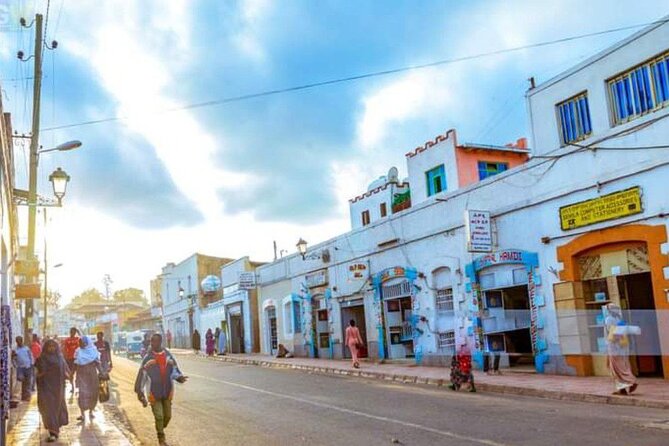
At $300 per person, the package covers a lot of the expenses that can make a short Ethiopian trip complicated. You receive pickup and drop-off, an air-conditioned vehicle, hotel accommodation, breakfast, dinner, and two lunches.
Entrance charges are also covered for the hyena feeding, museums, and Harar’s wall. Government tax is included as well. These inclusions make the price easier to assess because you are not adding a series of small fees at each stop.
The domestic flight is the major extra. You must pay for the flight from Addis Ababa to Dire Dawa, and the package begins after you reach the airport. If you are already visiting eastern Ethiopia, the tour becomes more useful because it organizes the road travel and sightseeing from there.
I see the best value for someone who wants a short, managed visit without arranging each transfer separately. The package also reduces the risk of missing the hyena feeding or spending time finding the old-city sights on your own.
The value is weaker for independent visitors who already have a hotel, driver, and local guide. In that case, compare the total cost of arranging those parts yourself with the $300 package before deciding.
Guiding and group size
The maximum group size is 15 people. That is small enough for a guide to manage a walking group through narrow streets, though it may not feel private at the upper limit.
The guide is especially important in Harar. The city’s lanes, museums, cultural sites, and hyena ritual all benefit from explanation. The strongest praise connected with this experience centers on friendly service, safe handling of the trip, clear information, and guides who adjust to the needs of their group.
Several guides have been praised by name, including Alex, Tilahun, and Mickey. Their work has been described as professional and well coordinated. Mickey has also handled trips with a three-year-old child and two people in their late seventies, suggesting that the route can work for a broad age range if you can walk.
That does not mean the tour is effortless. The old city involves walking on narrow paths, and the two-day schedule includes road travel. If you have mobility concerns, discuss them before booking rather than assuming the group format will solve every problem.
Who should book this two-day Harar tour?
I would recommend it to first-time visitors to Harar who want the main cultural sights, a local guide, and a dependable connection from Dire Dawa Airport. It also suits photographers, history fans, and anyone curious about the unusual relationship between Harar and its hyenas.
Families and mixed-age groups may find the format practical because pickup, meals, transport, and admissions are handled together. The positive comments about service and flexibility also make the operator worth considering if you prefer regular updates during the planning stage.
I would be more cautious if your schedule cannot include Monday or Thursday and Babile’s camel market is important to you. On other days, the alternative visit to Koremi may still be worthwhile, but you should choose the tour for Harar itself rather than expecting the same day-two program.
The start point is fixed at Dire Dawa International Airport, and the activity ends back there. That makes it convenient for a two-day loop, but less convenient if you need to finish elsewhere in Ethiopia.
Free cancellation is available up to 24 hours before the local start time. Changes or cancellations inside that window are not accepted for a refund, and the tour requires a minimum number of participants. If the operator cancels because that minimum is not reached, you are offered another date or experience, or a full refund.
Should you book it?
Book this tour if you want Harar’s essential experiences in a compact package: the Jegol old city, museums, colorful homes, the market, hyena feeding, and a regional outing toward Babile. The included meals, vehicle, entrance fees, and airport service make $300 reasonable for a visitor who values order and local assistance.
Before paying, check two things: your domestic flight timing and whether your dates fall on Monday or Thursday. If they do, you get the strongest version of day two. If not, book because you want Harar’s old city and hyena ritual, with Koremi as the substitute regional stop.
FAQ
Where does the tour start?
The tour starts at Dire Dawa International Airport, listed at JV75+452, Dire Dawa, Ethiopia. Pickup is offered there at 9:00 a.m.
Is the flight from Addis Ababa included?
No. The domestic flight from Addis Ababa to Dire Dawa is not included in the $300 price.
What is included in the tour price?
The price includes dinner, breakfast, two lunches, an air-conditioned vehicle, airport pickup and drop-off, hyena-feeding admission, museum and Harar wall entrance fees, and government tax.
When does the Babile Camel Market take place?
The Babile Camel Market takes place every Monday and Thursday.
What happens if the trip is not scheduled on a market day?
The Babile visit is not considered worthwhile outside market days. The route may instead include Koremi, a village described as older than Harar, on the way back to Dire Dawa.
How large is the tour group?
The tour has a maximum of 15 participants.
Can I cancel for a full refund?
Yes. You can cancel at least 24 hours before the local start time for a full refund. Cancellations or changes made less than 24 hours before the start time are not accepted for a refund.
New on the Ethiopia list
- Yod Abyssinia Cultural Night: Dinner, Music, and Dance★ 5.0 · 7 reviews
- Tigray Mountain Church’s Day Trip from Mekele★ 5.0 · 2 reviews
- Mekele City Tour★ 5.0 · 2 reviews
- Day trip to Tigray Churches★ 5.0 · 2 reviews
- 2 days Tigray Church★ 5.0 · 3 reviews
- 3 Day Tour of Geralta Churches Tigray Church’s★ 5.0 · 2 reviews
- Trekking in Ethiopia’s Lalibela Wollo Highland 4 Days / 3 Nights★ 5.0 · 6 reviews
- Lalibela Backpacker tours★ 5.0 · 6 reviews