
Reviewed · CITY TOURS
Addis Ababa Authentic Private City Tour
Addis Ababa rewards a full day. This private tour brings together the city’s key historical and cultural sights, from Haile Selassie’s tomb and the National Museum to Mercato, old coffee houses, textile stalls, and the eucalyptus-covered heights of Entoto. I like the way it mixes major landmarks with ordinary city life, and I like having a private guide and driver for a busy capital where traffic and crowded streets can make independent sightseeing tiring. The main drawback is the pace: eight stops in six to eight hours leaves limited time at each place, and lunch costs extra.
The $75 price is fair for a private vehicle, guide, entrance fees, bottled water, coffee or tea, fuel, and hotel or airport transfers. A good guide makes this tour work, and past visitors especially praised Alex, Acham, and Mulu for clear explanations, punctual pickups, flexible help, and an easygoing manner. You should expect a long day, some walking, market crowds, and a high-altitude stop at Entoto.
In This Review
- Key points before you book
- What the $75 price really covers
- Holy Trinity Cathedral and the imperial tombs
- Tomoca Coffee in Piazza
- Mercato, where Addis Ababa does business
- Lunch at Taitu Hotel, built by an empress
- Lucy and the National Museum of Ethiopia
- Haile Selassie’s former palace at the Ethnological Museum
- Entoto Natural Park at 2,600 meters
- Shiro Meda and Ethiopian textiles
- The guide and driver make the difference
- Who should book this Addis Ababa tour?
- Should you book it?
- FAQ
- How long does the Addis Ababa private city tour last?
- What is included in the tour price?
- Is lunch included?
- Can I be picked up at the airport?
- Is this a private group activity?
- Are entrance fees included?
- What happens if bad weather cancels the tour?
Key points before you book
- Haile Selassie appears twice: You visit his burial place at Holy Trinity Cathedral and his former palace bedroom at the Ethnological Museum.
- Lucy is included: The National Museum gives you a chance to see the famous early hominid fossil.
- Mercato is a real working market: Expect organized zones for coffee, spices, leather, metal goods, jewelry, baskets, and more.
- Coffee is part of the story: Tomoca, founded in 1953, offers a short stop at Ethiopia’s oldest coffee shop.
- Entoto changes the view: At about 2,600 meters, the eucalyptus forest gives you broad views over Addis Ababa.
- Private transport saves time: Hotel and airport pickup, a dedicated vehicle, and a guide make the busy itinerary easier to manage.
What the $75 price really covers
At $75 per person, this is not a bare-bones walking tour. Your fee includes a private vehicle, driver and guide, fuel surcharge, bottled water, coffee or tea, all listed entrance fees, and pickup and drop-off at your hotel or the airport.
That package matters in Addis Ababa. The itinerary crosses several parts of the city, and private transport lets you move from the cathedral to Piazza, Mercato, the museums, Entoto, and Shiro Meda without arranging separate taxis. It also gives you somewhere to return between stops if the day feels full.
Lunch is the main extra cost. You may eat at Taitu Hotel, where Empress Taytu Betul established the hotel in 1905, or choose another restaurant. Since lunch is not included, bring local currency or confirm payment options with your operator.
The private format is especially useful for families, couples, and small groups. Group discounts may be available, so the per-person value improves when several people share the booking. You also avoid being tied to strangers’ interests or waiting for a large group to gather.
The published start time is 8:30 in the morning, and the outing usually lasts six to eight hours. That is enough time for a strong introduction to Addis Ababa, but not enough for long visits at every stop. I would treat this as a first-day orientation with real cultural content, not a slow museum tour.
Other ways to see Addis Ababa itself:
- Addis Ababa Guided City Tour With Airport & Hotel Pick Up
★ 5.0 · 237 reviews - Full-Day Private City Tour of Addis Ababa
★ 5.0 · 147 reviews - Authentic Addis Ababa City Tour with a Local Guide
★ 4.9 · 109 reviews
Holy Trinity Cathedral and the imperial tombs

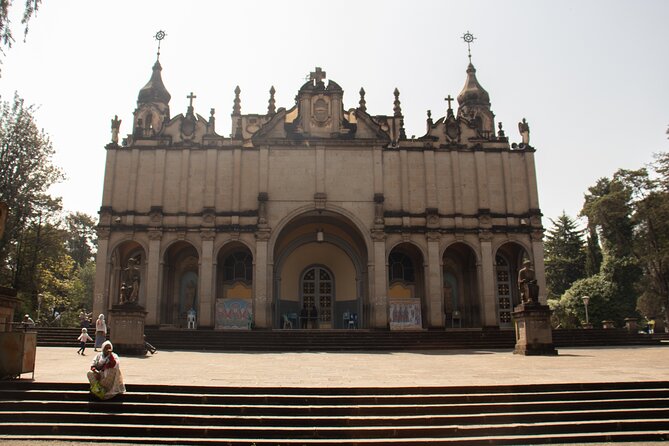
The day begins at Holy Trinity Cathedral, known in Amharic as Kidist Selassie. Built in 1942 to mark Ethiopia’s victory over Italian occupation, it is one of the country’s most important Orthodox churches.
The cathedral is more than an architectural stop. Inside, you can pay your respects at the tombs of Emperor Haile Selassie and Empress Menen Asfaw, along with other members of the Imperial Family. A good guide can explain the cathedral’s place in Ethiopian religious and national life, which gives the visit more meaning than a quick look at the building.
Plan on about an hour here. That is a useful amount of time for the church, the imperial tombs, and an explanation of the setting. Dress and behave respectfully in this active place of worship. The tour description does not provide a detailed dress code, so your safest choice is modest clothing and a quiet manner.
This first stop also sets up themes that return later: the Orthodox faith, the imperial period, the Italian occupation, and Ethiopia’s strong sense of independence. You will understand the later palace and museum visits better after starting here.
Tomoca Coffee in Piazza
The Tomoca stop is short, about 15 minutes, but it gives the morning a distinctly Ethiopian flavor. Located in the Piazza area, Tomoca has operated since 1953 and is described as the oldest coffee shop in Ethiopia.
Do not expect a long coffee ceremony at this stop. It is a quick taste of Addis Ababa’s coffee culture, and the included coffee or tea adds a welcome pause between major sights. If coffee matters to you, ask your guide about the beans, roasting, and the role of coffee in Ethiopian daily life.
Some bookings have included a longer coffee ceremony at another restaurant, so the exact food and drink experience can vary. The supplied tour plan specifically promises a Tomoca visit and coffee or tea, while lunch and any extended ceremony depend on the arrangements made for your day.
Mercato, where Addis Ababa does business
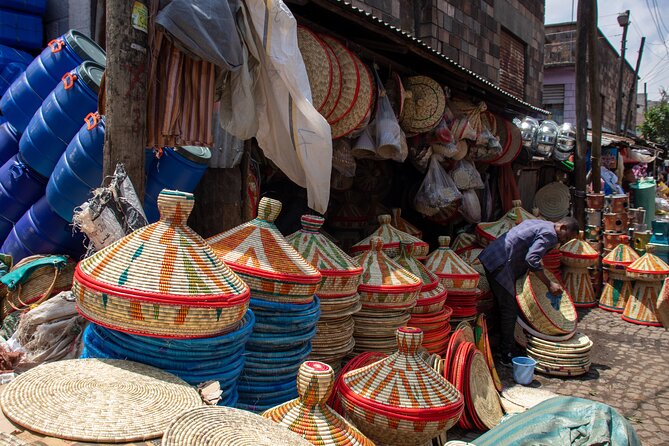
Mercato is the most energetic part of the itinerary. It is described as Africa’s largest open-air market, covering several square miles and containing organized zones for agricultural goods, incense, coffee, spices, jewelry, baskets, pottery, leather, and metal goods.
You get about an hour here. That will not cover the entire market, and it should not. Mercato is a working commercial district, not a staged attraction built for sightseeing. Your guide helps you focus on a manageable section and explains what you are seeing without wasting time trying to cross every street.
This is where the private format earns its keep. Narrow streets, crowded stalls, and a large number of businesses can be confusing on your own. Stay close to your guide, keep your belongings secure, and ask before photographing people or merchandise.
The market may be the most rewarding stop for shoppers. You might find coffee, spices, leather goods, baskets, pottery, jewelry, and other Ethiopian products. Still, do not expect a quiet browsing session. If you dislike crowds or want to shop slowly, tell your guide early so the stop can be adjusted.
A different sort of day out, same part of Ethiopia:
- Full Day Tour of Addis Ababa with Hotel Pickup and Drop-off
★ 5.0 · 430 reviews - Taste of Ethiopia
★ 5.0 · 406 reviews - Day Trip From Addis Ababa See Historical Monastery,Stunning Nature,Animals,Birds
★ 5.0 · 303 reviews - Addis Ababa: Debre Libanos, Blue Nile Gorge, and Cave Tour
★ 4.5 · 256 reviews
Lunch at Taitu Hotel, built by an empress
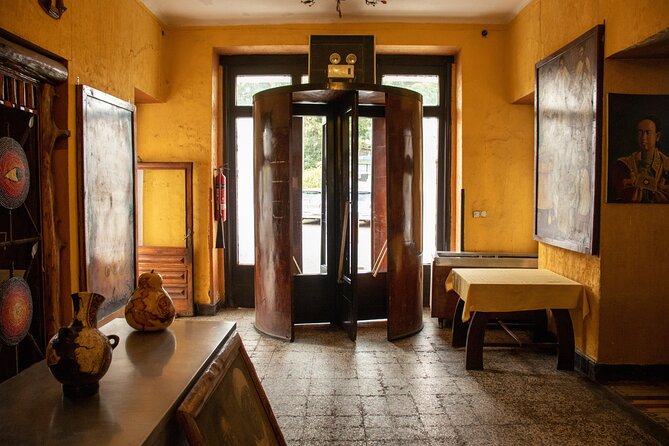
Lunch is planned at Taitu Hotel in Piazza, the oldest hotel in Addis Ababa. Empress Taytu Betul founded it in 1905, or 1898 in the Ethiopian calendar, to give foreign visitors a place to rest and dine.
The setting gives lunch historical weight without turning the meal into another museum visit. You are eating in a building tied to Empress Taytu and the early development of modern Addis Ababa.
Lunch itself is not included, and the stop lasts about 45 minutes. An alternative restaurant is possible, which is useful if you have dietary needs or want a different kind of meal. One booking included a honey wine experience and an explanation of how it was made, but that is not listed as a guaranteed part of every tour.
You should use this break to ask about local food and drink. Past guests also praised a coffee ceremony connected with lunch on some days. Since the exact restaurant can change, treat that as a possible extra rather than a promise.
Lucy and the National Museum of Ethiopia
The National Museum is one of the strongest reasons to choose this tour. Its basement holds paleontological displays, including the fossilized remains of early hominids and the famous specimen known as Lucy.
Seeing Lucy gives the day a clear connection to human origins. The museum also covers Ethiopia’s archaeological and artistic past, with Aksumite, pre-Aksumite, Solomonic, and Gondarian objects on the ground floor. Upstairs, you find Ethiopian art ranging from fourteenth-century parchment to twentieth-century oil paintings.
The planned visit lasts about 40 minutes. That is enough for a guided introduction and the headline exhibits, but not for a careful study of every room. I would ask your guide to make Lucy the priority, then use the remaining time for the sections that match your interests.
The museum visit works best when your guide explains the objects in context. Several guides associated with this experience have been praised for telling clear stories and answering questions about Ethiopian culture, rituals, and history. If you want more time with the art or archaeology collections, you may need to shorten a later stop.
Haile Selassie’s former palace at the Ethnological Museum
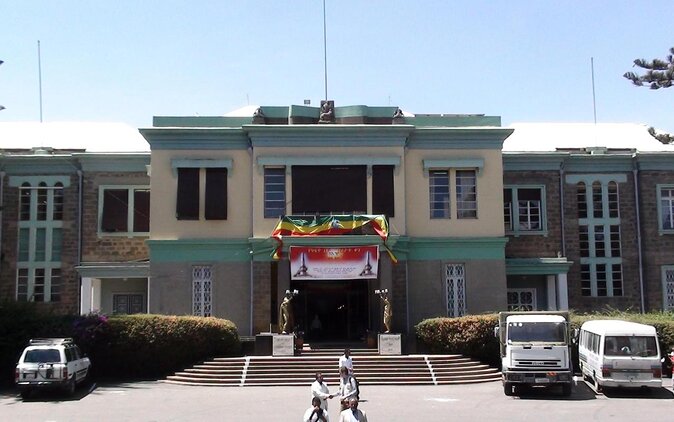
The Ethnological Museum occupies Haile Selassie’s former palace on the main university campus. It is surrounded by gardens and fountains, giving you a calmer setting after Mercato and the National Museum.
The museum focuses on Ethiopian ethnology and culture, with displays connected to music, anthropology, and everyday traditions. The former palace rooms are the special feature. Walking through the emperor’s old bedroom and other palace spaces helps connect national history with a real domestic setting.
The scheduled visit lasts about 40 minutes. It is not only a display of objects. The palace itself supplies much of the atmosphere, while the exhibits help explain the many cultures and traditions found across Ethiopia.
This stop is particularly useful after Holy Trinity Cathedral. At the cathedral, you see the imperial family in a sacred setting. Here, you see the imperial world in a former residence, then move toward the broader cultural story of the country.
Entoto Natural Park at 2,600 meters

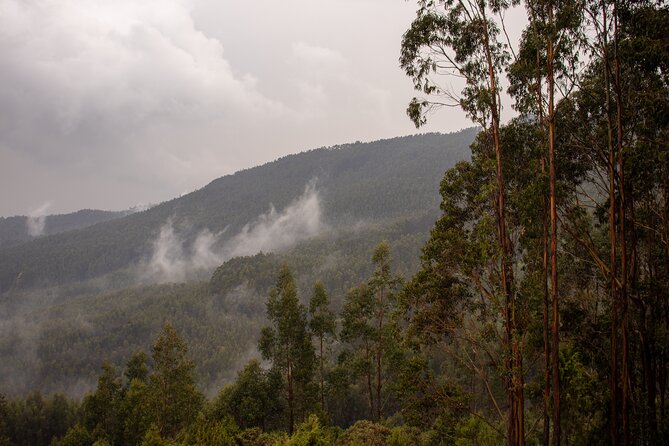
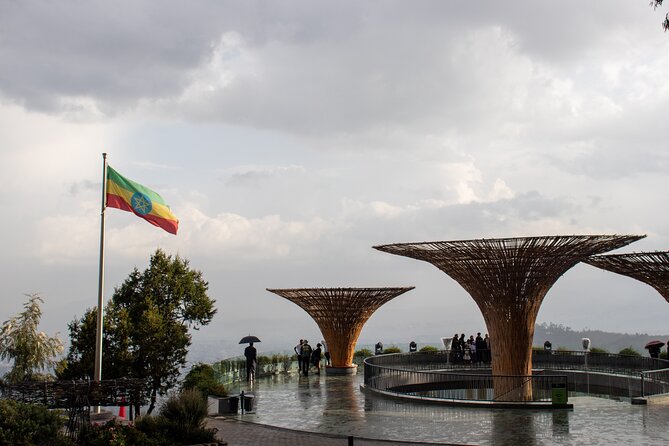
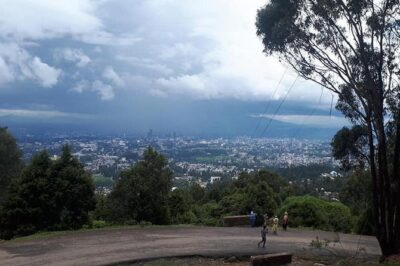
Entoto brings fresh air and a change of scale. At roughly 2,600 meters above sea level, the natural park occupies the high ground above Addis Ababa and offers wide views of the capital and surrounding countryside.
The mountain is covered with eucalyptus trees introduced from Australia during Menelik II’s reign and planted widely during Haile Selassie’s reign. It is sometimes called the lung of Addis Ababa. Menelik II’s former permanent camp and palace were also located here.
The stop lasts about 40 minutes and is free. The tour description calls it a hike, but the schedule suggests a short walk rather than a strenuous mountain outing. Even so, the altitude can affect how you feel. Walk at your own pace, especially if you have come straight from a flight or have not adjusted to Addis Ababa’s elevation.
The views depend on weather and visibility. On a clear day, this is one of the best places to understand the city’s size and setting. On a cloudy day, the forest still offers a pleasant break, but the panorama may be limited.
Shiro Meda and Ethiopian textiles
The final listed stop is Shiro Meda, also spelled Chiromeda. This market specializes in Ethiopian textiles, including wedding dresses, clothing, linens, and fabrics.
The 40-minute visit gives you time to browse without making shopping the entire purpose of the tour. It is a useful place to look for a textile that has a direct connection to Ethiopian dress and craft traditions.
If you plan to buy something, ask your guide about the fabric, intended use, and price before committing. The guide can also help you avoid spending the last part of the day in a shop that does not interest you. The market is free to enter, but anything you purchase is your responsibility.
Shiro Meda also balances Mercato nicely. Mercato shows the scale and variety of Addis Ababa commerce. Shiro Meda is more focused, giving you a clearer chance to examine Ethiopian textiles.
The guide and driver make the difference
The strongest praise for this experience centers on the people running it. Alex has been described as punctual, funny, easy to talk with, and strong at explaining history. Acham has handled airport pickup, museum visits, lunch, coffee, and Mercato in a well-organized day. Mulu has been praised for contacting guests soon after booking, discussing expectations, and responding closely to personal interests.
Those details matter more than a long list of stops. A guide who explains rituals and historical events can turn a fast city tour into a useful introduction. A driver who keeps the day moving helps you see distant parts of Addis Ababa without wasting your limited time.
The private setup also allows reasonable flexibility. Past bookings included adjustments for personal requests and extra attention to comfort. The tour remains a fixed full-day plan, so flexibility has limits, but you are not locked into the needs of a large group.
Airport pickup and drop-off make this a practical choice during a layover or a short stay. Still, the full schedule may feel demanding if you arrive exhausted. One guest came directly from the airport and appreciated a guide who kept the day clear and manageable, but you should be honest about your energy level when confirming the plan.
Who should book this Addis Ababa tour?
I would choose this tour if you want a broad first look at Addis Ababa and prefer help with transport, history, markets, and cultural etiquette. It suits couples, families, first-time visitors, and small groups that value a private vehicle.
It also works well if you have only one full day in the capital. You will see religious, imperial, archaeological, artistic, commercial, and natural sides of the city in one outing.
I would hesitate if you want long museum visits, extensive shopping, or an unhurried food tour. The schedule is full, lunch costs extra, and Mercato and Shiro Meda each deserve more time if shopping is your main goal.
The tour is recommended by 99 percent of its published audience and carries a five-star rating from 136 ratings. That record fits the experience’s strongest features: punctual pickup, clear communication, strong local explanations, and attention to comfort.
Free cancellation is available up to 24 hours before the start time. Changes made within 24 hours are not accepted, and poor weather may lead to a new date or a full refund. The tour begins at 8:30 a.m., and confirmation is provided when you book.
Should you book it?
Book this tour if you want the city’s main story in one private day. At $75 per person, the combination of transport, entrance fees, guide service, airport or hotel transfers, and a tightly planned route is good value, especially for a small group.
Go in knowing what the day is: a fast, thoughtful introduction rather than a slow examination of every museum and market. Ask for the guide you prefer if possible, confirm the lunch plan, wear comfortable walking shoes, and keep some energy for Entoto. If you want an efficient first view of Addis Ababa with real contact with its markets, coffee culture, imperial past, and highland setting, this is an easy choice.
FAQ
How long does the Addis Ababa private city tour last?
The tour lasts approximately six to eight hours and begins at 8:30 a.m.
What is included in the tour price?
The price includes bottled water, coffee or tea, private transportation, fuel surcharge, all entrance fees, a driver and guide, and airport or hotel pickup and drop-off.
Is lunch included?
No. Lunch is not included. The planned lunch stop is Taitu Hotel, though an alternative restaurant may be possible.
Can I be picked up at the airport?
Yes. Airport and hotel pickup and drop-off are included.
Is this a private group activity?
Yes. Only your own group participates in the private tour.
Are entrance fees included?
Yes. Entrance fees for the listed paid attractions are included, including Holy Trinity Cathedral, the National Museum of Ethiopia, and the Ethnological Museum.
What happens if bad weather cancels the tour?
If poor weather causes cancellation, you will be offered a different date or a full refund. You can also cancel up to 24 hours before the start time for a full refund.
New on the Addis Ababa list
- Yod Abyssinia Cultural Night: Dinner, Music, and Dance★ 5.0 · 7 reviews
- Locally crafted beer and wine tasting and nightlife in Addis tour★ 5.0 · 6 reviews
- Addis Ababa City Tours Full-Day Tours★ 5.0 · 5 reviews
- Stunning Views Wonchi Crater Lake a Private Day Trip★ 5.0 · 3 reviews
- Visiting the wonders of Lalibela in Three (3) days and Two ( 2) nights★ 5.0 · 2 reviews
- Unique Ethiopian Cooking Class and Coffee Ceremony with a Local in Addis Ababa★ 4.5 · 7 reviews
- Tribes of the Ethiopian Omo Valley – 9 Day Tour★ 5.0 · 5 reviews
- Two days Lake Wenchi and Menagesha Forest★ 5.0 · 3 reviews
City Tours, compared.

Addis Ababa Guided City Tour With Airport & Hotel Pick Up
Read our review →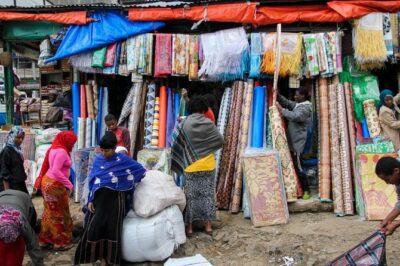
Authentic Addis Ababa City Tour with a Local Guide
Read our review →

Addis Ababa City Tours Full Day With Hotel Pickup And Drop Off.
Read our review →
Browse the lists this tour appears in