
Reviewed · DANAKIL DEPRESSION TOURS
3 Day Danakil Depression Ertale and Dallol Tours
The earth gets strange here. This three-day expedition takes you into Ethiopia’s Afar region, where Erta Ale’s active volcano, acid springs, salt flats, and bright mineral colors create one of the planet’s most unusual settings. I like the mix of raw geology and local life, especially the visit to Hamed Ela and Lake Asale, and I like that meals, water, entry fees, transport, and a small group of up to 10 people are included. The main drawback is comfort: expect long off-road drives, basic camping, no electricity or running water for much of the trip, and severe heat.
I also like the care built into the operation. Guides and drivers such as Kbrom, Aklilu, Ashu, Abey, and Mickey are praised for clear organization, friendly help, and calm handling of changes. Still, you should clarify the exact transfer from Addis Ababa to Semera before paying, since the meeting point is in Addis while the driving program begins in Semera.
In This Review
- Key points before you book
- What the $400 price really covers
- Day 1: From Semera to the Erta Ale base camp
- Day 2: A second look at Erta Ale, then the salt desert
- Day 3: Dallol’s sulfur springs and an alien-colored desert
- The guide and driver can make or break this trip
- Comfort, safety, and physical demands
- Who will appreciate this unusual Ethiopian expedition?
- Should you book the Danakil tour?
- FAQ
- Where does the tour start?
- Does the tour return to the meeting point?
- Is transportation included?
- What meals are included?
- How many people can join?
- How much fitness do I need?
Key points before you book
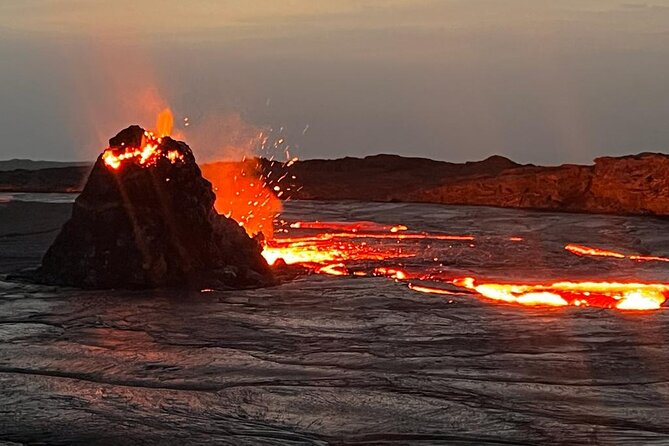
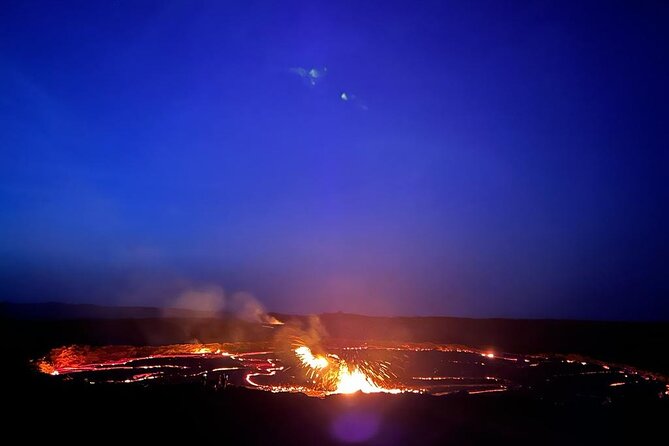
- Erta Ale after dark: A night visit to an active volcano is the trip’s most dramatic moment, with heat, fumes, sound, and the chance to see molten lava.
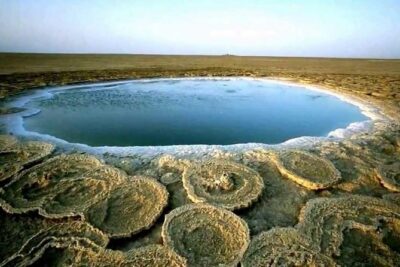
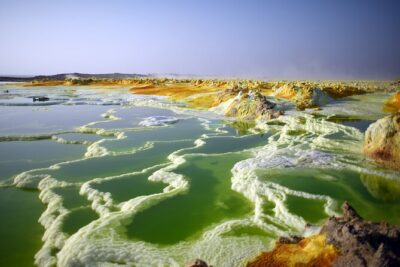
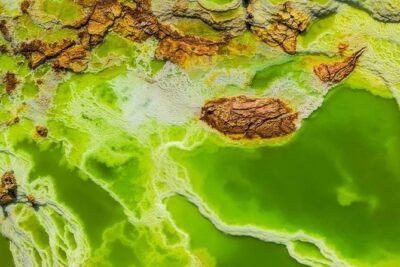
- Dallol’s sulfur colors: Acid springs and mineral deposits produce yellow, green, red, and white tones that look almost unreal.
- Afar salt culture: At Lake Asale, you can see salt extraction and camel caravans carrying blocks across the desert.
- Seven hours on rough roads: The journey from Semera to Dodom takes about seven hours, much of it over lava, rock, and sand.
- Bare-bones nights: You sleep under the stars or in simple camp conditions, with no normal hotel comforts for much of the tour.
- Strong practical inclusions: Water, six meals, air-conditioned transport, taxes, and entrance fees are included in the $400 price.
What the $400 price really covers
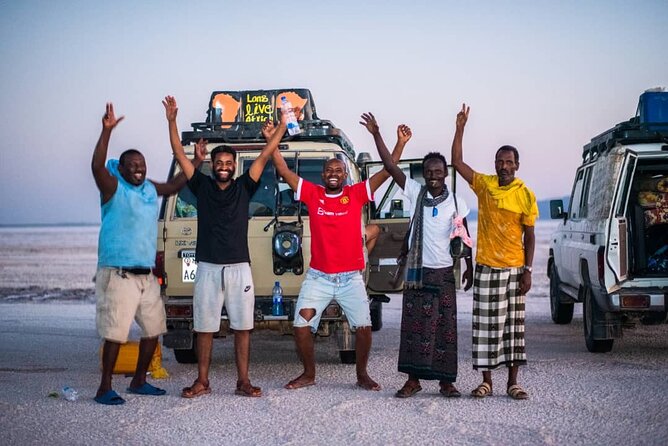
At $400 per person, this tour offers good value if you want the main Danakil sights without arranging a remote desert expedition yourself. The price includes an air-conditioned vehicle, all listed entrance fees and taxes, bottled water, two breakfasts, three lunches, and two dinners.
That matters here. The Danakil is not a place where you can simply hire a car and improvise. You need transport capable of handling rough ground, food and water brought into a very isolated region, and a guide team that can coordinate a convoy and desert camps.
The price does not include alcoholic drinks. More important, the supplied details do not clearly explain how you get from Addis Ababa to Semera. The meeting point is given as Cameron Street, Oasis Building, on Cameroon Street in Addis Ababa, while the first driving instructions begin at Semera. Ask if flights or ground transfers between the two cities are included, and confirm the return plan before booking.
A maximum of 10 people is a useful middle ground. You are not joining a huge bus group, but you also have the safety and social benefits of a convoy-style expedition. The smaller number should make it easier to hear your guide and move through the stops without a crowd.
More Danakil Depression Tours in Addis Ababa
- 12 Days SIMIEN MOUNTAIN-LALIBELA-DANAKIL-TIGRAY CHURCHES
★ 5.0 · 45 reviews - 3 Days Dankile Depression group Tours
★ 5.0 · 40 reviews - 5 DAYS Lalibela, Axum, Tigray churches and Danakil
★ 5.0 · 34 reviews
Day 1: From Semera to the Erta Ale base camp
The first long road day begins around 9 a.m. From Semera, you join a Toyota Landcruiser and travel in convoy toward the Danakil Depression. The opening section is on smooth asphalt, with views of the Afar region opening around you as you leave town.
The road becomes rougher as you approach Afdera and the salt country. Once you reach the desert, the surface changes to a jumbled mix of solidified lava, rock, and sand. The route can feel less like a road than a set of tracks across old volcanic ground. An occasional palm-lined oasis offers a sharp contrast to the black rock and pale sand.
The drive from Semera to Dodom is listed at about seven hours. That is the key fact of the day. You are spending much of your first day in a vehicle, and the rough surface makes the journey tiring even when the distance does not look great on a map.
Lunch is provided before you continue to the Erta Ale base camp. The inclusion of meals and water is especially useful on a road day like this, because there are few ordinary services once you leave the settled areas.
From the base camp, the focus shifts to the volcano. The exact hiking conditions can change, and one account describes a recently cleared road that reduced the walk to around 30 minutes. Do not assume that distance will always apply. Ask about current access and walking time before departure, particularly if you have knee, heart, or heat-related concerns.
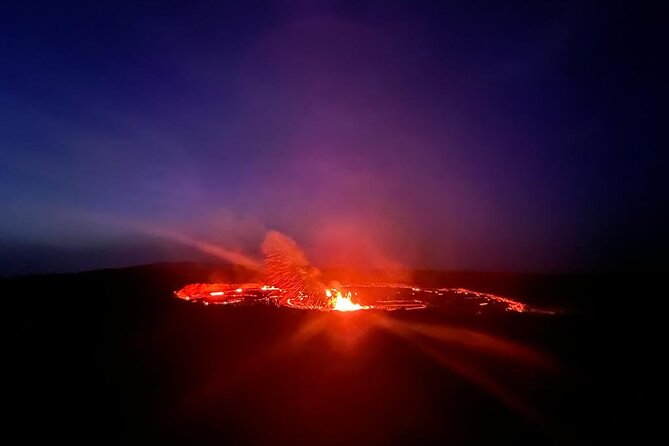
Erta Ale is the reason many people accept the rough transport and simple camping. The volcano has an active crater, and the night visit brings a strange combination of red light, heat, abrasive vapor, and deep volcanic sound. The experience is not polished or comfortable, but that is part of its force. You are seeing a live geological process rather than a tidy viewpoint.
The camp conditions are basic. You may sleep under the stars, and there is no electricity or running water during much of the trip. Pack with that in mind rather than expecting a normal campsite with showers, charging points, or a restaurant.
Day 2: A second look at Erta Ale, then the salt desert
The second morning starts early. You return to the crater before the sun rises high, giving you another chance to see the volcano in cooler light. The schedule says you visit the lava lake one last time before beginning the drive away from Erta Ale.
This early start is sensible. The Danakil heat becomes punishing as the day advances, and the volcano is easier to approach before the strongest sun. You should still expect fatigue, since the previous day involved a long drive and a night visit.
After breakfast at camp, the route continues toward Hamed Ela, the small settlement associated with the Dallol area. The drive is described as taking about three hours, with arrival at the campsite by around 8 a.m. at the latest after leaving the volcano. Later in the day, the schedule places arrival in Hamed Ela around 1:30 p.m., so the timing appears to vary depending on the exact order of stops and current road conditions. Confirm the day-by-day sequence with the operator.
Hamed Ela has a population of about 600 people. Visiting the village adds a human dimension to a trip that could otherwise become a parade of rocks, salt, and colored water. You can see something of Afar daily life and understand that this harsh region is also home to settled communities.
The salt economy becomes clearer at Lake Asale. Here, local people mine salt from the ground, cut or shape it, and load it onto camel caravans. This is one of the tour’s most valuable stops because it connects the spectacular scenery to work that has been part of life in the region for generations.
Lake Asale and the surrounding salt pans are broad, bright, and exposed. The surface can look almost empty, but it is not without purpose. Salt is a resource, a trade good, and a reason for the camel routes that cross this difficult part of Ethiopia.
The practical challenge is heat. Temperatures in the Danakil can reach more than 40 degrees Celsius and, on some days, exceed 48 degrees. Carry water, cover your head and arms, and listen to your guide when it is time to leave an exposed area. The tour supplies plenty of bottled water, but you should still drink steadily rather than waiting until you feel thirsty.
Day 3: Dallol’s sulfur springs and an alien-colored desert
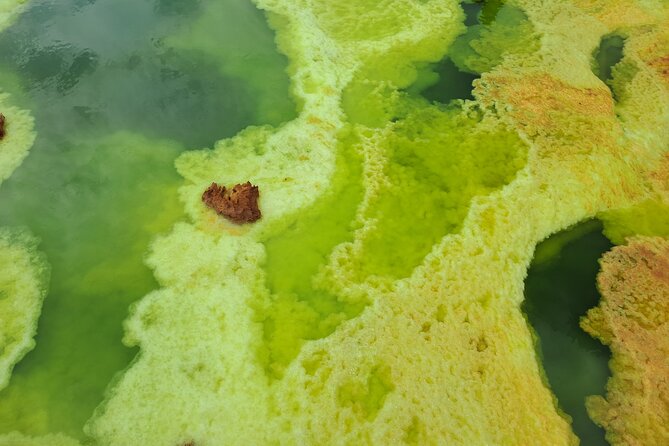
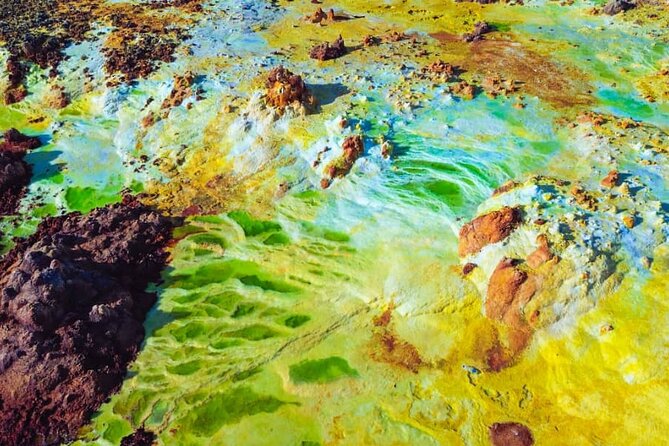
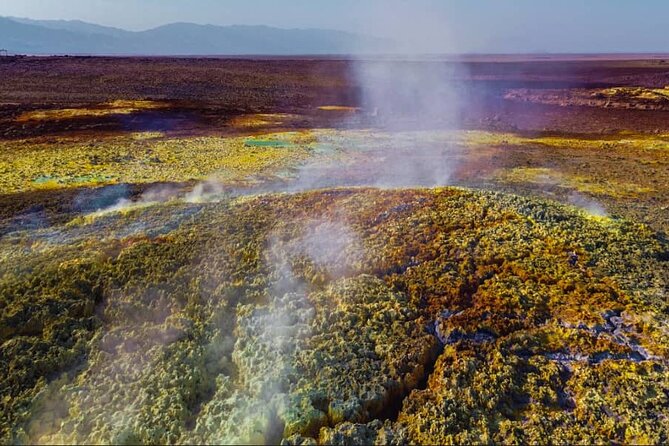
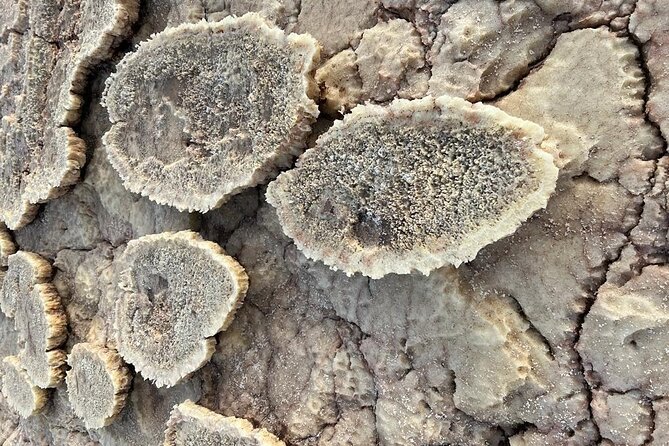
The final day begins early with a drive to Dallol, one of the most striking geological areas in the Danakil Depression. This is a place of acidic springs, fumaroles, salt mounds, and mineral deposits in shades of green, red, yellow, and white.
The colors are natural rather than painted or enhanced. Chemical activity brings different minerals to the surface, while heat and evaporation shape the mounds and pools around them. You will want photographs, but remember that the setting is hazardous. Stay with your guide and do not step onto crusts or near pools simply because the surface looks solid.
The supplied description gives an average temperature of about 35 degrees Celsius for Dallol, while also noting that temperatures can exceed 48 degrees on hotter days. Those figures do not make the place sound frightening until you add direct sun, little shade, and long hours in an open desert. Plan for a demanding morning even if the walking itself is moderate.
Dallol is best understood slowly. Look at the layers of color, the crusted salt, the small vents, and the way water has altered the ground. You are not visiting a conventional attraction with railings and signs at every turn. The guide’s role is important for both interpretation and safety.
The day also returns to the wider Danakil area, where you may see additional salt formations and local salt-mining activity. The schedule describes camel caravans carrying salt from the flats. This is a powerful image, but it also reminds you that the region is a working environment, not an empty stage built for photography.
The final drive takes you back toward the tour’s meeting point. Since the published timing and starting location are not fully consistent, keep your departure day flexible. Do not schedule a tight onward connection from Addis Ababa unless the operator has confirmed the return time and transport plan.
A different sort of day out, same part of Ethiopia:
- Full Day Tour of Addis Ababa with Hotel Pickup and Drop-off
★ 5.0 · 430 reviews - Taste of Ethiopia
★ 5.0 · 406 reviews - Day Trip From Addis Ababa See Historical Monastery,Stunning Nature,Animals,Birds
★ 5.0 · 303 reviews - Addis Ababa: Debre Libanos, Blue Nile Gorge, and Cave Tour
★ 4.5 · 256 reviews
The guide and driver can make or break this trip
Remote desert tours depend heavily on the people running them. Here, the strongest praise is directed at the guides, drivers, and owner rather than at luxury facilities, which tells you what matters most.
Kbrom is described as friendly, entertaining, and well informed, while Aklilu is praised for smooth coordination. Ashu and Abey are also singled out for their guiding, and Mickey, the owner, is described as helpful and willing to go beyond the expected service.
That kind of support matters when flights are delayed, roads change, or someone in the group struggles with the heat. One account describes a domestic flight delay of 16 hours, while another notes delays of up to two hours during a longer Ethiopian trip. The important lesson is simple: keep your schedule loose, and stay in contact with the operator.
The guide is also your link to Afar culture and the geology of the region. You are not just being driven to colorful pools. You are seeing how people mine salt, use camel caravans, and live in one of the harshest inhabited areas on earth.
Comfort, safety, and physical demands
This is not a soft adventure. You need a moderate level of physical fitness, and you should be comfortable with long hours in a vehicle, rough tracks, heat, basic sleeping arrangements, and limited washing facilities.
The air-conditioned Landcruiser helps during transfers, but air conditioning does not remove the strain of the desert. You will still walk outside in intense heat, climb toward the Erta Ale crater, and spend time around volcanic and acidic features.
Solo visitors can join the small group, and one solo woman described feeling safe with the company. That does not mean the trip is risk-free. The setting itself is demanding, so follow instructions, stay close to the group, and avoid wandering around volcanic or acidic areas.
Pack light but deliberately:
- A wide-brimmed hat and strong sun protection
- Loose, breathable clothing that covers your skin
- Sturdy walking shoes
- A headlamp or flashlight
- A power bank, since electricity is unavailable for much of the trip
- Wet wipes and personal toiletries
- Extra drinking water for personal use
- A scarf or face covering for dust and wind
The tour provides bottled water and meals, but it does not promise normal bathroom facilities. Your own preparation will make the basic camp conditions much easier.
Who will appreciate this unusual Ethiopian expedition?
I would recommend this trip to you if you want rare geological sights, can tolerate rough transport, and see discomfort as part of the story rather than a flaw. It suits active visitors who are more excited by a live volcano and salt-mining routes than by hotel amenities.
It is also a good choice if you want a guided experience that combines nature and culture. Erta Ale provides the drama, Dallol provides the color, and Hamed Ela and Lake Asale show how people live and work in the region.
I would hesitate to recommend it if you need reliable electricity, running water, soft beds, short drives, or predictable timing. The Danakil is not a casual add-on to an Ethiopia itinerary. It demands patience, flexibility, and a real tolerance for heat.
Should you book the Danakil tour?
Book it if Erta Ale’s lava, Dallol’s acidic colors, and the salt caravans at Lake Asale are high on your Ethiopia wish list. At $400, the included transport, food, water, entrance fees, and small group make the package appealing for such a remote destination.
Before confirming, ask one practical question: exactly how will you travel between Addis Ababa and Semera? Then confirm the current walking distance to Erta Ale, sleeping setup, return timing, and what happens if a flight is delayed.
If you accept the hard roads and simple nights, this can be a remarkable three-day expedition. If you want comfort first, choose another part of Ethiopia. The Danakil rewards curiosity, stamina, and a willingness to let the desert set the schedule.
FAQ
Where does the tour start?
The meeting point is Cameron Street, Oasis Building, on Cameroon Street in Addis Ababa. The listed start time is 9:00 a.m.
Does the tour return to the meeting point?
Yes. The activity is scheduled to end back at the meeting point.
Is transportation included?
Yes. An air-conditioned vehicle is included. The driving program begins in Semera, so you should confirm how the Addis Ababa to Semera connection is handled.
What meals are included?
The tour includes two breakfasts, three lunches, and two dinners. Alcoholic beverages are not included.
How many people can join?
The tour has a maximum group size of 10 people.
How much fitness do I need?
A moderate level of physical fitness is required. You should be ready for rough off-road driving, heat, early starts, and walking near Erta Ale and the Dallol area.
New on the Addis Ababa list
- Yod Abyssinia Cultural Night: Dinner, Music, and Dance★ 5.0 · 7 reviews
- Locally crafted beer and wine tasting and nightlife in Addis tour★ 5.0 · 6 reviews
- Addis Ababa City Tours Full-Day Tours★ 5.0 · 5 reviews
- Stunning Views Wonchi Crater Lake a Private Day Trip★ 5.0 · 3 reviews
- Visiting the wonders of Lalibela in Three (3) days and Two ( 2) nights★ 5.0 · 2 reviews
- Unique Ethiopian Cooking Class and Coffee Ceremony with a Local in Addis Ababa★ 4.5 · 7 reviews
- Tribes of the Ethiopian Omo Valley – 9 Day Tour★ 5.0 · 5 reviews
- Two days Lake Wenchi and Menagesha Forest★ 5.0 · 3 reviews
Danakil Depression Tours, compared.
12 Days SIMIEN MOUNTAIN-LALIBELA-DANAKIL-TIGRAY CHURCHES
Read our review →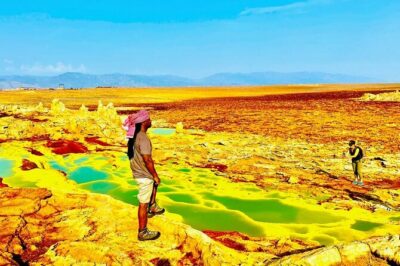
5 DAYS Lalibela, Axum, Tigray churches and Danakil
Read our review →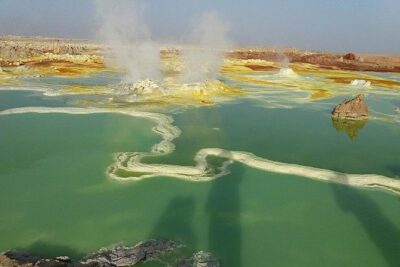
6 Days tour Package (Simien Mountains, Lalibela, and Danakil Depression)
Read our review →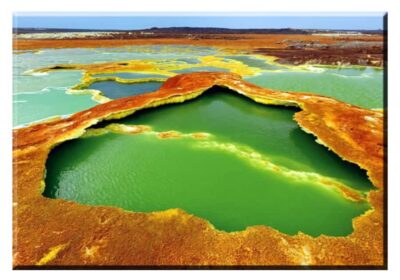
2-Night 3-Day Danakil Depression Tour without Flights
Read our review →
Lalibela, Axum, Danakil and Omo Valley 8 DAYS
Read our review →Browse the lists this tour appears in