
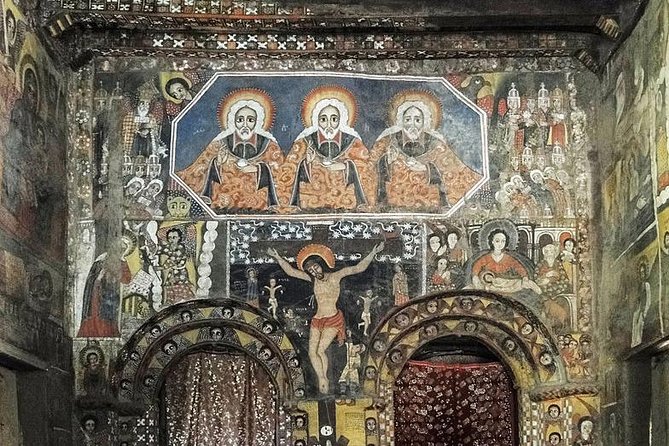
Reviewed · ROCK-HEWN CHURCH TOURS
Lalibela, Axum, Danakil and Omo Valley 8 DAYS
Ethiopia packs a continent’s worth of contrasts into eight days. This small-group tour links Lalibela’s carved churches, Axum’s ancient monuments, the Danakil Depression, and Omo Valley communities with flights, hotels, guides, and ground transport arranged for you. I like the sheer range of places covered, and I like that entrance fees, local guides, scouts, fuel, and village payments are included. The drawback is the pace: you will spend long hours on rough roads and face early starts, heat, altitude changes, and basic lodging.
I also like the practical setup. A maximum of 10 people keeps the group manageable, while an air-conditioned vehicle provides some relief between stops. But this is not a gentle sightseeing holiday. Erta Ale and the Danakil Depression require real stamina, and the cliff churches near Gheralta can involve serious exposure. Confirm the exact plan before departure, especially on Day 2.
In This Review
- Key things to know before booking
- Lalibela’s carved churches set the tone
- Axum and Gheralta bring two different northern Ethiopia
- Erta Ale turns the middle of the tour into an expedition
- Sunrise at Erta Ale rewards the hard work
- Dallol and the salt caravans show Danakil at its strangest
- The Omo Valley changes the focus from geology to community life
- Mago National Park and Turmi cover two very different encounters
- Konso closes the journey with stone terraces and tradition
- What the $2,051.29 price really covers
- The small group and guides are part of the value
- Who should book this Ethiopia tour?
- FAQ
- Where does the tour start?
- Where does the tour end?
- How many people can join the group?
- Are domestic flights included?
- Is accommodation included?
- Are entrance fees and village payments included?
- How physically demanding is the experience?
Key things to know before booking
- Four UNESCO-related highlights in one route: Lalibela, Axum, Konso, and the ancient cultural sites around northern Ethiopia give this trip strong variety.
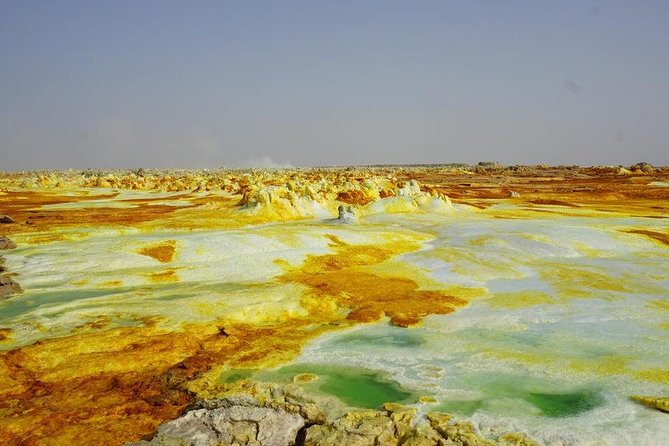
- The Danakil section is the toughest: Expect rough driving, volcanic heat, a night near Erta Ale, and walking around craters and salt-mining areas.
- A maximum of 10 people matters: Smaller numbers make transfers and guide coordination easier than on a large coach tour.
- The price covers much of the expensive groundwork: Domestic flights, accommodation, fuel, guides, scouts, entrance fees, and village payments are included.
- The Omo Valley adds living culture: Ari, Mursi, and Hamer communities provide a different focus from the churches and volcanoes.
- The schedule is tightly packed: This trip suits you if you want breadth and are comfortable trading long stays for more destinations.
Lalibela’s carved churches set the tone
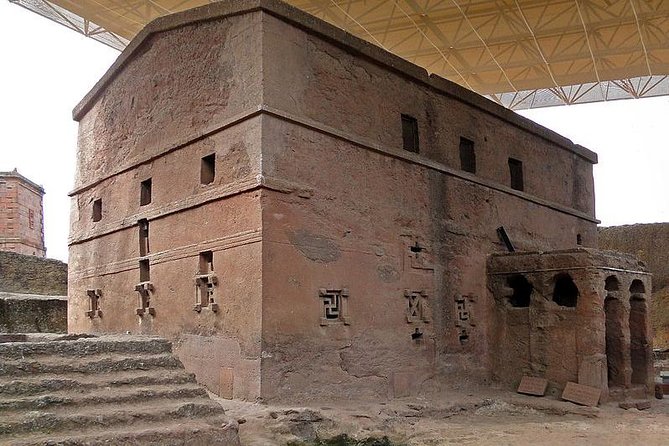
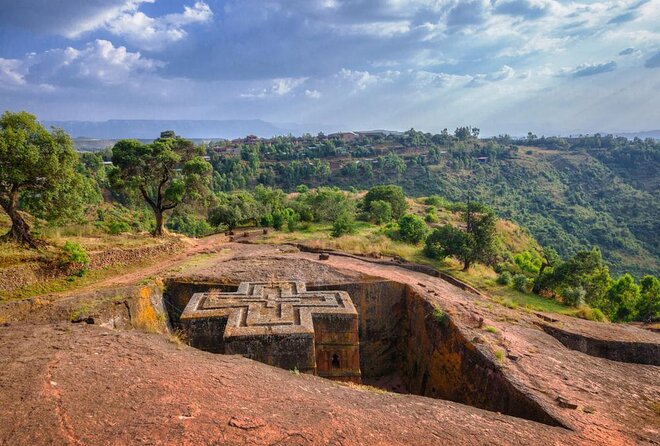
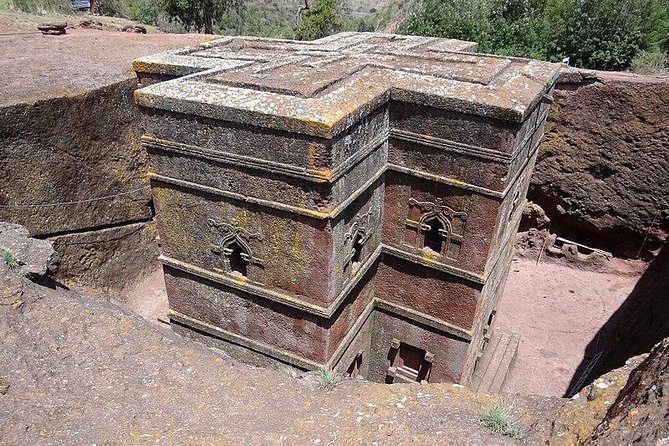
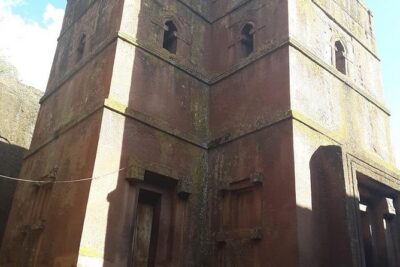
Your first sightseeing day begins in Lalibela, after a morning flight north and a hotel transfer. After lunch, you visit the first group of rock-hewn churches, located north of the stream called the Jordan River.
These churches were cut directly into volcanic rock during the reign of King Lalibela, from 1181 to 1221. The site contains about 11 churches arranged in groups, and the four-hour visit gives you time to see the scale of the work and move between the separate areas.
I would give Lalibela your full attention. It is not simply a collection of old buildings. The churches remain places of worship, so the experience works best when you slow down, watch how people use the spaces, and let your guide explain the religious setting.
Comfortable shoes matter here. The ground can be uneven, and the visit involves walking between churches rather than viewing them all from one platform. Entrance is included, which saves both money and time at the site.
The first night also gives you a chance to settle into the trip. The accommodation is described as basic but clean, with good beds and locations near town centers. That is a fair fit for an itinerary where the hotel is mainly a place to sleep, wash, and prepare for the next departure.
More Rock-Hewn Church Tours in Lalibela:
- Visiting Lalibela churches
★ 5.0 · 40 reviews - Visit the rock hewn churches
★ 5.0 · 39 reviews - Tour 11 monolithic rock churches & museum in Lalibela & cave church with mummies
★ 5.0 · 37 reviews
Axum and Gheralta bring two different northern Ethiopia
Day 2 starts with a flight from Lalibela to Axum. The program allows about an hour in Axum before the road journey toward Hawzien, passing through Adwa and the Gheralta plains.
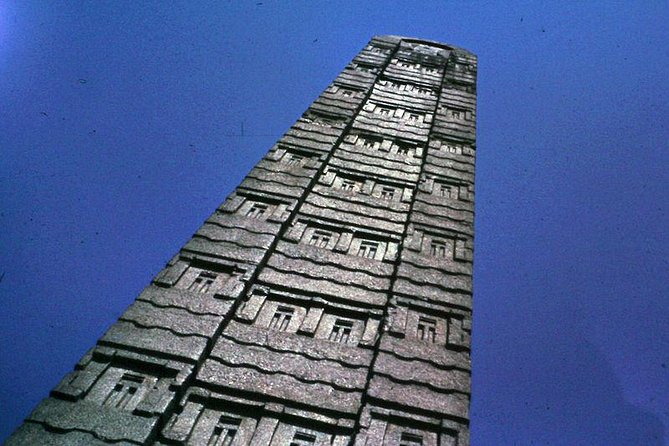
Axum is one of Ethiopia’s key historical centers. The Northern Stelae Park gives you a quick look at the tall stone monuments associated with the ancient city. An hour is enough for an introduction, but not enough for a leisurely exploration of every major site in Axum.
The route then turns toward Gheralta, an area known for churches cut into high rock formations. Hawzien is used as the base for this part of the journey. The three-hour Gheralta visit can be one of the most memorable sections of the northern route, but it needs careful handling.
One serious concern appears in the trip information: Day 2 can involve a visit to a cliff church, and the described ascent may be a 200-meter free climb along exposed rock. That is not a normal casual walk. If you have a fear of heights, limited balance, or no experience with exposed climbs, ask the operator exactly which church is planned and what alternatives are available.
This is also the clearest place to confirm the schedule in writing. The day description refers to Axum, Gheralta, Hawzien, and a possible cliff church, but the order and exact activity should be settled before you arrive. A highly praised trip can still become stressful if a demanding climb appears without clear warning.
Erta Ale turns the middle of the tour into an expedition

Day 3 begins the Danakil section, and this is where the trip changes character. You drive toward Erta Ale through Mekele and onward to Dodom, the settlement at the base of the volcano.
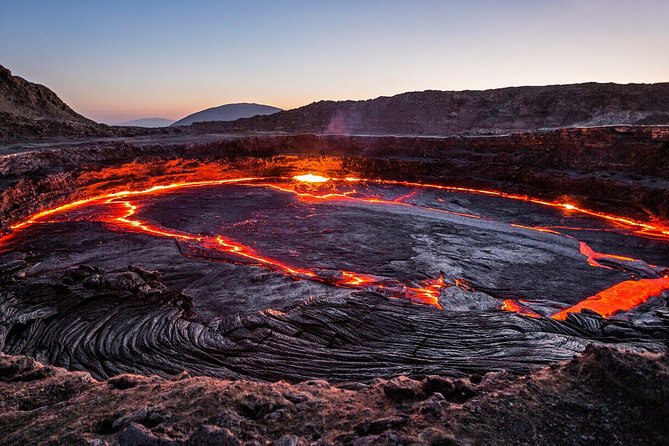
Erta Ale is a shield volcano about 613 meters high, with a summit caldera roughly one square kilometer across. Its permanent lava lake is the main attraction. The volcano is described as one of only a small number of permanent lava-lake sites in the world, which explains why this stop draws people willing to accept difficult conditions.
The drive is a major part of the experience. The route from Mekele to Dodom covers about 80 kilometers on extremely rough roads. You may spend hours in a Toyota 4WD-style vehicle, with dust, jolts, and little comfort. Air conditioning helps, but it cannot turn this into a smooth transfer.
The schedule gives a 9:00 a.m. start and about six hours for the Erta Ale portion. It also refers to reaching the summit and spending the night in the area. Be ready for a long, physically demanding day rather than a simple viewpoint visit.
Pack more water than you think you need, along with sun protection, a head covering, sturdy footwear, and clothing that can handle dust. The program provides accommodation and meals through the bed-and-breakfast arrangement, but do not expect the hotel standard you may have in Addis Ababa or Lalibela.
Sunrise at Erta Ale rewards the hard work
Day 4 begins with sunrise near the volcano’s northern crater. You can walk about five minutes to reach the southern and central pits, while the main crater is described as about 200 meters deep and 350 meters across.
This is the point when the rough approach can make sense. The volcanic setting is stark and unusual, with crater shapes and heat that feel far removed from Ethiopia’s historic towns. I like that the schedule includes time for an early look before the return to Dodom, rather than treating Erta Ale as a rushed roadside stop.
The descent is planned for around 9:00 a.m., after an early breakfast, with arrival back at camp by about 10:30 a.m. The rest of the day may include a drive to Lake Afrera, also called Lake Giulietti. That stop is optional and may not be available during some seasons or conditions.
You need to accept uncertainty here. Danakil plans can change because of weather, road conditions, volcanic conditions, or access rules. The program requires good weather, and a cancellation for poor weather results in a different date or a full refund. Even with good weather, the timetable may shift.
The heat is not a minor detail. This area is known for severe conditions, and the itinerary includes walking, long drives, and outdoor stops. I would not choose this trip if you want a cool, relaxed holiday or if you need predictable indoor comfort each afternoon.
More Danakil Depression Tours in Lalibela:
- 3 Days Danakil Depression Tour
★ 4.5 · 135 reviews - 3 Days Danakil Depression Tours Via Semera
★ 5.0 · 47 reviews - 12 Days SIMIEN MOUNTAIN-LALIBELA-DANAKIL-TIGRAY CHURCHES
★ 5.0 · 45 reviews - 3 Day Danakil Depression Ertale and Dallol Tours
★ 5.0 · 44 reviews
Dallol and the salt caravans show Danakil at its strangest
Day 5 continues with an early visit to Ragad, also called Asebo, where local workers mine salt. You may see salt broken from the ground, cut into rectangular blocks, and loaded onto camels.
The work gives the Danakil section a human focus. The area is not only about colorful volcanic formations. It is also a place where salt extraction and camel transport remain part of local life. The visit can help you understand why this harsh region has long mattered to people who live and work there.
The route then continues to Dallol, about 116 meters below sea level. The stop includes volcanic formations, salt-mining areas, Lake Assal, and camel caravans. Camel caravans are not present in July, August, or early September, so your timing affects what you see.
After the excursion, you return to Hamedela and continue to Mekele. A flight back to Addis is scheduled for 7:50 p.m., arriving at 9:10 p.m. That late flight makes Day 5 another demanding day, especially after the early start and hours in the heat.
This section is worth the effort if you want unusual geology and a close look at salt work. It is less suitable if you dislike heat, dust, remote roads, or walking on rough ground. Bring camera equipment carefully, and remember that video or camera fees may apply where required.
The Omo Valley changes the focus from geology to community life
Day 6 shifts you south to Jinka and the Omo Valley. After arriving at Jinka Airport, you meet the local team and drive to Ari villages.
The Ari are described as the largest population in the lower Omo Valley. Ari women make pottery and wear skirts made from enset, a banana-like plant often called false banana. The village visit lasts about three hours, giving you time to see daily life and hear explanations from local guides.
This is an important change of pace. After two days of volcanoes, salt, and punishing roads, the Omo Valley puts people and craft at the center. I value the inclusion of local guides and village payments because they help organize visits with community involvement rather than treating a settlement as a quick photo stop.
You also visit the Jinka Museum for about an hour. Its collection includes musical instruments, weapons, household objects, and related items. The museum is a useful orientation before the following day, when you visit Mago National Park and continue toward Turmi.
Approach these visits with patience and respect. You are entering working communities, not a staged theme park. Listen to the guide’s instructions about photography, personal space, and payments, and let the encounter be more than a hunt for striking images.
Mago National Park and Turmi cover two very different encounters
After breakfast on Day 7, you make a day excursion to Mago National Park to visit a Mursi village. The Mursi live in low huts made from straw and leaves. The program also describes traditional body adornment, including stretched lower lips and earlobes among some women.
The visit may be visually powerful, but it deserves thoughtful conduct. Avoid reducing people to their appearance. Use the local guide as your bridge, ask before taking photographs, and remember that village visits can feel intrusive if rushed or handled carelessly.
The next stop is Turmi, home of the Hamer people. The Hamer are associated with bull jumping, a rite connected with a boy’s passage into manhood. The ceremony includes female relatives dancing and inviting whipping from recently initiated men, which signals family support and gives the women a recognized role in future marriage decisions.
The boy must cross the backs of bulls or castrated steers twice. The ceremony is not guaranteed simply because Turmi is on the schedule, so treat the cultural visit as the main point, not one particular event.
Day 7 includes only about two hours at Mago and one hour at Turmi in the stated schedule. That is enough for a focused introduction but not a long stay. The road time between sites may make the day feel longer than the sightseeing hours suggest.
Konso closes the journey with stone terraces and tradition

Day 8 begins early and heads to the Konso Cultural Landscape. The site includes stone-walled terraces and fortified settlements in the Konso highlands.
The terraces show how communities adapted farming and settlement patterns to a dry, difficult environment. The cultural tradition is described as extending back 21 generations, or more than 400 years. You will also see anthropomorphic wooden statues connected with respected community members, heroic events, and funerary customs.
This final stop provides a calm counterpoint to the Danakil and Omo Valley. Instead of a single dramatic monument, Konso asks you to notice engineering, social organization, and how people shape the ground around them.
The program gives about four hours here. Entrance is listed as free, unlike several earlier sites where fees are included. The final transfer back to Addis is included, with drop-off at your hotel, although the exact road and flight arrangement for the last leg should be confirmed before booking.
What the $2,051.29 price really covers
At $2,051.29 per person, this is not a cheap independent trip, but the number becomes easier to judge once you count what is bundled. You receive accommodation, bed and breakfast, domestic flights, transfers, an air-conditioned vehicle, fuel, a professional guide, local guides, scouts where needed, entrance fees, village payments, and elder payments.
The domestic flights alone save time across a country where road distances can be huge. The Danakil section also needs specialist coordination, local access, and rough-road transport. Handling those pieces yourself would be difficult, especially when the schedule connects northern sites with the Omo Valley.
The accommodation is best understood as practical rather than luxurious. You may stay in several different types of lodging, and the available feedback describes the basic hotels as clean, comfortable enough, and often close to town centers.
You still pay extra for international flights, alcohol, laundry, internet, phone use, personal purchases, and any required camera or video fees. Those are easy costs to overlook, so keep some room in your budget.
The small group and guides are part of the value
A maximum of 10 people is one of the strongest features. Small numbers help with airport pickups, village visits, and quick decisions when roads or weather alter the plan.
The company has received strong praise for staff who handle changes and personal requests. Guides and agents named in positive accounts include Muller, Samrawit, Muna, Sefora, Yared, and Natnael. The praise centers on dependable organization, warm service, and help with missed or rescheduled flights.
That matters on a route this complicated. You are moving through several regions, changing vehicles and flights, and relying on local staff in places where conditions can change quickly. Still, good organization does not remove the need for you to ask questions. Confirm the Day 2 church visit, the Danakil camping conditions, the exact domestic flights, and the Day 8 return plan.
The tour begins at 7:00 a.m. in Lalibela, with pickup available from Lalibela and Addis Ababa according to the program details. The stated end point is your hotel in Addis Ababa.
Who should book this Ethiopia tour?
I would recommend it to you if your main goal is to see as much of Ethiopia as possible in a short time. You get major churches, ancient stone monuments, volcanic scenery, salt mines, and several Omo Valley communities without arranging each transfer yourself.
It suits people with moderate physical fitness, flexible expectations, and a taste for demanding roads. It is also a good match for solo visitors who want the company and support of a small group, since the schedule and local coordination can otherwise be hard to manage.
I would hesitate if you need luxury hotels, slow mornings, long museum visits, or easy walking. I would also think twice if exposed climbing, desert heat, rough roads, or early departures are a serious problem.
Book it if range matters more to you than relaxation. Skip it if you would rather spend several days in one region and experience fewer places at a slower pace. For the right kind of explorer, this is a remarkably efficient route through Ethiopia’s most dramatic contrasts.
FAQ
Where does the tour start?
The stated start point is Lalibela, Ethiopia, at 7:00 a.m. Pickup from Lalibela and Addis Ababa is offered.
Where does the tour end?
The tour ends in Addis Ababa, with drop-off at your hotel.
How many people can join the group?
The maximum group size is 10 people.
Are domestic flights included?
Yes. Domestic flights are included in the tour price.
Is accommodation included?
Yes. Accommodation is included according to the program, with bed and breakfast provided.
Are entrance fees and village payments included?
Yes. Entrance fees, village payments, elder payments, and local guides or scouts where needed are included.
How physically demanding is the experience?
You should have a moderate fitness level. The schedule includes long drives on rough roads, walking around volcanic craters and salt-mining areas, early starts, and potentially demanding cliff access near Gheralta.
More Historic Route Tours in Lalibela
- Ethiopia: 5-Day Tour Lalibela, Gondar, Bahir dar & Axum
★ 4.3 · 2 reviews - 5 DAYS Lalibela, Axum, Tigray churches and Danakil
★ 5.0 · 34 reviews - 5 Days North Ethiopia Tours
★ 5.0 · 23 reviews - 5 DAYS Axum, Lalibela, Tigray churches and Danakil
★ 4.5 · 22 reviews
More Omo Valley Tribe Tours in Lalibela
- 6 Days Omo Valley Tribes Tours From Addis Ababa
★ 5.0 · 33 reviews - 3 days around Arbaminch and Konso Adventure Tours Life Time
★ 5.0 · 24 reviews - 3 Days Omo Valley Tour
★ 5.0 · 24 reviews - Danakil Depression, Lalibela, Omo Valley and Simien Mountains
★ 5.0 · 23 reviews
New on the Lalibela list
- Trekking in Ethiopia’s Lalibela Wollo Highland 4 Days / 3 Nights★ 5.0 · 6 reviews
- Lalibela Backpacker tours★ 5.0 · 6 reviews
- The Rock-Hewn Churches of Lalibela: 3 Days / 2 Nights★ 5.0 · 6 reviews
- Lasta Mountains: Highland Eco Trekking Tour in Lalibela★ 5.0 · 4 reviews
- Lalibela churches Guided Tour★ 5.0 · 6 reviews
- Lalibela 2-Day Eco Trekking Tour★ 5.0 · 3 reviews
- Day Tour of the Rock Hewn Churches of Lalibela★ 5.0 · 2 reviews
- Lalibela Churches Day Tour★ 5.0 · 7 reviews
Rock-Hewn Church Tours, compared.
12 Days SIMIEN MOUNTAIN-LALIBELA-DANAKIL-TIGRAY CHURCHES
Read our review →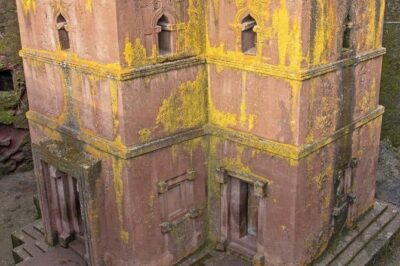
Tour 11 monolithic rock churches & museum in Lalibela & cave church with mummies
Read our review →
Ethiopia Tigray Tours: Guided tour of Tigray rock hewn churches
Read our review →
5 DAYS Lalibela, Axum, Tigray churches and Danakil
Read our review →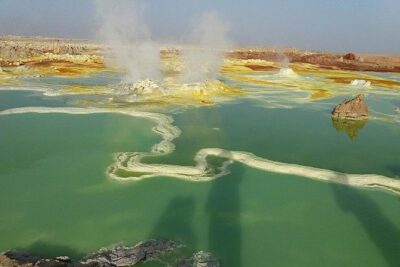
6 Days tour Package (Simien Mountains, Lalibela, and Danakil Depression)
Read our review →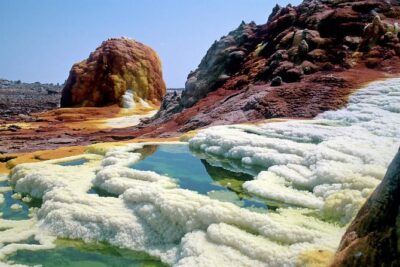
Browse the lists this tour appears in