
Reviewed · SIMIEN MOUNTAINS TREKKING
4 Days Trekking to Simien Mountain National Park
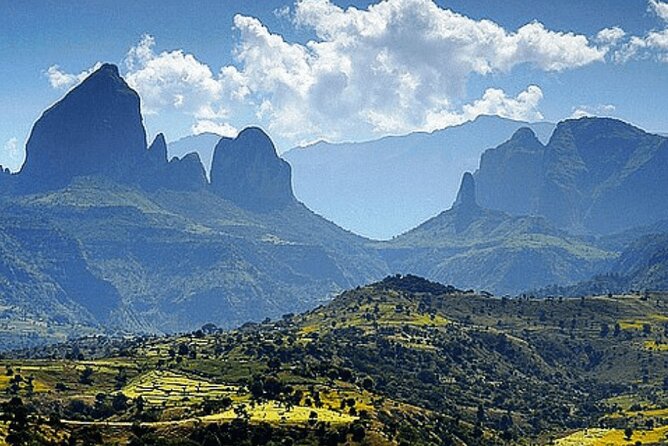
The cliffs are the main event. This four-day trek from Gondar takes you into Ethiopia’s Simien Mountains, where high plateaus break into sheer ravines, giant lobelias fill the uplands, and gelada baboons graze beside the trail. I like the blend of big mountain views and everyday village life, especially the coffee ceremony near Gich. I also like the small group size, capped at eight people.
The main caution is altitude. You reach 4,070 meters on the third day and climb Buwahit at 4,430 meters on the fourth. The trek is rated for people with moderate fitness, but the altitude can make a manageable trail feel much harder. Guide Jon, named in past feedback, and owner Solomon received strong praise for being helpful, punctual, flexible, and professional.
In This Review
- What makes this trek special
- Why the Simien Mountains deserve four days
- Day 1: Gondar to Debark and the first escarpment walk
- Day 2: Jinbar Waterfall, Gich Abyss, and a village coffee
- Day 3: Giant lobelias, Imet-Gogo, and the 4,070-meter summit
- Day 4: Buwahit at 4,430 meters and the return to Gondar
- The physical challenge: moderate fitness is only the starting point
- Guides, scouts, and the value of a small group
- What $275 buys you in practical terms
- Timing, pickup, and booking details
- Who should book this Simien Mountains trek?
- Should you book it?
- FAQ
- Where does the Simien Mountains trek begin?
- What time does the tour start?
- How long does the experience last?
- How far is Debark from Gondar?
- Is a park permit included?
- What is the highest point reached on the trek?
- Can you see Ras Dejen?
- What wildlife might you see?
- Is the trek suitable for children?
- How many people can join the group?
- What happens if the weather is poor?
- What is the cancellation policy?
What makes this trek special
- A 500-meter waterfall: The Jinbar River drops dramatically into the abyss near Gich Abyss.
- Gelada baboons at close range: These Ethiopian highland primates are a highlight of the first day.
- Village coffee near Gich: The route includes time in a local hut and a look at farm life.
- Three major high points: Imet-Gogo reaches 3,926 meters, another summit reaches 4,070 meters, and Buwahit rises to 4,430 meters.
- A chance to see Walia ibex: This rare Ethiopian goat is especially associated with the Simien Mountains.
- A compact group: The maximum group size is eight, useful on narrow paths and during long drives.
Why the Simien Mountains deserve four days
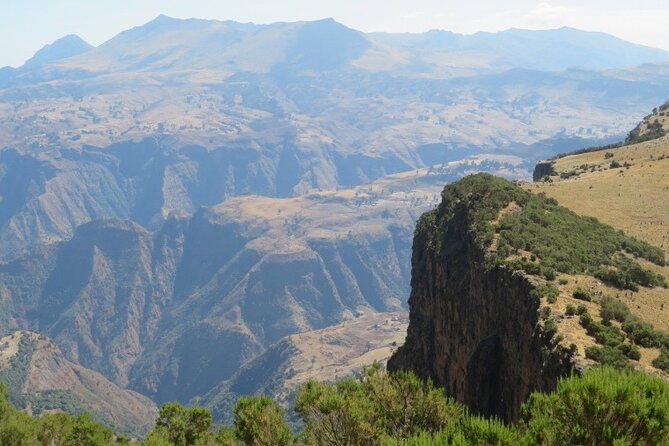
The Simien range is one of Africa’s great high mountain areas. At least a dozen peaks rise above 4,000 meters, including Ras Dejen, Ethiopia’s highest mountain at 4,543 meters and the fourth-highest peak in Africa.
The area became a national park in 1966, and the range received UNESCO World Heritage status in 1978. Those labels matter here because the protected area brings together scenery, wildlife, unusual plants, farmland, and old footpaths in one compact trip.
I like this trek because it is not only a summit outing. You move along escarpments, through cultivated fields, beside deep ravines, and past villages. The scenery changes with every section of trail. One hour you are looking across broad foothills, and the next you are standing above a near-vertical drop.
The route also suits people who enjoy natural history. Gelada baboons, Walia ibex, endemic plants, and abundant bird life are all part of the appeal. Sightings are never guaranteed, but the park gives you a real chance to see animals in their highland habitat rather than in a zoo or roadside enclosure.
More Hiking Tours in Gonder
- 2 Days Simien Mountains Trekking
★ 5.0 · 6 reviews - Simien Mountains National Park – 7 Day Trek
★ 5.0 · 5 reviews - Day trek to Simien Mountain
★ 5.0 · 5 reviews
Day 1: Gondar to Debark and the first escarpment walk
Your morning begins at 8:00 am with pickup from Gondar Airport or your hotel. The drive to Debark covers about 100 kilometers on a good paved road and takes roughly two hours.
Debark is the administrative gateway to Simien Mountains National Park. Here, the team arranges your park permits and picks up the required scout. That formal step can take some time, so do not expect to be hiking the moment you leave Gondar.
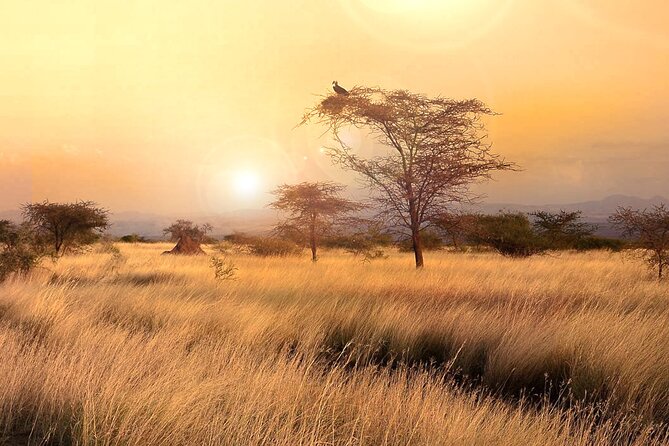
After Debark, you continue by vehicle for about another hour before beginning the first walk. This opening hike is described as easy and follows the northern edge of the escarpment. It is a useful introduction rather than a hard test, with views toward the foothills and plains of northern Ethiopia.
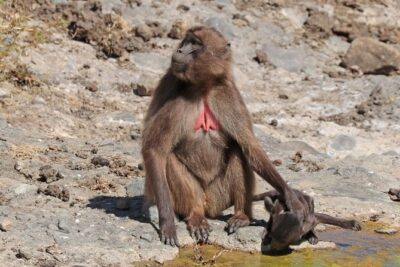
The first day also offers one of the trip’s most memorable wildlife possibilities: gelada baboons. These animals are found in the Ethiopian highlands and may be seen along the trail. Their presence gives the first walk more character than a simple viewpoint stop.
You spend the night at Sankaber. Since the day includes a two-hour drive from Gondar, park formalities, another hour by vehicle, and a walk, the schedule is active even if the hike itself is easy. I would treat this day as a chance to get your bearings, not as a warm-up to ignore.
Day 2: Jinbar Waterfall, Gich Abyss, and a village coffee
The second day follows the northern escarpment eastward from Sankaber. The trail drops into the Kaba Valley, then climbs again before reaching Gich Abyss.
This up-and-down pattern is typical of the route. The distance may look reasonable on paper, but repeated climbs at altitude require patience. You will want to keep a steady pace and save energy for the later sections.
At Gich Abyss, the trail reaches a narrow ridge and a cliff with broad views toward the Simien foothills. The main feature is the Jinbar River, which plunges about 500 meters into the abyss. This is one of the trip’s strongest viewpoints, though anyone uneasy around exposed edges should stay well back from the rim.
After roughly two hours, lunch is taken near the Jinbar River. The route then passes through barley fields on the way to Gich village. This transition is important. The Simien Mountains are not empty wilderness, and the walk shows how local farming fits into the high plateau.
Near the village, you can take part in a traditional coffee ceremony inside one of the huts. This is the kind of stop that gives the trek a human scale. You are not simply moving from one scenic point to another. You get a glimpse of local farm life and time to slow down before the short walk to Gich Camp.
The day is listed as taking about one day, with the hiking portion described as roughly two hours before lunch and additional walking afterward. The exact walking time can vary with pace and conditions. If you prefer a trip with long, steady days on foot, this is likely satisfying. If you want a relaxed sightseeing schedule, the elevation and terrain may feel demanding.
Day 3: Giant lobelias, Imet-Gogo, and the 4,070-meter summit
Day three is the scenic heart of the trek. From Gich Camp, you walk through fields of giant lobelia before reaching Imet-Gogo at 3,926 meters.
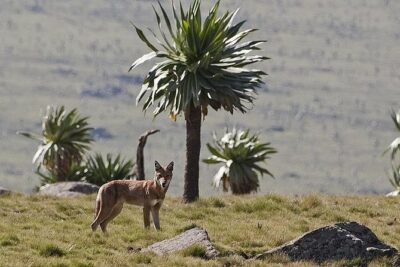
Giant lobelia is one of the Simien’s striking high-altitude plants. Its tall form gives the open plateau a distinctive look, and walking among these plants helps explain why the park attracts people interested in botany as well as hiking.
Imet-Gogo offers wide views over the mountain valleys. You also see unusual dome-shaped formations in the distance, which are part of the area’s volcanic character. The route then descends into the Jinbahir River Valley, giving you a different view back toward Imet-Gogo.
This change in angle is one of the best features of the itinerary. From above, the mountains appear as broad plateaus and dramatic cliffs. From the valley, the same formations look broken and massive, as if large sections have been removed. I like that the trek gives you both perspectives instead of stopping at one lookout.
The trail then follows the escarpment, which becomes completely vertical for several hundred meters. This is spectacular, but it is also where you need to pay attention. The route may be well established, yet the exposure can be uncomfortable for anyone who dislikes heights.
The day includes a climb to a summit at 4,070 meters. That is high enough for altitude to become the main issue, even for a fit person. The listing specifies an age range of 12 to 70 and calls for moderate physical fitness. Those limits do not remove the need for personal judgment. Your comfort at altitude matters more than simply meeting the age requirement.
Day three is likely the most tiring day because it combines a high starting point, a descent, a steep escarpment section, and another climb. The reward is a succession of views rather than one isolated summit.
More Simien Mountains Trekking in Gonder
- 6 Days tour Package (Simien Mountains, Lalibela, and Danakil Depression)
★ 5.0 · 32 reviews - Simien Mountains – 4 Days
★ 4.0 · 7 reviews - 2 Nights 3 Days Trek to Semien Mountain
★ 5.0 · 4 reviews - 3 Days Simien Mountains Trekking
★ 5.0 · 3 reviews
Day 4: Buwahit at 4,430 meters and the return to Gondar
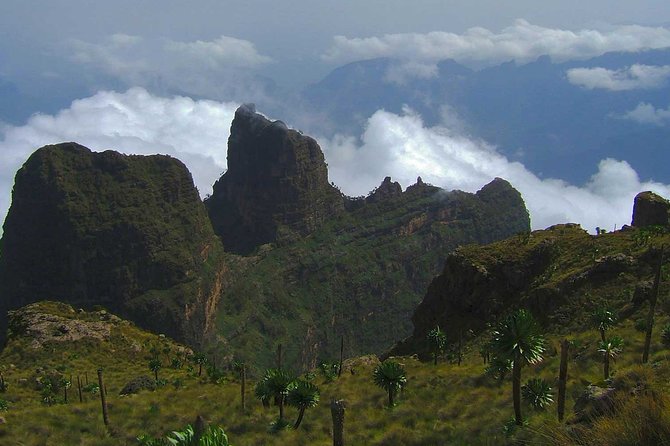
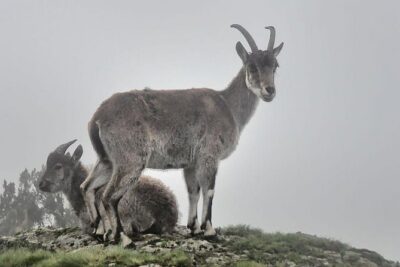
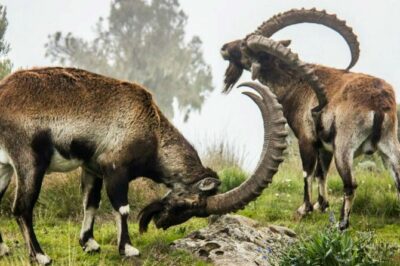
The final day begins with a climb of Buwahit, listed at 4,430 meters. It is described as the second-highest peak in the Simien Mountains and provides a chance to see Walia ibex, one of Ethiopia’s endemic wild animals.
The Walia ibex is part of the goat family and is particularly associated with the Simien Mountains. As with all wildlife sightings, there is no promise that one will appear at the right moment, but this is one of the strongest reasons nature lovers may choose this route.
From Buwahit, you may also see Ras Dejen, Ethiopia’s highest peak at 4,543 meters. The difference between Buwahit and Ras Dejen is small enough to make the comparison especially meaningful. You are not just looking at a distant famous summit. You are already moving through the same high mountain system.
After the climb, you return to Chenek Camp, where the vehicle is waiting. The drive back to Gondar takes about four hours. That return is a long finish after a high-altitude walk, so I would not plan an important evening flight or tightly timed connection unless you have plenty of extra time.
The final drive also changes the rhythm of the experience. For three days, your attention is on footpaths and viewpoints. Then the vehicle carries you back toward Gondar, giving you time to process the scale of the range and the effort involved.
The physical challenge: moderate fitness is only the starting point
This is not presented as an extreme mountaineering trip. It is a trekking route with established trails, and the company describes it as suitable for people with moderate physical fitness.
Still, altitude is the key factor. You reach nearly 4,000 meters on Imet-Gogo, climb to 4,070 meters on day three, and finish at 4,430 meters on Buwahit. Even ordinary uphill walking can feel slow at those heights.
I would choose this trip if you are comfortable walking for several hours over uneven ground and handling repeated climbs. You should also be ready for exposed escarpment sections and a full day of movement before the four-hour drive back to Gondar.
The stated age range is 12 to 70. That is a broad range, so the number alone should not decide for you. Fitness, prior experience with high-altitude walking, and your response to the first days matter more.
Guides, scouts, and the value of a small group
A park scout joins the group after the permits are arranged in Debark. That is an important part of moving through a national park and adds local support on the route.
The group is limited to eight people. I see this as a real advantage. A small group is easier to manage on narrow ridges, quicker at viewpoints, and less disruptive around wildlife. It also gives you more room to ask questions and request a sensible adjustment if conditions or energy levels change.
Past feedback gives special credit to Solomon and guide Jon. Solomon was described as kind and helpful, while Jon was praised for making a strong effort to meet the group’s needs. The operation was also praised for being reliable, punctual, and professional.
One useful detail is the reported flexibility with itinerary changes. Flexibility is valuable on a high-altitude trek, but it should not be confused with unlimited freedom. The route still depends on weather, park rules, vehicle timing, and the group’s condition.
What $275 buys you in practical terms
At $275 per person, the trip offers four days of guiding, park access arrangements, a scout, transport from Gondar, accommodation at the named camps and stop points, and the return drive to Gondar. The exact inclusions beyond those stated details should be confirmed before booking, especially meals and camping equipment.
The value is strongest if you want one organized package rather than arranging permits, transport, a scout, and a route on your own. The drive from Gondar to Debark and the return from Chenek involve long road sections, so having transport arranged removes a major planning burden.
The maximum of eight people also helps the price feel reasonable. A private trip may cost more, but this is not a large coach excursion. You are paying for access to a remote mountain area, route management, and transport between widely separated points.
The main value question is your interest in hiking. If you mainly want a quick view of the Simien Mountains, a shorter visit may be enough. If you want wildlife, village contact, high summits, and several days on foot, four days gives the range time to unfold.
Timing, pickup, and booking details
Pickup is offered from Gondar Airport or a hotel, with an 8:00 am start. The activity ends back at the meeting point in Gondar.
Confirmation is sent within 48 hours of booking, subject to availability. The activity has a maximum of eight people and requires a minimum number of participants. It also depends on suitable weather.
You can cancel for a full refund if you do so at least 24 hours before the start time. Cancellations or changes made within 24 hours are not refunded or accepted. If poor weather or an unmet minimum causes the company to cancel, you are offered another date or experience, or a full refund.
The activity has a mobile ticket and is near public transportation, though the main pickup is arranged from Gondar Airport or your hotel. Those details make the trip fairly simple to fit into a Gondar visit, provided you leave enough space after the trek for the return drive and any onward plans.
Who should book this Simien Mountains trek?
I would recommend it to you if you want a serious introduction to Ethiopia’s highlands without arranging every part yourself. It suits hikers who care about scenery and wildlife but also want contact with local life, especially the Gich coffee ceremony and the walk through barley fields.
It is also a good match for natural history enthusiasts. The combination of gelada baboons, possible Walia ibex, giant lobelias, endemic bird life, and volcanic formations gives the route more variety than a standard peak walk.
I would think twice if you dislike heights, struggle with long uphill walks, or have no interest in spending four days in a remote mountain setting. The route is described as moderate, but the altitude makes it more demanding than the label may suggest.
Should you book it?
Book this trek if you want the Simien Mountains as an active, four-day experience rather than a scenic drive-by. The strongest reasons are the 500-meter Jinbar waterfall, gelada sightings, the Gich village coffee stop, the high viewpoints around Imet-Gogo, and the chance to see Walia ibex near Buwahit.
The sensible way to decide is to focus on altitude. If you can handle the climbs and exposed ridges, $275 offers good value for a small, organized trip with transport, park arrangements, and local support. If your fitness is uncertain, ask about the exact daily walking distances and inclusions before paying.
FAQ
Where does the Simien Mountains trek begin?
The trek begins in Gondar, Ethiopia. Pickup is offered from Gondar Airport or your hotel.
What time does the tour start?
The scheduled start time is 8:00 am.
How long does the experience last?
The experience lasts approximately four days and ends back at the meeting point in Gondar.
How far is Debark from Gondar?
Debark is about 100 kilometers from Gondar. The drive takes roughly two hours on a good paved road.
Is a park permit included?
Park permits are arranged at the park headquarters in Debark. The itinerary states that admission is included for at least one Simien Mountains National Park stop.
What is the highest point reached on the trek?
The fourth day includes a climb of Buwahit, listed at 4,430 meters. The route also includes a summit at 4,070 meters on day three.
Can you see Ras Dejen?
The fourth day provides a chance to see Ras Dejen, Ethiopia’s highest mountain at 4,543 meters.
What wildlife might you see?
The route includes a chance to see gelada baboons on the first day and Walia ibex near Buwahit. The trip also highlights the park’s bird life and unusual plants.
Is the trek suitable for children?
The stated age range is 12 to 70. Participants should also have a moderate level of physical fitness.
How many people can join the group?
The activity has a maximum of eight participants.
What happens if the weather is poor?
If the experience is canceled because of poor weather, you are offered a different date or a full refund.
What is the cancellation policy?
You can receive a full refund by canceling at least 24 hours before the start time. Cancellations or changes made less than 24 hours before the start are not accepted, and the amount paid is not refunded.
New on the Gonder list
- Gondar city Tour With Airport & Hotel Pick Up★ 5.0 · 3 reviews
- 2 Nights 3 Days Trek to Semien Mountain★ 5.0 · 4 reviews
- Day trek to Simeien Mountains★ 5.0 · 3 reviews
- 3 Days Simien Mountains Trekking★ 5.0 · 3 reviews
- Simien Mountains One Day Trip:Wildlife Spotting,Hiking Tour★ 5.0 · 2 reviews
- Simien Mountains – 4 Days★ 4.0 · 7 reviews
- 2 Days Simien Mountains Trekking★ 5.0 · 6 reviews
- Day trek to Simien Mountain★ 5.0 · 5 reviews
Simien Mountains Trekking, compared.
12 Days SIMIEN MOUNTAIN-LALIBELA-DANAKIL-TIGRAY CHURCHES
Read our review →
6 Days tour Package (Simien Mountains, Lalibela, and Danakil Depression)
Read our review →Danakil Depression, Lalibela, Omo Valley and Simien Mountains
Read our review →
5-Day Northern Ethiopia Tour : 3D Simien Mountains Trek & Axum.
Read our review →
Browse the lists this tour appears in