
Reviewed · HISTORIC ROUTE TOURS
Gondar city Tour With Airport & Hotel Pick Up
Castles and painted churches make Gondar unforgettable. This seven-and-a-half-hour tour gives you a useful first look at Ethiopia’s former imperial capital, combining the Royal Enclosure at Fasil Ghebbi, Fasilides Bath, Debre Birhan Selassie Church, and the former Jewish village of Wolleka. I especially like the airport and hotel pickup and the way the route joins major sights with very different stories. I also like that the group is limited to 10 people, which should make questions and timing easier.
The main drawback is the packed schedule. Fasil Ghebbi and Debre Birhan Selassie each receive about two hours, while Wolleka also takes two hours, so you will see a lot without having unlimited time at any one place. The $90 price is fair if you value private transport, a guide, admissions, and airport coordination, but you may want a slower visit if you prefer long, unhurried stops.
In This Review
- Key points to know before booking
- Why Gondar deserves a full day
- Entering Fasil Ghebbi, Gondar’s royal enclosure
- Fasilides Bath and the Timkat connection
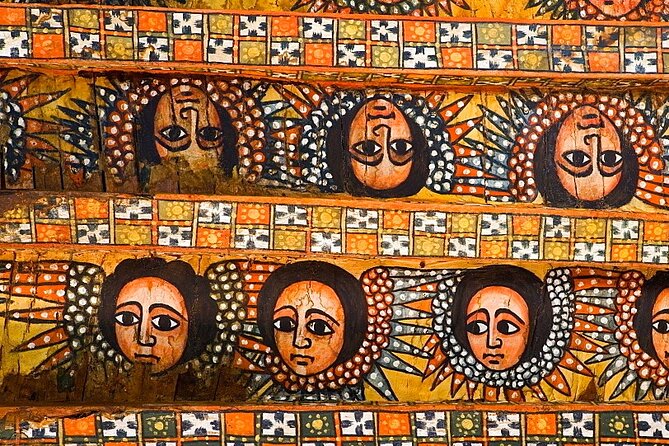
- The painted ceiling of Debre Birhan Selassie
- Wolleka and the memory of Ethiopian Jewish life
- What the guide and vehicle add to the day
- Is $90 a fair price for seven and a half hours?
- Timing, pickup, and cancellation details
- Who will get the most from this Gondar tour?
- Should you book it?
- FAQ
- Where does the tour start?
- What time does the tour begin?
- How long does the tour last?
- Is airport pickup available?
- Where does the tour end?
- What is included in the price?
- How many people can join the tour?
- What attractions are visited?
- Can I cancel for a full refund?
Key points to know before booking
- Fasil Ghebbi is the main event: Allow plenty of attention for the castles, churches, walls, and mixed architectural influences inside the old royal compound.
- Fasilides Bath adds a different mood: Ancient trees, brick walls, a central tower, and a bridge make this more than a quick photo stop.
- Debre Birhan Selassie is famous for its ceiling: The church is especially important for its painted interior and the protective towers around it.
- Wolleka adds difficult history: The former Ethiopian Jewish village offers craft stalls, old houses, and a small synagogue, but persistent sales pitches can affect the visit.
- Airport pickup is useful: The operator arranged an airport meeting for one customer, a practical help if you are arriving in Gondar without local transport.
- Mickey helped coordinate the visit: One detailed account praised Mickey for connecting the customer with good local guides and keeping the day organized.
Why Gondar deserves a full day
Gondar was founded by Emperor Fasilides in the 1630s and served as the royal capital of Ethiopia for roughly 250 years. It was a period when architecture, painting, music, education, literature, and commerce gained new force after centuries of decline following ancient Aksum.
That background gives this tour its shape. You are not simply moving between old buildings. You are following the story of an imperial city that brought together Ethiopian traditions with outside influences, including Hindu, Arab, and later European Baroque elements.
I like Gondar because the major sights feel connected. The Royal Enclosure shows imperial power. Fasilides Bath reveals ceremonial and religious life. Debre Birhan Selassie shows the importance of painting and worship. Wolleka brings you face to face with a smaller community’s difficult past.
The tour begins at 9:00 a.m. from Central Hotel in Gondar and ends back at the meeting point. Pickup is offered, including airport pickup, and an air-conditioned vehicle is included. That matters in a city tour lasting about 7 hours and 30 minutes, especially when you want to save energy for the sites rather than spend the day arranging taxis.
More Historic Route Tours in Gonder:
- 5 DAYS Lalibela, Axum, Tigray churches and Danakil
★ 5.0 · 34 reviews - Lalibela, Axum, Danakil and Omo Valley 8 DAYS
★ 5.0 · 29 reviews - 5 Days North Ethiopia Tours
★ 5.0 · 23 reviews
Entering Fasil Ghebbi, Gondar’s royal enclosure
Fasil Ghebbi is the centerpiece of the day. In the 16th and 17th centuries, this fortified city served as the residence of Emperor Fasilides and later rulers. Its walls run for about 900 meters, enclosing palaces, churches, monasteries, and public buildings across roughly 70,000 square meters.
The scale helps explain why the stop lasts about two and a half hours. You are not looking at one isolated castle. You are walking through a former imperial compound, where royal residences, religious buildings, and ceremonial spaces occupied the same enclosed city.
Look closely at the architecture. Ethiopian building traditions mix here with Hindu and Arab influences, followed by Baroque features introduced by Jesuit missionaries. The result is unusual. You may see heavy stonework beside more decorative details, with the whole compound carrying the feel of a fortified royal center rather than a single palace.
Dawit’s Hall is in the northern part of the enclosure. The compound also once connected to Adababay, the marketplace to the south. Imperial proclamations were made there, troops were presented, and public punishments took place. It is now a city park, but its former role gives the surrounding area a sharper sense of how power worked in Gondar.
I would give Fasil Ghebbi your freshest attention. The grounds contain enough architectural detail that a rushed walk can turn the visit into a blur of stone walls and palace rooms. Your guide is important here because the buildings do not always explain their own purpose clearly.
The admission fee is included, which makes the $90 cost easier to assess. You are paying not only for entry, but also for transport, a Blue Badge guide, government taxes, and airport or departure tax. For someone arriving in Gondar for a short stay, that bundle has practical value.
Fasilides Bath and the Timkat connection
The next stop lasts about one hour and is listed as Ethio Wonder Tours, but the attraction described is Fasilides Bath. The structure is generally linked either to Emperor Fasilides or to his son Iyasu I, although its original commissioner is not known with certainty.
The compound has a bath, a central tower, and a bridge used when the pool is full. Ancient badian trees have sent thick roots through the old brickwork. That combination of water, masonry, and roots gives the site a quieter feel than the Royal Enclosure.
Fasilides Bath has an important role in Ethiopian Orthodox Christian life. Each year on January 19, the bath is filled for Timkat, the Ethiopian celebration of Epiphany. The ceremony recalls the baptism of Jesus in the River Jordan, and the filled pool becomes part of the public celebration.
If your visit does not fall around Timkat, you will see the structure without the festival crowds and ceremonies. That makes it easier to study the construction, but you will not see the bath in its full ritual use. Your guide can help connect the empty pool to its annual purpose.
I like this stop because it prevents the day from becoming a series of palaces. It adds an important religious and ceremonial layer to Gondar’s story. Still, the visit is shorter than the two major stops, so expect a compact look rather than an extended historical session.
The painted ceiling of Debre Birhan Selassie
Debre Birhan Selassie Church is one of Gondar’s best-known places of worship. Its name means Trinity and Mountain of Light. The church is surrounded by 12 rounded stone towers representing the 12 apostles, with a taller 13th tower representing the Lion of Judah.
Look for the Lion of Judah imprint near the top of the tallest tower. It is an easy detail to miss if you are focused only on the church itself, so this is a good place to slow down and follow the guide’s explanation.
The present building was redeveloped in the 1880s after the earlier church was destroyed by a raid from Sudanese Dervishes and a lightning strike. Its story is a reminder that even famous monuments can be survivors rather than untouched originals.
Inside, the painted decoration is the main reason to visit. The church is known for its paintings, and the ceiling is a major visual feature. The artwork gives you a strong sense of Ethiopian religious art in a way that a palace cannot.
The stop lasts about two hours and includes admission. That is a generous amount of time, though the actual pace will depend on how long you spend studying the paintings and how much explanation your guide provides.
Please treat this as an active place of worship, not only a museum. Dress and behavior should be respectful. The supplied details do not specify a dress code, so ask your guide if you are unsure about local expectations.
Other ways to see Gonder itself:
- Addis Ababa Guided City Tour With Airport & Hotel Pick Up
★ 5.0 · 237 reviews - Full-Day Private City Tour of Addis Ababa
★ 5.0 · 147 reviews - Addis Ababa Authentic Private City Tour
★ 5.0 · 134 reviews - Authentic Addis Ababa City Tour with a Local Guide
★ 4.9 · 109 reviews
Wolleka and the memory of Ethiopian Jewish life
Wolleka, also called the Falasha Village, changes the subject again. The area was once home to a thriving Ethiopian Jewish community. Most residents were airlifted to Israel in the 1980s, and no Jewish population remains there today.
You may see craft stalls marked with Stars of David and Falasha Village signs. A few original houses have artwork on their fronts, and a small synagogue can be viewed for Birr 10. The village is therefore both a historic place and a modern craft stop.
The history is painful. After Christianity became the state religion, Falashas had their land confiscated because they refused to convert. Many survived by becoming skilled craftspeople. Research suggests they may have provided labor for the construction and decoration of Gondar’s royal buildings and churches.
That connection makes Wolleka more than a shopping stop. It helps you consider who built and decorated the imperial city, and how minority communities lived under changing religious and political rules.
The practical warning is important. Persistent sales children may surround you near the synagogue and craft stalls. You should prepare for direct selling and decide in advance how you want to handle purchases, photographs, and requests for money. The experience may feel less calm than the churches and castles.
Wolleka receives about two hours, which is a long period if you mainly want to see the synagogue and old houses. It makes more sense if you are interested in the community’s history and want time to examine the crafts. If shopping is not your priority, ask your guide how the time will be used.
What the guide and vehicle add to the day
The air-conditioned vehicle is one of the tour’s more useful features. You will move between several sites over a long morning and afternoon, and having arranged transport reduces the need to negotiate local rides between each stop.
The tour includes a Blue Badge guide. One detailed customer account praised the organization by Simien Mountain Trekking and Tours, noting that Mickey arranged contact with excellent local guides and sent someone to meet the customer at the airport. That airport handoff is a real advantage when your arrival time is close to the start of your sightseeing day.
The guide’s role matters most at Fasil Ghebbi and Wolleka. At the Royal Enclosure, a guide can separate the palaces, religious buildings, and ceremonial spaces into a clear story. At Wolleka, a guide can provide needed context rather than leaving you with only signs and sales stalls.
The group maximum is 10 people. That is small enough for a more personal feel without requiring the cost of a completely private tour. The data does not promise a private group, so expect to share the vehicle and guide if other bookings are present.
The published rating is 5 based on three reviews, so the praise is encouraging but the sample is small. The strongest positive theme is organization, especially the airport meeting and the connection with good local guides. I would treat that as a helpful sign, not a guarantee that every departure will feel identical.
Is $90 a fair price for seven and a half hours?
At $90 per person, this tour is not the cheapest way to walk around Gondar. But the price includes several items that can add up quickly: an air-conditioned vehicle, a guide, entrance fees listed in the program, government taxes, and airport or departure tax.
The value is strongest for a first-time visitor, someone arriving by air, or anyone with only one day in Gondar. You receive a full route through the city’s headline sights without having to organize separate transport or admissions.
The value is weaker if you already have a vehicle, a local guide, or several days in town. In that case, you may prefer to visit each site at your own speed and give more time to the places that interest you most.
Lunch is not listed as included. One customer account referred to having lunch during the day, but the provided tour details do not say that the meal is part of the price. Plan for lunch separately and confirm arrangements with the operator.
Timing, pickup, and cancellation details
The scheduled start is 9:00 a.m. at Central Hotel, ሴንትራል ሆቴል, in Gondar. Pickup is offered, and the experience can include airport pickup. The stated end point is back at the meeting point.
Confirmation is received at booking. Most people can participate, and the maximum group size is 10. The supplied information does not provide a detailed accessibility description, so you should ask the operator directly if mobility support is important to you.
Free cancellation is available up to 24 hours before the start time for a full refund. Cancellations or changes made within 24 hours are not accepted for a refund. The tour also requires a minimum number of participants, and if that minimum is not met, you will be offered another date or experience, or a full refund.
Who will get the most from this Gondar tour?
I would recommend this experience to you if you want a well-organized introduction to Gondar and do not want to piece together transport. It suits first-time visitors, short-stay visitors, and people arriving at the airport who want to start sightseeing with a local contact already arranged.
It is also a good fit if you care about more than royal buildings. The route includes imperial architecture, Ethiopian religious painting, the Timkat connection at Fasilides Bath, and the history of Ethiopian Jews at Wolleka.
You may want another approach if you prefer a slow museum-style visit. The schedule covers four substantial stops, and Wolleka can take longer than expected if you want to look at crafts and learn about the community. The tour gives you breadth, but not unlimited time for quiet study.
Should you book it?
Book this Gondar city tour if you want the city’s essential sights covered in one organized day, especially with airport or hotel pickup. The best reasons are the broad route, included admissions, air-conditioned vehicle, small maximum group, and the strong praise for Mickey’s coordination and airport assistance.
Think twice if you want to linger at every castle room, church painting, or historic house. For most first visits, though, $90 is a sensible price for a guided introduction to Gondar’s imperial and religious center, with the useful bonus of seeing Wolleka’s more complicated human story.
FAQ
Where does the tour start?
The tour starts at Central Hotel, ሴንትራል ሆቴል, in Gondar.
What time does the tour begin?
The scheduled start time is 9:00 a.m.
How long does the tour last?
The experience lasts approximately 7 hours and 30 minutes.
Is airport pickup available?
Yes. Pickup is offered, and airport pickup is included among the tour’s arrangements.
Where does the tour end?
The activity ends back at the meeting point.
What is included in the price?
The price includes an air-conditioned vehicle, airport or departure tax, a Blue Badge guide, entrance fees according to the program, and government taxes.
How many people can join the tour?
The maximum group size is 10 people.
What attractions are visited?
The route includes Fasil Ghebbi, Fasilides Bath, Debre Birhan Selassie Church, and Wolleka, also called Falasha Village.
Can I cancel for a full refund?
Yes. You can cancel at least 24 hours before the experience start time for a full refund. Cancellations or changes made within 24 hours are not refundable.
New on the Gonder list
- 2 Nights 3 Days Trek to Semien Mountain★ 5.0 · 4 reviews
- Day trek to Simeien Mountains★ 5.0 · 3 reviews
- 3 Days Simien Mountains Trekking★ 5.0 · 3 reviews
- Simien Mountains One Day Trip:Wildlife Spotting,Hiking Tour★ 5.0 · 2 reviews
- 2 Days Simien Mountains Trekking★ 5.0 · 6 reviews
- 4 Days Trekking to Simien Mountain National Park★ 5.0 · 7 reviews
- Day trek to Simien Mountain★ 5.0 · 5 reviews
- Simien Mountains National Park – 7 Day Trek★ 5.0 · 5 reviews
Historic Route Tours, compared.

5 DAYS Lalibela, Axum, Tigray churches and Danakil
Read our review →
Lalibela, Axum, Danakil and Omo Valley 8 DAYS
Read our review →
5 DAYS Axum, Lalibela, Tigray churches and Danakil
Read our review →
North Ethiopia Round Trip Tours From Addis Ababa
Read our review →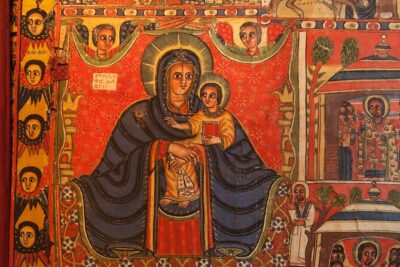
Historical tours – in five days, Addis Ababa, Axum, Laliebla and Gonder
Read our review →
5-Day Northern Ethiopia Tour : 3D Simien Mountains Trek & Axum.
Read our review →Browse the lists this tour appears in