
Reviewed · ROCK-HEWN CHURCH TOURS
Abuna Yemata Guh, Maryam and Daniel Korkor (if time allows)
The climb is only half the story. This demanding day trip from Mekele takes you into Tigray’s Gheralta massif, where ancient rock-hewn churches sit above the plains and the views stretch across some of Ethiopia’s most striking scenery. I love the sheer drama of Abuna Yemata Guh, reached by handholds and narrow ledges, and I like that the route may include both Maryam Korkor and Daniel Korkor if the day allows.
The main drawback is plain: this is not a gentle sightseeing outing. The approach to Abuna Yemata Guh includes a steep climb, exposed ledges, and a roughly 200-meter drop beside the final walk to the church. If heights trouble you, or if you are not comfortable using your hands and feet on rock, this trip may be too demanding.
The tour costs $180 per person and includes a professional English-speaking guide, transport by van to the starting point, and entrance fees to all three churches. Meals, drinks, and your hotel are not included, so you will need to plan for a long day away from Mekele.
In This Review
- Key points before you book
- Why this Tigray church trip is worth considering
- The drive from Mekele into Tigray
- Walking toward Abuna Yemata Guh
- The narrow ledge to Abuna Yemata Guh
- What makes Abuna Yemata Guh special
- Maryam Korkor and its 12 pillars
- Daniel Korkor, the quieter third stop
- Is $180 per person good value?
- What to pack for the climb
- Who should book this experience?
- Should you book the Abuna Yemata Guh tour?
- FAQ
- Where does the tour begin?
- How much does the experience cost?
- What does the price include?
- Are meals and drinks included?
- How difficult is the climb to Abuna Yemata Guh?
- Is the tour suitable for children?
- Can I take photographs inside the churches?
- Are Maryam Korkor and Daniel Korkor guaranteed stops?
Key points before you book
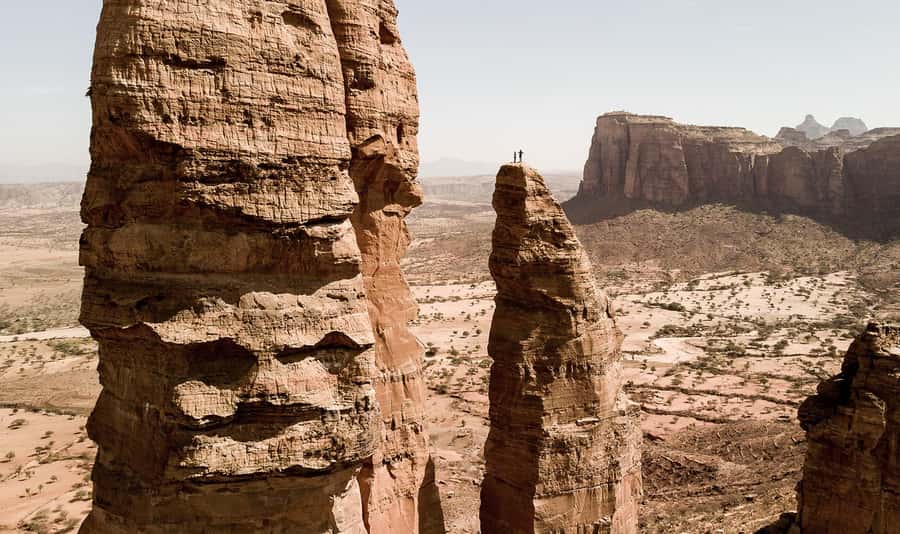
- Abuna Yemata Guh requires a serious climb: Expect about an hour of walking before a steep ascent with chipped footholds and handholds in the sandstone.
- The final approach is exposed: You walk along a ledge about one meter wide, with a drop of roughly 200 meters on one side.
- Maryam Korkor offers the finest architecture: Its high ceiling and 12 free-standing pillars make it a remarkable place to see.
- Daniel Korkor adds variety: This smaller-known church gives the day a second viewpoint and a different feel from Abuna Yemata Guh.
- The trip works best for active visitors: Comfortable shoes, water, sun protection, and a steady head are essential.
- The schedule can change: Maryam Korkor and Daniel Korkor are visited if time allows, so Abuna Yemata Guh remains the main focus.
Why this Tigray church trip is worth considering
The churches of Tigray are not easy roadside stops. They are carved into cliffs and reached by foot, which is part of their appeal and part of the cost in physical effort. You do not simply arrive, take a photograph, and return to the van. You walk into a setting where the rock itself forms the walls, floors, and approach.
I especially like the contrast between the three churches. Abuna Yemata Guh is the dramatic one, perched high above the ground and reached by a route that demands attention. Maryam Korkor is the architectural showpiece, with a vast interior supported by 12 pillars. Daniel Korkor provides a quieter third stop if the timing works.
The tour also gives you a practical way to visit these sites from Mekele without arranging separate transport, entrance fees, and local guiding. That matters here. The difficult part is not just getting to the region, but knowing where to walk and how to approach the churches safely.
The most useful praise for the experience centers on two things: the guides are kind and well-informed, and the view from Abuna Yemata Guh rewards the effort. That matches the nature of the outing. A good guide matters when the route involves exposed rock, narrow ledges, and a church entrance hidden behind a small cave.
More Rock-Hewn Church Tours in Mekele:
- Two Days Tigray Churches Trip
★ 5.0 · 10 reviews - Day trip to Tigray Churches
★ 5.0 · 2 reviews - 12 Days SIMIEN MOUNTAIN-LALIBELA-DANAKIL-TIGRAY CHURCHES
★ 5.0 · 45 reviews
The drive from Mekele into Tigray
Your day begins with transport by van from Mekele toward the starting point for the church visits. The drive is part of the experience, not dead time. You get changing views of the Tigray region before leaving the vehicle and continuing on foot.
The supplied details do not give a fixed departure time, exact driving distance, or group size. That means you should confirm those points before booking if timing matters to you. The trip is described as a full day, and the plan needs enough daylight and energy for the climb to Abuna Yemata Guh.
Because lunch and drinks are not included, carry water and ask about food arrangements before setting out. The information specifically recommends water, and I would treat that as essential rather than optional. The combination of sun, walking, and climbing can make a long day feel longer.
A hat and sunscreen are also useful. You will spend time outside on exposed rock, and the route does not sound like one where shade is always available. Comfortable walking shoes are required. Sandals or smooth-soled footwear would be a poor match for the ascent.
Walking toward Abuna Yemata Guh
The approach starts with about an hour of walking before the steep ascent begins. This first section is important because it gives you time to settle into the pace and understand what lies ahead. It is not yet the hardest part, but it adds to the total physical demand.
As you reach the Gheralta massif, the route changes from a walk into a climb. Footholds and handholds have been chipped into the sandstone by the passage of many hands and feet. You use your arms and legs together, paying attention to each movement rather than rushing upward.
This is where the trip separates active hikers from casual sightseers. You need to be comfortable with a route that is uneven, steep, and exposed. The climb is specifically unsuitable for children under eight, pregnant women, people with vertigo, and people afraid of heights.
The tour is not suitable for everyone, and that honesty is useful. Do not book it because the church looks attractive in photographs if the route itself will make you panic. A guide can help you understand the path, but a guide cannot remove the steep rock or the drop.
The narrow ledge to Abuna Yemata Guh
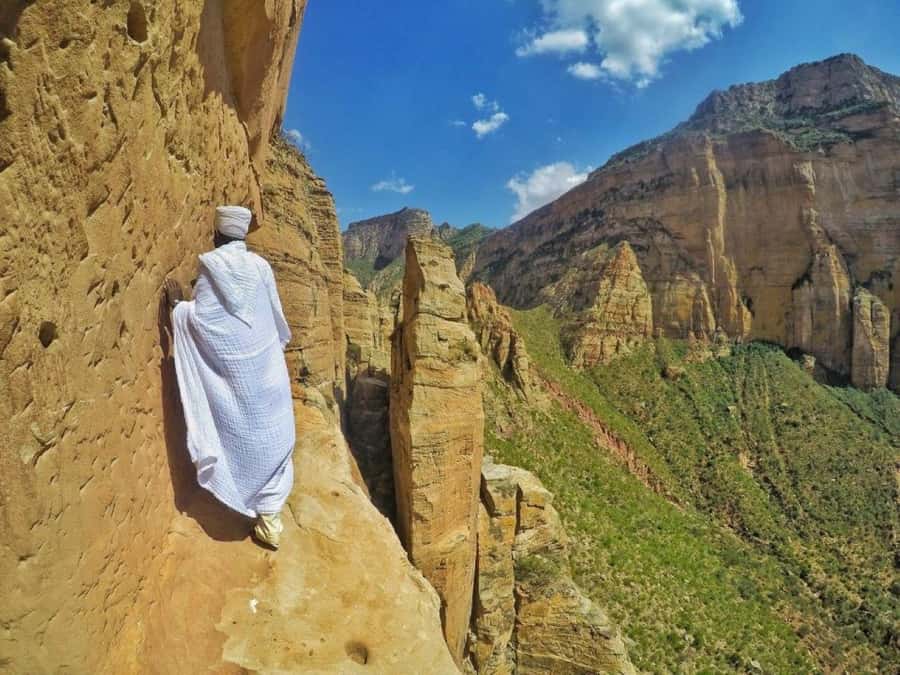
The final approach is the part you need to picture clearly before paying for the tour. The church is reached by walking along a ledge about one meter wide, with a drop of approximately 200 meters to the left. The description is not exaggerated for effect. This is an exposed passage.
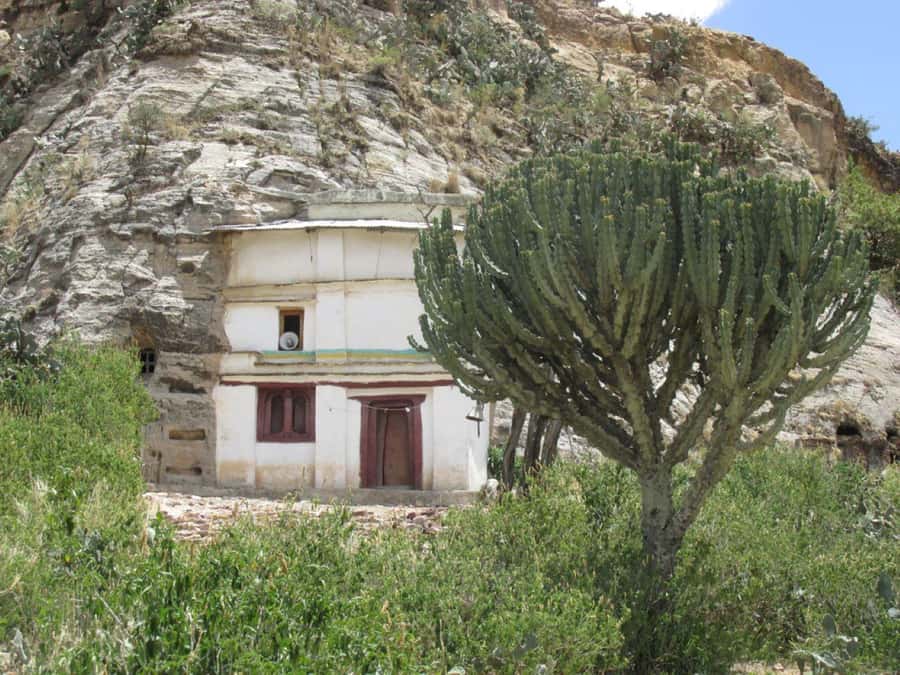
At the entrance, a small cave leads to a wooden door built into the rock. That detail gives the arrival a powerful sense of place. After the open climb and ledge, the doorway feels tucked into the mountain rather than placed on it.
The reward is not only the church itself. The high position gives you a breathtaking view over the surrounding area, and the effort makes the arrival feel earned. One of the strongest positive impressions of this outing is that the view is considered worth the climb.
Move slowly here. Keep your attention on your footing, listen to the guide, and avoid treating the approach as a quick photo stop. Photography is allowed inside the churches, but flash photography is not permitted. Bring a camera if you wish, but use it carefully and respectfully.
A different sort of day out, same part of Ethiopia:
- Danakil 3 days tour
★ 5.0 · 10 reviews - 3 days tour Danakil Depression (Dallol & Erta Ale)
★ 4.0 · 5 reviews - 2 Days Dallol Trip
★ 5.0 · 4 reviews - 2 days Tigray Church
★ 5.0 · 3 reviews
What makes Abuna Yemata Guh special
Abuna Yemata Guh is the emotional center of the day because of its position. The church is perched on the cliff edge, and simply reaching it becomes part of the visit. You are not looking at a monument from a flat courtyard. You are entering a place shaped into the rock above the ground.
The setting also explains why the visit takes time. A church reached by an exposed climb cannot be handled like a standard stop on a bus tour. The walking pace will depend on the group, the guide, and individual confidence on the rock.
I would allow yourself to enjoy the quiet moments rather than focusing only on reaching the door. Look back at the route when it is safe to do so. The rock, ledges, and open views are central to the experience, not just obstacles between the van and the church.
The church is the primary reason to book this trip. If time becomes limited, the two Korkor churches may not both fit, but Abuna Yemata Guh is the main target. That makes the schedule sensible, provided you understand that the optional stops are not guaranteed.
Maryam Korkor and its 12 pillars
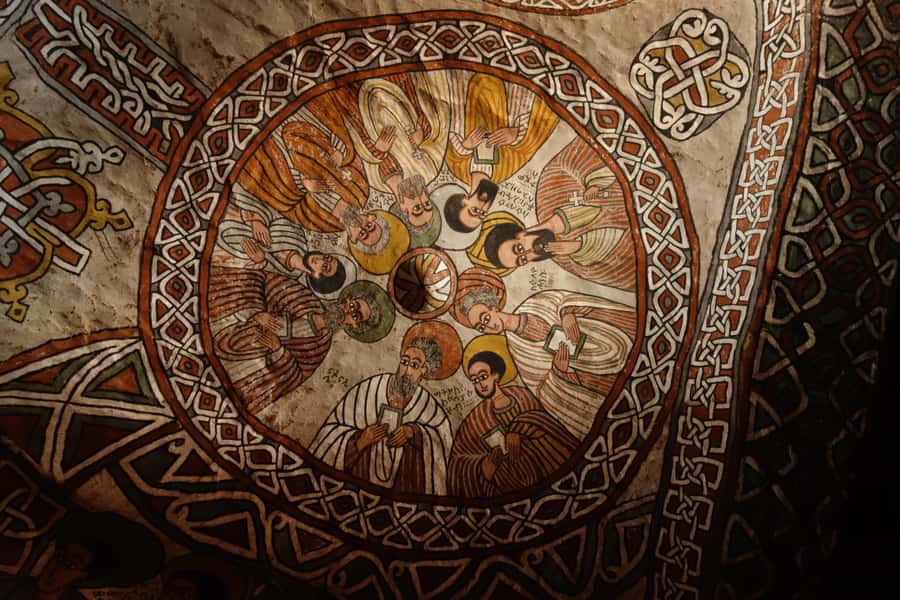
Maryam Korkor is described as the most impressive of the three churches from an architectural point of view. Its interior has a huge, high ceiling supported by 12 free-standing pillars. The scale raises an obvious question: how did the builder carve so high from the ground?
That question is part of the appeal. The church gives you a chance to study the craft rather than simply admire a dramatic viewpoint. The pillars create a strong interior rhythm, and the high ceiling makes the space feel far larger than you might expect from a church cut into a mountain.
The visit to Maryam Korkor depends on time. The tour is built around Abuna Yemata Guh, and the two Korkor churches are additional stops if the schedule allows. If seeing all three is especially important to you, ask the operator how often the full route is completed and how much time is normally available.
Maryam Korkor is also a good counterpoint to Abuna Yemata Guh. Abuna is about exposure, ascent, and the cliffside entrance. Maryam is about height inside the church and the skill needed to shape such an impressive chamber.
Daniel Korkor, the quieter third stop
Daniel Korkor is the third church on the possible route. The available details do not provide the same architectural description for Daniel Korkor as they do for Maryam Korkor, but it is presented as a distinctive stop and a valuable addition if time remains.
That difference is useful to remember. You should not expect three identical churches. The appeal of this route comes from seeing how each site occupies the mountain in its own way. Abuna Yemata Guh is the cliff-edge experience, Maryam Korkor is the architectural highlight, and Daniel Korkor adds another perspective on Tigray’s rock-hewn religious sites.
Because this stop is conditional, keep your expectations flexible. The day involves a demanding ascent and a full schedule, so the guide may need to balance walking time, church visits, and the return drive to Mekele.
Is $180 per person good value?
At $180 per person, this is not a budget day trip. The price makes more sense when you consider what is included: a professional guide, van transport to the trailhead, and entrance fees to all the churches. You are paying for access and coordination in a place where the route requires more planning than a normal urban excursion.
The guide is especially important here. A kind, well-informed guide can explain the churches, manage the pace, and help you understand the exposed sections before you tackle them. The strongest praise for the experience is directed at the guides, which is encouraging for a route where calm and clear direction matter.
You still need to pay for meals and drinks, and your hotel is not included. Bring water and make a food plan before leaving Mekele. The lack of included meals is not unusual for a full-day outdoor trip, but it affects the final cost and convenience.
I see the tour as good value for the right person: someone who wants the major Tigray church experience and prefers organized transport and guiding. It is less convincing for someone who mainly wants a relaxed day of sightseeing or who would not attempt the climb to Abuna Yemata Guh.
What to pack for the climb
Keep your packing simple. You need items that help with heat, walking, and photography without making the climb awkward.
- Comfortable shoes with secure footing
- Plenty of water
- A hat
- Sunscreen
- A camera
- Suitable clothing for a full day outdoors
Your shoes matter most. The route includes a steep ascent and footholds in sandstone, followed by narrow ledges. Choose comfort and grip over fashion.
Bring a camera, but remember that flash photography is not permitted inside the churches. You should also be ready to put the camera away on exposed sections so you can use both hands if needed.
Who should book this experience?
I would recommend this tour to fit adults and older children who are comfortable with steep walking, hands-on climbing, and heights. It suits visitors who care more about an unusual cultural and physical experience than an easy sightseeing day.
It is not appropriate for people with vertigo or a strong fear of heights. It is also not suitable for pregnant women or children under eight. Even if you meet none of those restrictions, consider your general comfort with a narrow ledge beside a 200-meter drop.
You do not need to be a technical climber based on the information provided, but you do need to be steady and willing to climb. The guide and the carved footholds help you follow the route, yet the physical challenge remains real.
The trip is also best for people who can accept a flexible schedule. Maryam Korkor and Daniel Korkor are included only if time allows, while Abuna Yemata Guh is the fixed priority.
Should you book the Abuna Yemata Guh tour?
Book it if reaching a cliffside church is the main reason you want to visit Tigray. The views, the rock-cut route, the cave entrance, and the unusual architecture offer far more than a standard church visit. The $180 price is reasonable for a guided, transported day, as long as you budget separately for food and drinks.
Skip it if you want an easy outing, dislike exposed heights, or need a guaranteed visit to all three churches. The itinerary is demanding, and the two Korkor stops depend on available time.
For the right visitor, this is a memorable day built around effort and reward. Abuna Yemata Guh is the priority, Maryam Korkor adds the strongest architectural moment, and Daniel Korkor rounds out the route when the schedule permits.
FAQ
Where does the tour begin?
The tour begins in Mekele and uses a van to reach the starting point for the church visits.
How much does the experience cost?
The price is $180 per person.
What does the price include?
The price includes a professional English-speaking guide, transportation by van to the starting point, and entrance fees to all the churches.
Are meals and drinks included?
No. Meals and drinks are not included, so you should bring water and plan for food during the day.
How difficult is the climb to Abuna Yemata Guh?
You walk for about an hour before beginning a steep ascent. The climb uses footholds and handholds chipped into the sandstone, followed by narrow ledges with significant drops.
Is the tour suitable for children?
It is not suitable for children under eight years old.
Can I take photographs inside the churches?
Yes, photography is allowed, but flash photography is not permitted inside the churches.
Are Maryam Korkor and Daniel Korkor guaranteed stops?
No. The tour focuses mainly on Abuna Yemata Guh, while Maryam Korkor and Daniel Korkor are visited if time allows.
New on the Mekele list
- Tigray Mountain Church’s Day Trip from Mekele★ 5.0 · 2 reviews
- Mekele City Tour★ 5.0 · 2 reviews
- Day trip to Tigray Churches★ 5.0 · 2 reviews
- 2 days Tigray Church★ 5.0 · 3 reviews
- 3 Day Tour of Geralta Churches Tigray Church’s★ 5.0 · 2 reviews
- 3 days tour Danakil Depression (Dallol & Erta Ale)★ 4.0 · 5 reviews
- 2 Days Dallol Trip★ 5.0 · 4 reviews
- Danakil 3 days tour★ 5.0 · 10 reviews
Rock-Hewn Church Tours, compared.
12 Days SIMIEN MOUNTAIN-LALIBELA-DANAKIL-TIGRAY CHURCHES
Read our review →
Tour 11 monolithic rock churches & museum in Lalibela & cave church with mummies
Read our review →
Ethiopia Tigray Tours: Guided tour of Tigray rock hewn churches
Read our review →
5 DAYS Lalibela, Axum, Tigray churches and Danakil
Read our review →
6 Days tour Package (Simien Mountains, Lalibela, and Danakil Depression)
Read our review →
Lalibela, Axum, Danakil and Omo Valley 8 DAYS
Read our review →Browse the lists this tour appears in