
Reviewed · CITY TOURS
Addis Ababa City – Half Day Tour
Addis Ababa reveals itself quickly. This tour gives you three strong introductions to the capital: Holy Trinity Cathedral, the National Museum, and a classic Ethiopian coffee stop at Tomoca. I like the compact five-hour format, which leaves room for your own plans, and I like that admission fees, transport, coffee, and a professional guide are included. The main concern is guide reliability, since one booking ended without a guide and caused a major delay.
The tour costs $70 per person, with pickup offered and a maximum group size of 15. That is fair value if you want a car, an English-speaking guide, and entry to two major sights without arranging each piece yourself. The itinerary is not designed for a slow, exhaustive look at Addis Ababa, but it gives you a useful first taste of the city.
In This Review
- Key points to know before booking
- Why this half-day route works in Addis Ababa
- Holy Trinity Cathedral and the tombs of Ethiopia’s royal family
- The National Museum and the story of Lucy
- Tomoca Coffee, where the beans are roasted on-site
- What the guide can add to the experience
- Is $70 a fair price?
- Who should book this Addis Ababa tour?
- Final verdict: a useful first look with one important warning
- FAQ
- How long does the Addis Ababa City Half-Day Tour last?
- What places are included in the route?
- Is hotel pickup available?
- Are admission fees included?
- Is coffee included at Tomoca Coffee?
- How many people can join the tour?
- What is the cancellation policy?
Key points to know before booking
- Lucy is the star of the National Museum: You will see the famous fossil that changed the study of human origins.
- Holy Trinity Cathedral is more than a photo stop: Emperor Haile Selassie and Empress Menen Asfaw are buried inside.
- Tomoca is a serious coffee experience: Beans are roasted on-site, and the Atlas branch dates to around 1953.
- The five-hour format works well for a stopover: You can see major sights and still keep part of your day free.
- Small groups make questions easier: The maximum is 15 people, with room for a more personal exchange.
- Guide quality matters here: Eyob has been praised for clear answers and a good sense of humor, while one booking suffered when no guide appeared.
Why this half-day route works in Addis Ababa
Addis Ababa can feel spread out, and a first visit is easier when someone connects the main sights for you. This tour does that without filling your entire day. You spend about 80 minutes at Holy Trinity Cathedral, 90 minutes at the National Museum, and 40 minutes at Tomoca Coffee.
The timing gives each stop enough room to matter. You are not simply stepping out for a quick photograph, but you also are not committing to a full-day program. That balance is useful if you have a short stay, a long layover, or other plans such as a market visit, a meal, or time with local contacts.
The included air-conditioned vehicle also has practical value. Addis Ababa is a large capital, and moving between sights by car saves you from sorting out each transfer yourself. Pickup is offered, while the designated meeting point is in Addis Ababa, so you should confirm the exact pickup or meeting details when you book.
The group limit is 15 people. That is small enough for questions and conversation, though not necessarily a private tour. If you want the guide to adjust the pace or explain a detail in greater depth, a smaller group gives you a better chance than a large coach tour.
Other ways to see Addis Ababa itself:
- Addis Ababa Guided City Tour With Airport & Hotel Pick Up
★ 5.0 · 237 reviews - Full-Day Private City Tour of Addis Ababa
★ 5.0 · 147 reviews - Addis Ababa Authentic Private City Tour
★ 5.0 · 134 reviews
Holy Trinity Cathedral and the tombs of Ethiopia’s royal family
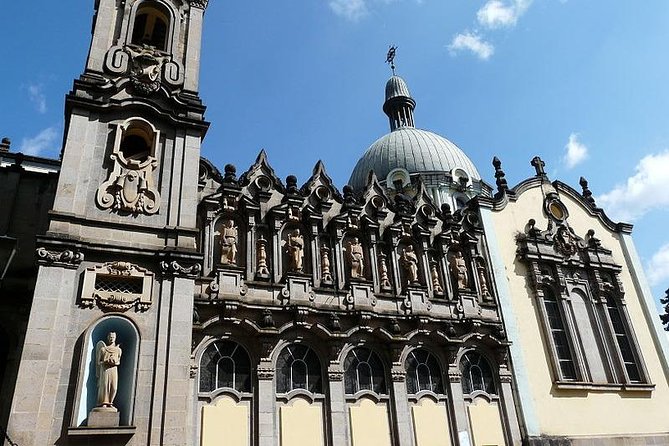
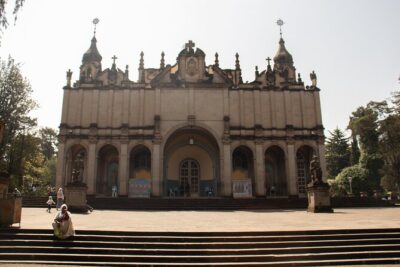
Holy Trinity Cathedral is the most solemn stop on the route. It is regarded as Ethiopia’s second-most important place of worship, after the Old Church of St. Mary of Zion in Aksum. The building is massive and ornate, so your first impression is likely to be visual, but the interior carries more weight than its decoration alone suggests.
The cathedral is the final resting place of Emperor Haile Selassie and Empress Menen Asfaw. Their granite tombs are built in an Aksumite style and sit inside the church. They are large, formal, and impossible to overlook.
I like the contrast you encounter here. The interior design feels controlled and solemn, while the atmosphere around the tombs can be charged with emotion. Your guide can help explain why this is such an important place in Ethiopian public and religious life, although the exact amount of interpretation will depend on who leads your group.
The scheduled visit lasts about 1 hour and 20 minutes, with admission included. That is a useful amount of time for a guided look rather than a rushed entry. You can take in the architecture, see the tombs, and ask questions without having to handle another payment at the door.
A small point of etiquette matters here: this is an active place of worship, not only a historic building. Dress and behavior should be respectful. The supplied tour details do not set out a formal dress code, so the safest approach is modest clothing and a quiet manner inside.
This stop suits you if you want religious history, imperial history, and architecture in the same place. If you prefer museums and objects to places of worship, the cathedral may feel slower, but its connection to Haile Selassie gives it unusual importance.
The National Museum and the story of Lucy
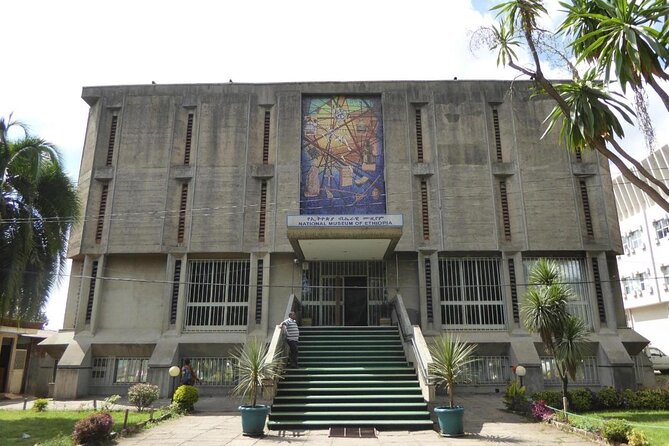
The National Museum of Ethiopia gives the tour its strongest historical and scientific focus. Its collection is considered one of the most important in sub-Saharan Africa, and the museum is best known internationally as the home of Lucy.
Lucy was discovered in Ethiopia’s Afar region in 1974. Her discovery changed how scientists understood human origins, and seeing her here gives the museum a clear center of gravity. You are not just looking at an old object in a glass case. You are looking at a find that affected the way people think about early human development.
The visit lasts about 1 hour and 30 minutes, with admission included. That is long enough to spend real time with Lucy and see more of the collection. The guide’s role is important because a museum visit can otherwise become a procession of labels and display cases. A good guide can connect the exhibits to Ethiopia’s place in the wider story of human history.
I would treat this as the most important stop for first-time visitors who want context. The cathedral shows Ethiopia through faith and monarchy. The museum adds archaeology, science, and national identity. Together, the two stops give you a broader view than either one alone.
The museum may not satisfy you if you want an exhaustive museum day. This is a half-day tour, so the visit is a focused introduction rather than a room-by-room study. Still, the time allocation is sensible. You receive enough time to understand why the museum matters without losing the rest of your day.
Because the tour includes all fees and taxes, you do not need to budget for a separate admission payment at either major stop. That makes the $70 price easier to assess, especially if you value the convenience of having transport and entry handled together.
Tomoca Coffee, where the beans are roasted on-site
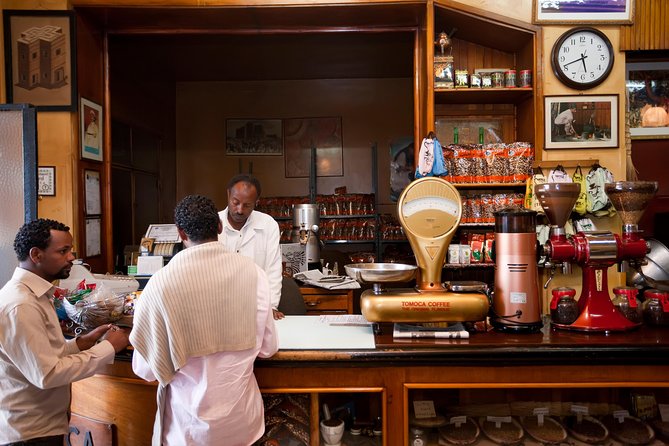
Tomoca Coffee is the most relaxed stop and the most distinctly local in its own way. The Atlas branch is an Italian-style cafe in Piazza, with high stools and a history reaching back to around 1953. Coffee is not an afterthought here. It is the reason the place exists.
The beans are roasted on-site, and the smell can reach the street well before you enter. That detail gives the stop a sensory edge that a standard cafe visit lacks. You can also see an Ethiopian coffee map on the wall and buy beans by the half-kilo if you want a practical souvenir.
The scheduled stop is about 40 minutes. Coffee and tea are included, specifically coffee at the famous Tomoca Coffee, so you are not paying again for the central tasting part of the experience. The short visit works well after the cathedral and museum. You get a chance to sit, ask questions, and reset before the tour ends.
I like this stop because it connects Ethiopia’s cultural reputation for coffee with an actual working cafe. It is not presented as a formal coffee ceremony, and you should not expect an elaborate demonstration. Instead, it is a chance to drink Ethiopian coffee in a place with a long local history and visible roasting activity.
The Atlas branch also makes the tour feel less like a checklist of monuments. You see major institutions, then spend time in a place people go for coffee. That mix gives the route a better sense of daily Addis Ababa.
A different sort of day out, same part of Ethiopia:
- Full Day Tour of Addis Ababa with Hotel Pickup and Drop-off
★ 5.0 · 430 reviews - Taste of Ethiopia
★ 5.0 · 406 reviews - Day Trip From Addis Ababa See Historical Monastery,Stunning Nature,Animals,Birds
★ 5.0 · 303 reviews - Addis Ababa: Debre Libanos, Blue Nile Gorge, and Cave Tour
★ 4.5 · 256 reviews
What the guide can add to the experience
The strongest part of this tour may be the guide rather than the vehicle or admissions. A capable guide can explain the cathedral’s royal tombs, put Lucy’s discovery in context, and help you understand why Tomoca matters. You also have a chance to ask questions throughout the day instead of simply following a fixed script.
Eyob is one guide associated with the experience and has been praised for clear answers, a fun manner, and strong subject knowledge. Another guide, Younes, has been described as informative, kind, and reassuring for a solo participant. Guide assignments can vary, so you should think of these as examples of the level of service you may receive, not a guarantee of a particular person.
Several parts of the feedback point to the value of flexibility. A guide and driver were able to adjust the plan and add interesting places during a five-hour visit. That suggests you may be able to discuss your interests, though you should not assume that every extra stop is guaranteed or included.
The English quality appears to be generally strong, but the experience has not been perfect every time. One serious failure involved a driver arriving without a guide and struggling to communicate in English. The group lost three hours, one person felt sick, and the tour ended early. The operator apologized and offered another full-day tour, but that did not solve the immediate problem.
That incident is a real consideration. I would confirm the guide arrangement and meeting details before the day begins. If you are on a tight layover, allow enough time for delays and keep the operator’s contact information easy to find.
Is $70 a fair price?
At $70 per person, the tour offers a reasonable bundle: an air-conditioned vehicle, a professional guide, coffee or tea, entry fees, and a half-day route. If you arranged transport, admissions, and an experienced local guide separately, the price could be competitive, especially for a solo participant who cannot split a private car with friends.
The value is strongest when convenience matters. You can meet in Addis Ababa, move between three stops, and leave the operator to manage the basic logistics. You also retain the second half of the day for your own plans.
The value is weaker if you already have a car, a local guide, or a firm interest in only one sight. Someone focused solely on the National Museum might prefer to spend longer there independently. Someone who wants a full city tour, markets, churches, and more neighborhoods may find this route too limited.
With an average booking lead time of about 24 days, planning ahead is sensible. The group limit is 15, but availability can change. Free cancellation is allowed up to 24 hours before the local start time for a full refund. Inside that 24-hour window, the payment is not refunded, and changes are not accepted.
Who should book this Addis Ababa tour?
I would recommend this tour for a first visit when you want orientation without sacrificing your whole day. It suits solo visitors, couples, and small groups who prefer a guide to handle transport and explain what they are seeing.
It is also a good match for people interested in several sides of Ethiopia at once. You receive religious and imperial history at the cathedral, human origins at the museum, and coffee culture at Tomoca. That range is the tour’s main strength.
Solo participants may appreciate the small-group setting and the reassurance of an organized vehicle. The experience has also been praised for making solo visitors feel safe, though no tour can promise that every personal concern will disappear.
You may want something else if your priority is shopping, food, nightlife, or a long visit to local markets. A booking note describes a market visit as interesting, but the stated route centers on the cathedral, museum, and Tomoca. Ask before booking if a market stop is essential to your plans.
Final verdict: a useful first look with one important warning
I would book this tour if I had limited time in Addis Ababa and wanted a balanced introduction. Holy Trinity Cathedral, Lucy at the National Museum, and Tomoca Coffee make a sensible trio, and the included transport and admissions keep the day simple.
The main warning is operational rather than cultural. The no-guide incident shows why you should confirm who is meeting you and how to reach the operator. If the guide arrives as planned, the tour offers good personal contact, useful explanations, and enough free time afterward to keep exploring.
For $70, this is a practical half-day choice for a first look at Addis Ababa. It will not cover the whole capital, but it gives you three memorable anchors and a guide who can help you make sense of them.
FAQ
How long does the Addis Ababa City Half-Day Tour last?
The tour lasts approximately four to six hours. The scheduled visits take about 1 hour and 20 minutes at Holy Trinity Cathedral, 1 hour and 30 minutes at the National Museum, and 40 minutes at Tomoca Coffee.
What places are included in the route?
The stated route includes Holy Trinity Cathedral, the National Museum of Ethiopia, and Tomoca Coffee at the Atlas branch in Piazza.
Is hotel pickup available?
Pickup is offered. The meeting point is also described as a designated location in Addis Ababa, so confirm the exact arrangement when booking.
Are admission fees included?
Yes. All fees and taxes are included, including admission for Holy Trinity Cathedral and the National Museum of Ethiopia.
Is coffee included at Tomoca Coffee?
Yes. Coffee and/or tea is included, with coffee served at Tomoca Coffee.
How many people can join the tour?
The maximum group size is 15 people. It is described as a small-group tour.
What is the cancellation policy?
You can cancel at least 24 hours before the local start time for a full refund. Cancellations or changes made within 24 hours are not accepted for a refund.
New on the Addis Ababa list
- Yod Abyssinia Cultural Night: Dinner, Music, and Dance★ 5.0 · 7 reviews
- Locally crafted beer and wine tasting and nightlife in Addis tour★ 5.0 · 6 reviews
- Addis Ababa City Tours Full-Day Tours★ 5.0 · 5 reviews
- Stunning Views Wonchi Crater Lake a Private Day Trip★ 5.0 · 3 reviews
- Visiting the wonders of Lalibela in Three (3) days and Two ( 2) nights★ 5.0 · 2 reviews
- Unique Ethiopian Cooking Class and Coffee Ceremony with a Local in Addis Ababa★ 4.5 · 7 reviews
- Tribes of the Ethiopian Omo Valley – 9 Day Tour★ 5.0 · 5 reviews
- Two days Lake Wenchi and Menagesha Forest★ 5.0 · 3 reviews
City Tours, compared.

Addis Ababa Guided City Tour With Airport & Hotel Pick Up
Read our review →
Authentic Addis Ababa City Tour with a Local Guide
Read our review →

Addis Ababa City Tours Full Day With Hotel Pickup And Drop Off.
Read our review →
Browse the lists this tour appears in