
Reviewed · CITY TOURS
Addis Ababa City Tour
Addis Ababa rewards a closer look. This six-and-a-half-hour private tour brings together mountain views, royal history, Ethiopian cultures, an ancient hominid, markets, churches, and coffee. I like the way it mixes major sights with everyday parts of the capital, and I especially like that transport, entrance fees, bottled water, and either a coffee ceremony or Tomoca Coffee are included.
The main drawback is the pace. Five important stops, city traffic, and a possible market visit leave little room for lingering. The fixed price of $200 per person also offers better value for a small private group than for a solo visitor, and the non-refundable booking rule calls for firm plans.
In This Review
- Key points at a glance
- Why this six-and-a-half-hour route works
- Entoto Mountain and Entoto Maryam
- Shiro Meda and the move into city life
- The Ethnological Museum in Haile Selassie’s former palace
- Lucy at the National Museum of Ethiopia
- Mercato, with a realistic view of Addis Ababa
- Holy Trinity Cathedral and the coffee finish
- Guide service, vehicle, and the private format
- Is $200 per person good value?
- Who should book this Addis Ababa tour?
- Should you book it?
- FAQ
- How long does the Addis Ababa City Tour last?
- What sights are included?
- Is pickup included?
- Are entrance fees included?
- Is food included?
- Is this a private tour?
Key points at a glance
- Entoto Mountain opens the day with wide city views, cool eucalyptus air, and a visit to Entoto Maryam church and museum.
- The Ethnological Museum occupies Haile Selassie’s former palace, giving you an unusual link between royal life and Ethiopia’s many cultures.
- Lucy at the National Museum provides the tour’s strongest connection to human origins and Ethiopian archaeology.
- Mercato and Shiro Meda show two very different sides of local commerce, from traditional clothing to one of Addis Ababa’s largest markets.
- A private vehicle and guide keep the day flexible, with the company arranging pickup and returning you to the meeting point.
- Coffee is part of the experience, either through a traditional ceremony or a stop at Tomoca Coffee.
Why this six-and-a-half-hour route works
Addis Ababa can feel spread out, and its traffic can turn a short cross-town trip into a slow one. This itinerary makes practical sense because it groups several major sights into one private outing. You begin above the city, work your way downhill, visit two important museums, spend time around markets, and finish with a church and coffee.
The private format matters. Only your group participates, so you are not tied to the needs of a large coach party. The guide can explain what you are seeing in English, answer questions, and, at least in one reported case, adjust the pace to suit the group. Meseret guided one extended visit over two days and allowed the group to set the rhythm, while Haile has been praised for careful planning and clear communication.
The published duration is about six hours and 30 minutes. That is enough for an overview, not a slow study of every museum room. You should think of this as a useful first introduction to Addis Ababa, especially if you have only one open day in the capital.
Other ways to see Addis Ababa itself:
- Addis Ababa Guided City Tour With Airport & Hotel Pick Up
★ 5.0 · 237 reviews - Full-Day Private City Tour of Addis Ababa
★ 5.0 · 147 reviews - Addis Ababa Authentic Private City Tour
★ 5.0 · 134 reviews
Entoto Mountain and Entoto Maryam
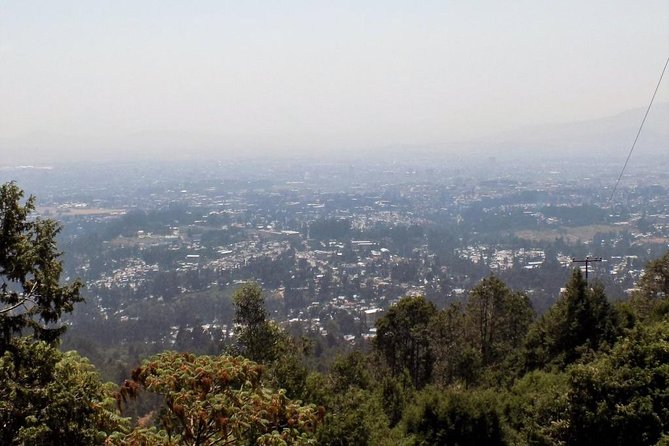
The day starts on Mount Entoto, above Addis Ababa. This is more than a viewpoint. Entoto was the capital of Ethiopia before Addis Ababa took its place, so the stop gives you geographic and historical context before you enter the modern city below.
From the mountain, you can look across Addis Ababa and take in its broad spread. The eucalyptus forests provide fresh air, a welcome change from the city streets, though you should still bring a light layer because the mountain setting may feel cooler than the capital.
The visit includes Entoto Maryam church and museum. The church adds a religious and historical dimension to the morning, while the museum helps explain the area’s role in Ethiopia’s past. The tour description does not specify how much time is spent inside each building, so expect an introduction rather than a long specialist visit.
This is also the most physically demanding part of the day in a modest way. You need a moderate level of fitness, and the tour is not recommended for anyone with an illness. Comfortable shoes are sensible, especially if you want to walk around the church and viewpoint rather than remain beside the vehicle.
Shiro Meda and the move into city life
After Entoto, the route descends through Shiro Meda, described as Addis Ababa’s largest market for traditional clothes. This stop helps bridge the gap between historic sights and ordinary city life.
You might find woven clothing, shawls, and other traditional garments, but the information provided does not promise a shopping session or a specific amount of free time. It is best to treat Shiro Meda as a brief market visit and visual introduction rather than a dedicated buying trip.
If you want to purchase something, ask the guide about prices, quality, and how much time is available. A private tour gives you a better chance of raising that request than a large group excursion, but the full route still has to fit into one day.
The market is valuable because it shows culture in use. A museum display can explain clothing, but a working market shows how those traditions connect with present-day Addis Ababa.
The Ethnological Museum in Haile Selassie’s former palace
The Ethnological Museum is located on the campus of Addis Ababa University, inside the former palace of Emperor Haile Selassie. That setting gives the visit two layers: you are learning about Ethiopian cultures while walking through a building linked to the country’s imperial period.
The museum contains displays representing many cultures of Ethiopia. For a first-time visitor, this is one of the strongest stops because Ethiopia is not a single cultural block. Different communities have their own languages, customs, clothing, music, and religious traditions. A guide can help you connect the objects and displays to the wider country.
The palace setting also makes the visit more memorable than a standard museum stop. You are not only looking at exhibits. You are seeing them within a former royal home, which gives the building its own story.
The stop is listed at about one hour, including admission. That is a reasonable amount of time for a guided introduction, though you may wish for longer if cultural history is your main interest. If you are deciding between taking photographs, reading displays, and listening to your guide, give priority to the explanation. The context is where much of the value lies.
A different sort of day out, same part of Ethiopia:
- Full Day Tour of Addis Ababa with Hotel Pickup and Drop-off
★ 5.0 · 430 reviews - Taste of Ethiopia
★ 5.0 · 406 reviews - Day Trip From Addis Ababa See Historical Monastery,Stunning Nature,Animals,Birds
★ 5.0 · 303 reviews - Addis Ababa: Debre Libanos, Blue Nile Gorge, and Cave Tour
★ 4.5 · 256 reviews
Lucy at the National Museum of Ethiopia
The National Museum is the day’s clearest archaeological highlight. It houses Lucy, one of Ethiopia’s most famous early human fossils and a key figure in the study of human origins.
The visit is listed at about two hours, making it the longest museum stop. That extra time matters. You can see Lucy along with other national collections and allow the guide to explain why Ethiopia is so important to the story of human development.
For many people, Lucy is the reason to visit the museum. Even if you are not especially interested in archaeology, seeing the fossil in person gives the subject a strong sense of place. You are not studying an abstract chapter from a textbook. You are looking at a discovery connected directly to Ethiopia.
The museum can also be the point where the tour feels most educational. Haile has been praised for explaining Addis Ababa clearly, and the company’s guides have received strong marks for their English communication and planning. The available feedback gives particular credit to the guides, including Haile and Meseret, rather than only to the sights.
Because the National Museum receives a full two-hour allocation, this is the part of the day least likely to feel rushed. Still, the overall tour includes several other stops, so ask your guide early if Lucy and the museum are your top priority.
Mercato, with a realistic view of Addis Ababa
Mercato is included as a stop on the route, but the published timing shows only two minutes. That is almost certainly too brief for a meaningful market visit, so you should clarify the expected timing before booking or at the start of the day.
The tour promises more than postcard sights. It aims to show realistic parts of Addis Ababa, and Mercato is important in that respect. A market can reveal the scale, noise, movement, and commercial life of a capital in ways a museum cannot.
At the same time, you should not expect a long, relaxed shopping visit unless the guide confirms that the schedule has changed. City traffic and the five-stop plan may limit your time here. If your main goal is buying goods, ask whether Mercato or Shiro Meda will receive more attention and plan your expectations accordingly.
A private tour helps because the guide can explain what you are seeing and help you move through the area with greater purpose. The available information does not promise shopping assistance, special access, or a particular market route, so keep your plans flexible.
Holy Trinity Cathedral and the coffee finish
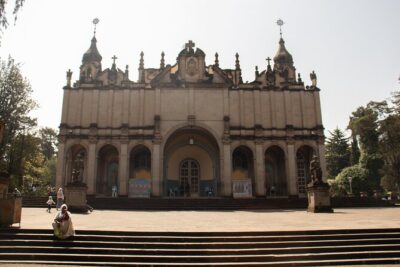
Holy Trinity Cathedral is the final named stop. It adds another major religious site to a day that already includes Entoto Maryam. The cathedral provides a different setting from the mountain church and helps round out the tour’s focus on Ethiopian faith, history, and public life.
The listed time is only one minute, which cannot represent a full visit. As with Mercato, treat this as a scheduling figure that needs clarification. You may see the cathedral as part of a short stop, or the actual time may depend on traffic, opening conditions, and the interests of your group.
Coffee is included, either as a traditional Ethiopian coffee ceremony or at Tomoca Coffee. This is one of the most appealing parts of the package because it turns a simple refreshment into a cultural choice. Ask which option is planned. The two experiences are not identical: a ceremony emphasizes tradition and presentation, while Tomoca offers a direct visit to a well-known coffee setting.
Food is not included, and alcoholic drinks are extra. Mineral water is included, which is useful during a long day of moving between outdoor and indoor stops. You should budget separately for meals and any purchases.
Guide service, vehicle, and the private format
The package includes a guide, transportation, entrance fees, and bottled water. Those inclusions simplify the day and make the $200 price easier to assess. Addis Ababa’s spread-out sights would be harder to combine independently in six-and-a-half hours, particularly if you are unfamiliar with the city.
The private format is the strongest practical feature. You avoid a shared group schedule, and you can ask for more explanation at a museum or a quicker stop at a market. The tour ends back at the meeting point, and pickup is offered.
The company has received repeated praise for communication, clean vehicles, and organized service. Haile has been singled out for arranging pickup in advance and helping make the first day run smoothly. Redwan has also been praised as an experienced driver, while another account describes Haile and driver Redwan as a particularly effective team.
That said, the tour is not a blank-check custom itinerary. The route and duration are set, and the published stop times are uneven. If your interests are narrow, such as churches, archaeology, or shopping, tell the company before the day begins so you can find out what can realistically be adjusted.
Is $200 per person good value?
The price is $200 per person. Value depends heavily on group size and what you would otherwise need to arrange.
For a small private group, the price can be reasonable because it covers a vehicle, guide service, admission fees, mineral water, pickup, and coffee. You also save time by combining attractions that are not presented as one compact cluster.
For one person, the cost is harder to justify unless convenience is your main priority. The tour does not include food, alcoholic drinks, flights, or tips, so the final spending will be higher. Still, a one-day visitor may value the ability to see several major sites without working out transport between them.
The rating shown for the experience is 4.9 from eight reviews. The strongest praise focuses on organized planning, clear communication, English-speaking guides, clean transport, flexibility, and the ability to see a lot of Addis Ababa in one day without feeling excessively rushed. Those are exactly the areas that matter most when you have limited time.
Who should book this Addis Ababa tour?
I would recommend it to you if you have one free day, want a broad introduction, and prefer a private vehicle with a guide. It suits people who want history, culture, archaeology, city views, markets, and coffee in one package.
It is also a good fit if you like asking questions and adjusting the day slightly. The company has shown flexibility in previous arrangements, including a two-day version guided by Meseret, but you should confirm any changes before relying on them.
I would be more cautious if you want a slow museum day, a long market visit, or a tightly focused religious tour. The schedule covers a lot, and the listed times for Mercato and Holy Trinity Cathedral are too short to explain a full visit. You should also reconsider if you have an illness or cannot manage a moderate level of physical activity.
The booking is non-refundable and cannot be changed for any reason. Poor weather or failure to meet the minimum number of participants can lead to a different date, another experience, or a full refund, but ordinary changes from your side are not refundable.
Should you book it?
Book this tour if you want an efficient first look at Addis Ababa and value having the city’s major cultural stops arranged for you. The guides, private transport, and museum access are the best reasons to choose it, especially when your time is limited.
Before paying, ask two direct questions: how much time will actually be allowed at Mercato and Holy Trinity Cathedral, and will the coffee portion be a ceremony or a Tomoca Coffee visit? If the answers fit your priorities, this is a useful and well-rounded way to get your bearings in Ethiopia’s capital.
FAQ
How long does the Addis Ababa City Tour last?
The tour lasts approximately six hours and 30 minutes.
What sights are included?
The route includes Mount Entoto, Entoto Maryam church and museum, Shiro Meda, the Ethnological Museum, the National Museum of Ethiopia, Mercato, and Holy Trinity Cathedral.
Is pickup included?
Yes. Pickup is offered, and the activity ends back at the meeting point.
Are entrance fees included?
Yes. Entrance fees, guide service, transportation, and mineral water are included.
Is food included?
No. Food and alcoholic drinks are not included. Coffee is included, either through a coffee ceremony or at Tomoca Coffee.
Is this a private tour?
Yes. Only your group participates in the activity.
New on the Addis Ababa list
- Yod Abyssinia Cultural Night: Dinner, Music, and Dance★ 5.0 · 7 reviews
- Locally crafted beer and wine tasting and nightlife in Addis tour★ 5.0 · 6 reviews
- Addis Ababa City Tours Full-Day Tours★ 5.0 · 5 reviews
- Stunning Views Wonchi Crater Lake a Private Day Trip★ 5.0 · 3 reviews
- Visiting the wonders of Lalibela in Three (3) days and Two ( 2) nights★ 5.0 · 2 reviews
- Unique Ethiopian Cooking Class and Coffee Ceremony with a Local in Addis Ababa★ 4.5 · 7 reviews
- Tribes of the Ethiopian Omo Valley – 9 Day Tour★ 5.0 · 5 reviews
- Two days Lake Wenchi and Menagesha Forest★ 5.0 · 3 reviews
City Tours, compared.

Addis Ababa Guided City Tour With Airport & Hotel Pick Up
Read our review →
Authentic Addis Ababa City Tour with a Local Guide
Read our review →

Addis Ababa City Tours Full Day With Hotel Pickup And Drop Off.
Read our review →
Browse the lists this tour appears in