
Reviewed · ADDIS ABABA TOURS
Addis Ababa Sightseeing
Addis Ababa’s story is written in churches and palaces. This private, full-day tour gives you a useful first look at the Ethiopian capital, from the National Museum’s ancient fossils to the former imperial compound at Unity Park. I especially like the small private-group format and the way the route links archaeology, Orthodox Christianity, modern politics, and national memory in one day.
I also like that lunch, bottled water, parking, and an air-conditioned vehicle are included. The main consideration is timing: the Entoto Maryam Church interior is usually visible only just after morning services, which normally end at 9am, so the 7am start matters. The day also includes several religious sites, and some museum or church opening times can be irregular.
Past guests consistently praised the friendly service, careful driving, and local explanations. Guides named Tariq, Tesfaye, and Samson received special praise for clear English, warmth, and attention to individual requests. That personal service is a major part of the tour’s appeal.
In This Review
- What makes this Addis Ababa day tour useful
- Starting at 7am: why the early hour matters
- Lucy, Selam, and Ethiopia’s earliest story
- Entoto Maryam and the 9am church-service window
- Holy Trinity Cathedral and the memory of liberation
- Unity Park and the former imperial compound
- St. George’s Cathedral and the Battle of Adwa
- What the $192.31 price includes
- Who will get the most from this tour?
- Should you book Addis Ababa Sightseeing?
- FAQ
- Where does the tour start?
- What time does the tour begin?
- How long does the experience last?
- Is this a private tour?
- What meals and drinks are included?
- Are entrance tickets included?
- What is the cancellation policy?
What makes this Addis Ababa day tour useful
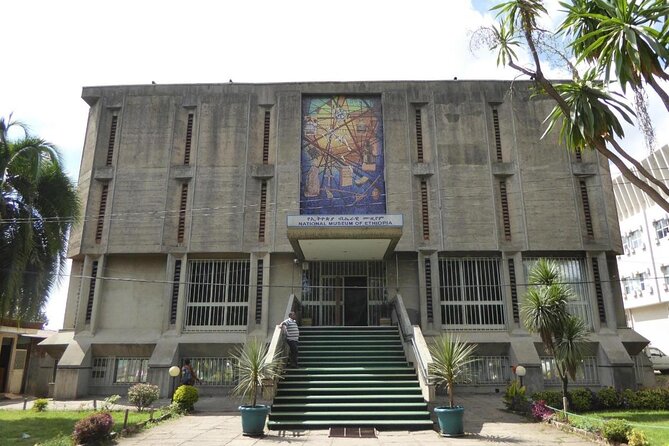
- Lucy and Selam at the National Museum: See some of Ethiopia’s most important early human fossils, including Lucy and the 3.3-million-year-old Selam display.
- An early visit to Entoto Maryam: The octagonal church is linked to Menelik II and may offer its best interior access soon after morning worship.
- Two major Orthodox cathedrals: Holy Trinity Cathedral and St. George’s Cathedral show different parts of Ethiopia’s religious and political story.
- A former imperial palace at Unity Park: The palace compound connects Ethiopia’s emperors with the country’s present-day government.
- A private vehicle and flexible pace: Your group travels alone, with room to make reasonable requests during the day.
- Meals and water included: Lunch and dinner are listed as included, although you should confirm the meal schedule when booking.
Starting at 7am: why the early hour matters
The tour begins at 7:00am at Yama Ethiopia Tours & Travel on Haile Gebre Silase Street. Pickup is offered, but the stated meeting point is the tour office, so confirm the exact pickup arrangement before the day begins. The activity lasts about eight to nine hours and returns to the starting point.
The early departure is not just a scheduling choice. Entoto Maryam’s painted interior can generally be seen immediately after morning services, which usually finish around 9am. If seeing the inside of this old church is important to you, leaving promptly gives you the best chance.
A private tour is especially helpful in Addis Ababa because the day includes several stops with different purposes. You are not tied to the pace of a large coach group, and the guide can respond to questions or reasonable requests along the way. Past guests specifically praised a driver who waited patiently in the morning and handled changing requests well.
You travel in an air-conditioned vehicle, with bottled water supplied. That makes a practical difference on a long sightseeing day. Parking fees, GST, airport or departure tax, lunch, and dinner are listed as included. Alcohol is not included, and landing and facility fees are separate.
Other Addis Ababa trips travellers keep going back to:
- Full Day Tour of Addis Ababa with Hotel Pickup and Drop-off
★ 5.0 · 430 reviews - Taste of Ethiopia
★ 5.0 · 406 reviews - Day Trip From Addis Ababa See Historical Monastery,Stunning Nature,Animals,Birds
★ 5.0 · 303 reviews
Lucy, Selam, and Ethiopia’s earliest story
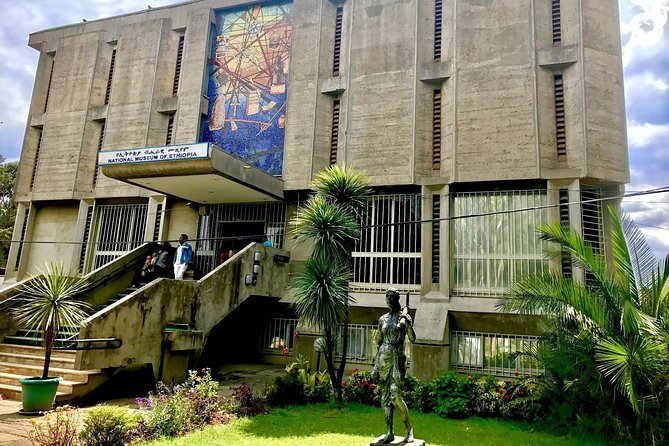
The National Museum of Ethiopia is the intellectual anchor of the tour. You have about one hour here, with admission included. The museum’s archaeological collection gives the rest of the day a useful foundation, showing that Ethiopia’s importance reaches far beyond imperial buildings and religious traditions.
The main draw is Lucy, the partial skeleton of an Australopithecus afarensis specimen. Lucy is one of the world’s best-known early hominid fossils, and seeing her associated with Ethiopia helps place the country at the center of the story of human origins.
A newer basement display focuses on Selam, an archaic fossil found between 2000 and 2004 and estimated to be about 3.3 million years old. That detail makes the museum especially worthwhile for anyone interested in archaeology, human evolution, or the long timeline of Ethiopian history.
The museum also contains artistic treasures and other local archaeological finds. One hour is enough for a focused visit, but not for a slow examination of every room. I would use your time here carefully: prioritize Lucy, Selam, and the main archaeological displays rather than trying to see every object.
This stop is strongest with a guide who explains why the fossils matter. The tour’s past guests praised guides such as Tariq and Tesfaye for explaining Ethiopia’s past in clear English. If your guide offers context, ask questions here. The museum is more rewarding when you understand what you are looking at, rather than simply passing display cases.
Entoto Maryam and the 9am church-service window
Entoto Maryam is one of the most distinctive stops because it combines a high historical setting with living religious practice. The octagonal church was built by Menelik II around 1882, when Entoto served as his capital. It is described as probably the oldest functional building in the Addis Ababa area.
The interior is covered with traditional church paintings. Access, however, is time-sensitive. The interior can generally be seen only immediately after morning services, which usually end at 9am. Since the tour starts at 7am, the schedule appears designed to give you a reasonable chance of arriving during that window.
That is also the tour’s clearest timing risk. Church services may not follow an exact schedule, and the site museum’s opening hours are described as erratic. You should treat the church interior as an important possibility, not an absolute guarantee.
The site museum contains religious objects and ceremonial clothing from the Menelik era. It may be open during your visit, but the provided information specifically warns that its hours can be unpredictable. If the museum is closed, the church and its historical setting still make the stop worthwhile.
You should dress and behave respectfully at both churches on this tour. This is not only a monument visit. Entoto Maryam remains a place of worship, and the best experience comes from paying attention to the religious setting as well as the building.
Holy Trinity Cathedral and the memory of liberation
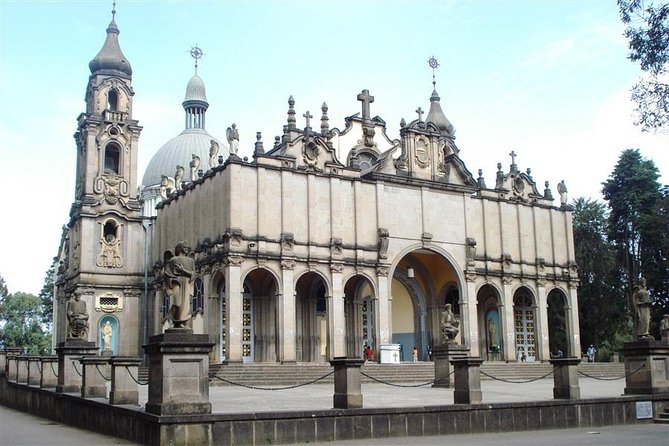
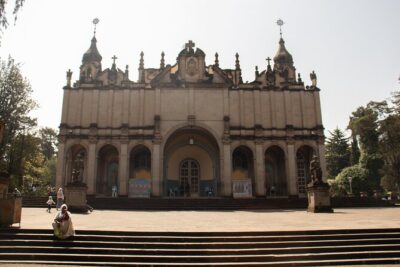
Holy Trinity Cathedral, or Kidist Selassie in Amharic, is the highest-ranking Ethiopian Orthodox Tewahedo cathedral in Addis Ababa. You spend about 30 minutes here, with admission included.
The cathedral was built to commemorate Ethiopia’s liberation from Italian occupation. That purpose gives the building a national role as well as a religious one. It is regarded as the second most important place of worship in Ethiopia, after the Church of Our Lady Mary of Zion in Axum.
Thirty minutes is a compact visit, so you will likely get an introduction rather than an exhaustive study. I would listen closely to the guide’s explanation of the cathedral’s place in Ethiopian Orthodox life and its connection to the country’s modern political story.
The stop also gives you a useful contrast with Entoto Maryam. Entoto presents an older, more intimate church linked to Menelik II and his early capital. Holy Trinity presents a larger national institution connected to liberation and state identity. Taken together, the two sites show how religion and government have often been closely linked in Ethiopia.
As with Entoto Maryam, this is an active religious site. The visit should be approached as a cultural and spiritual encounter, not simply as a photo stop.
A different sort of day out, same part of Ethiopia:
- Addis Ababa: Debre Libanos, Blue Nile Gorge, and Cave Tour
★ 4.5 · 256 reviews - Addis Ababa Guided City Tour With Airport & Hotel Pick Up
★ 5.0 · 237 reviews - Breathtaking Nature, Wildlife and Cave Church Tour – Free Pickups
★ 5.0 · 225 reviews - Full-Day Private City Tour of Addis Ababa
★ 5.0 · 147 reviews
Unity Park and the former imperial compound
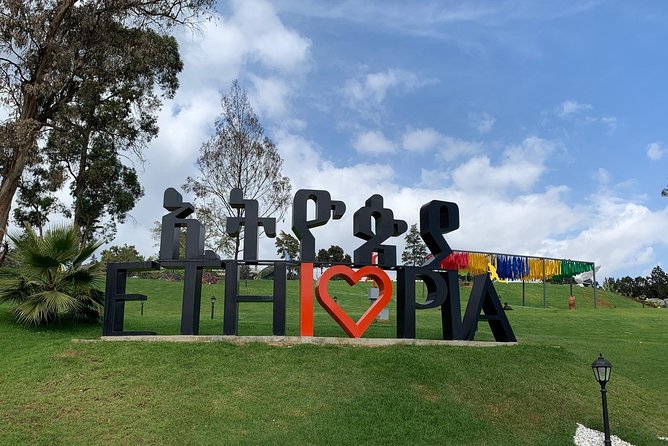
Unity Park occupies a palace compound that once housed Ethiopia’s emperors. The government of Prime Minister Abiy Ahmed rebranded the compound as Unity Park, giving the site a modern political identity while preserving its connection to the imperial past.
You have about one hour here, and admission is included. This is a useful stop for putting Ethiopia’s rulers, palaces, and recent government history into one physical setting. The site helps bridge the gap between the older royal story introduced at Entoto Maryam and the modern capital you see outside the compound.
Because the palace grounds cover a significant historical period, I would rely on your guide to explain what you are seeing. A private visit gives you a chance to ask questions about the former imperial residence, the name Unity Park, and the way the compound is used today.
The appeal here is less about one single object and more about the setting’s political importance. If you enjoy understanding how a city’s past affects its present, this may be one of the day’s most revealing stops.
St. George’s Cathedral and the Battle of Adwa
St. George’s Cathedral adds another strong connection between religion, national identity, and the conflict with Italy. The present church was built on the ruins of an older 15th-century church and was named for St. George.
The cathedral’s Tabot, or Ark, was carried to the Battle of Adwa, where Ethiopian forces secured victory against the Italians. That link gives the cathedral a direct connection to one of Ethiopia’s most important national events.
The building itself also has a difficult wartime story. Italian Fascist authorities set it on fire in 1937. After Ethiopia’s liberation in 1941, the emperor restored the cathedral. You have about 40 minutes here, enough time to see the building and hear the story behind its destruction and repair.
An Italian tourist publication from 1938 described the cathedral as a fine example of European interpretation of Ethiopian church design. That description hints at an unusual architectural blend, though your guide’s explanation will be more useful than a quick glance alone.
By this point in the day, St. George’s works as a fitting final cultural stop. You have already seen religious buildings linked to Menelik II, liberation, imperial rule, and the Battle of Adwa. This cathedral gathers many of those threads in one place.
What the $192.31 price includes
At $192.31 per person, this is not a bargain-priced city bus tour. The value depends on how much you want personal service, private transport, and a guide who can connect the stops into one story.
The price is based on a minimum of two people in the group. For a pair, the cost buys a private activity rather than a shared group outing. You also receive an air-conditioned vehicle, bottled water, lunch, dinner, admission tickets, parking fees, GST, and airport or departure tax.
The meal details deserve a quick check. Lunch and dinner are both listed as included, even though the activity lasts roughly eight to nine hours. Ask the operator how and when those meals are provided so you know what to expect during the day.
Alcoholic drinks are not included. Landing and facility fees are also excluded, so check whether those charges apply to your plans. The mobile ticket is convenient, and booking confirmation is provided at the time of booking.
For me, the strongest value comes from flexibility and the private format. If you want to move at a group-only pace, ask questions freely, and avoid organizing separate museum and church visits yourself, the price is easier to justify. If you prefer independent sightseeing or only want one or two landmarks, it may feel expensive.
Who will get the most from this tour?
I would recommend this tour to first-time visitors who want a broad introduction to Addis Ababa in one day. It suits couples, friends, and small private groups who value a dedicated vehicle and guide.
It is also a good match for visitors with limited time. One past booking involved an overnight layover, and guide Samson helped fit sightseeing into a short evening and morning schedule. This full-day version is longer, but the same kind of personal planning may appeal to people with tight itineraries.
History and religion are the main themes, so you should book if Lucy, Ethiopian Orthodox churches, imperial Ethiopia, and the Battle of Adwa interest you. The tour is less suited to someone seeking nightlife, shopping, or a food-focused day.
Most people can participate, according to the tour information. Still, you should consider that it is a long sightseeing day with five stops and an early start. The private setup may allow some flexibility, but no specific accessibility arrangements are described, so ask before booking if you have mobility needs.
Free cancellation is available when you cancel at least 24 hours before the 7am start time. Cancellations or changes made within 24 hours are not accepted for a refund.
Should you book Addis Ababa Sightseeing?
Book it if you want context, convenience, and a private day with a local guide. The route covers more than a checklist of buildings. Lucy and Selam introduce Ethiopia’s ancient past, the churches explain its religious and national identity, and Unity Park connects that story with the country’s rulers and government.
The biggest practical tip is to protect the early schedule. Entoto Maryam’s interior access depends on arriving soon after morning services, and its museum may keep irregular hours. Confirm the pickup point, meal arrangements, and any mobility concerns before paying.
I would choose this tour for a first day in Addis Ababa, especially with only a short stay. I would skip it if you want a slow, independent visit or have little interest in churches and political history. For the right visitor, the private format and attentive service make the $192.31 cost reasonable.
FAQ
Where does the tour start?
The stated starting point is Yama Ethiopia Tours & Travel on Haile Gebre Silase Street in Addis Ababa. Pickup is offered, so confirm the exact arrangement with the operator.
What time does the tour begin?
The tour starts at 7:00am.
How long does the experience last?
The tour lasts approximately eight to nine hours and ends back at the meeting point.
Is this a private tour?
Yes. Only your group participates in the activity.
What meals and drinks are included?
Bottled water, lunch, and dinner are listed as included. Alcoholic beverages are not included.
Are entrance tickets included?
Admission tickets for the National Museum of Ethiopia, Entoto Maryam Church, Holy Trinity Cathedral, Unity Park, and St. George’s Cathedral are listed as included.
What is the cancellation policy?
You can cancel at least 24 hours before the start time for a full refund. Cancellations or changes made less than 24 hours before the start time are not accepted for a refund.
New on the Addis Ababa list
- Yod Abyssinia Cultural Night: Dinner, Music, and Dance★ 5.0 · 7 reviews
- Locally crafted beer and wine tasting and nightlife in Addis tour★ 5.0 · 6 reviews
- Addis Ababa City Tours Full-Day Tours★ 5.0 · 5 reviews
- Stunning Views Wonchi Crater Lake a Private Day Trip★ 5.0 · 3 reviews
- Visiting the wonders of Lalibela in Three (3) days and Two ( 2) nights★ 5.0 · 2 reviews
- Unique Ethiopian Cooking Class and Coffee Ceremony with a Local in Addis Ababa★ 4.5 · 7 reviews
- Tribes of the Ethiopian Omo Valley – 9 Day Tour★ 5.0 · 5 reviews
- Two days Lake Wenchi and Menagesha Forest★ 5.0 · 3 reviews
Addis Ababa Tours, compared.
Full Day Tour of Addis Ababa with Hotel Pickup and Drop-off
Read our review →
Day Trip From Addis Ababa See Historical Monastery,Stunning Nature,Animals,Birds
Read our review →

Addis Ababa Guided City Tour With Airport & Hotel Pick Up
Read our review →
Breathtaking Nature, Wildlife and Cave Church Tour – Free Pickups
Read our review →
Browse the lists this tour appears in