
Reviewed · DANAKIL DEPRESSION TOURS
All Inclusive 03 Day Group Tour to Dalol, Danakil Depression From Semera
Salt, fire, and endless sky. This three-day trip from Semera reaches some of Ethiopia’s strangest natural sights, including Dallol’s mineral colors, Lake Assal, camel caravans, and Erta Ale’s glowing lava. I like the less-used Semera route and the way the tour combines the salt mines with a night beside an active volcano. The main concern is simple: this is a hot, physically demanding trip with long drives, basic camping, and little room for comfort.
I also like that the price covers transport, guides, entrance fees, and six meals. You are not left arranging separate rides across one of the most remote parts of Ethiopia. Still, the $450 cost does not make the Danakil easy. You need strong fitness, patience with rough conditions, and a willingness to trade hotel comforts for a rare view of the planet’s raw machinery.
In This Review
- Key points to know before booking
- Why the Semera route is worth considering
- Day 1: Salt mines, Lake Assal, and Dallol’s strange colors
- Day 2: Camel routes and the climb to Erta Ale
- Day 3: Sunrise over lava and the return to Semera
- What the $450 price really covers
- Heat, fitness, and practical comfort
- The most authentic parts of the experience
- Who should book this Danakil trip?
- Should you book it?
- FAQ
- Where does the tour begin?
- How long is the tour?
- What sites are included?
- Are camel caravans visible year-round?
- Is the tour physically difficult?
- What is included in the $450 price?
Key points to know before booking
- Dallol sits about 116 meters below sea level, among salt formations and colors shaped by volcanic activity.
- Erta Ale requires a night trek, with the climb beginning after an early dinner and reaching the volcano around 8 p.m.
- Camel caravans are seasonal, and they are not present in July, August, or early September.
- Lake Afdera is not always visible, since the water can be seen mainly during the Ethiopian rainy season.
- The group can include up to 15 people, which keeps the price lower but may slow down departures and walks.
- The tour includes three lunches, two breakfasts, and two dinners, along with an air-conditioned vehicle, fuel, parking, guides, and entrance fees.
Why the Semera route is worth considering
The Danakil Depression is not a quick sightseeing stop. From Semera, your group heads into a remote desert region where salt, heat, volcanic activity, and low elevation shape nearly everything you see. The route is described as less explored than the more familiar approaches, which gives the trip a stronger feeling of travel beyond the standard circuit.
Your pickup is scheduled for 8 a.m. in Semera, either from your hotel or the airport. From there, the road leads toward Lake Afdera, with long stretches of stark scenery before the group reaches the Dallol area in the afternoon.
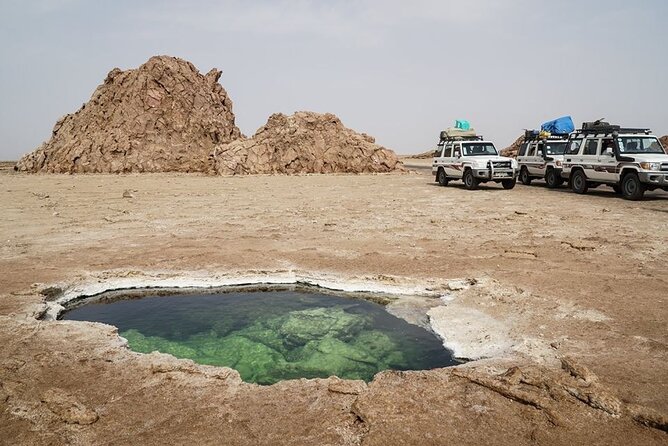
The air-conditioned vehicle matters. Even though you will spend plenty of time outside, the drive between stops is your main chance to cool down. Fuel and parking fees are also included, useful in a region where distances are long and services are limited.
A group limit of 15 keeps this from being a private expedition, but it is still a manageable size. You should expect some waiting if people walk at different speeds or need help in the heat. That is especially important for the Erta Ale trek, where the pace may be shaped by the slowest person in the group.
More Danakil Depression Tours in Ethiopia:
- 3 Days Danakil Depression Tour
★ 4.5 · 135 reviews - 3 Days Danakil Depression Tours Via Semera
★ 5.0 · 47 reviews - 12 Days SIMIEN MOUNTAIN-LALIBELA-DANAKIL-TIGRAY CHURCHES
★ 5.0 · 45 reviews
Day 1: Salt mines, Lake Assal, and Dallol’s strange colors
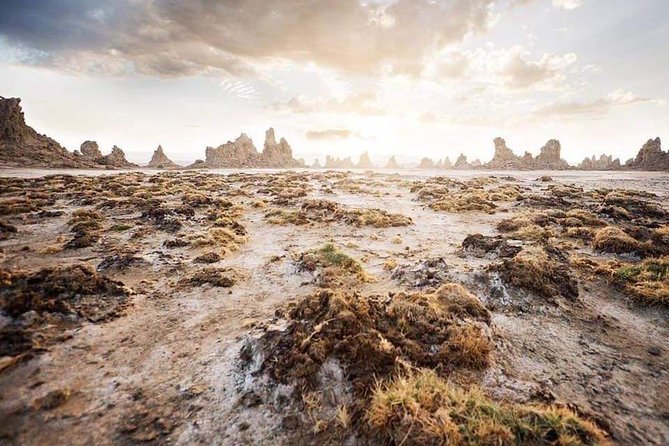
The first day lasts about nine hours and packs several major sights into one long outing. The drive toward Lake Afdera is part of the experience. The scenery changes as you approach the salt lake, and the emptiness gives you a clear sense of why the Danakil requires organized transport.
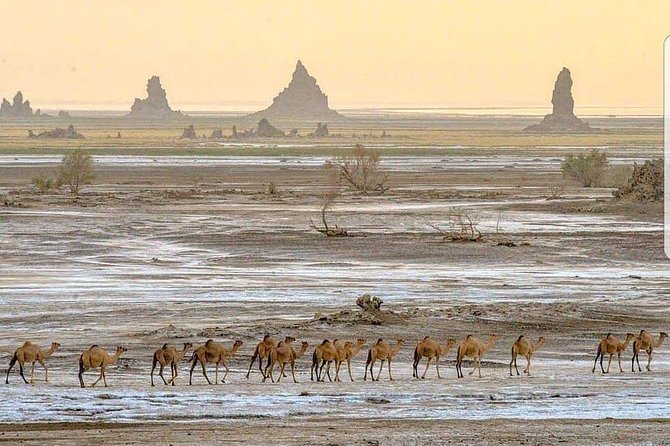
At Asebo, you see how salt is taken from the ground. Workers break the salt, cut it into rectangular blocks, and load the pieces onto camels. This is more than a photo stop. It shows the working side of the desert, where an old trade continues through a difficult environment.
The camel caravans are one of the most memorable parts of this section, but timing matters. They are not present in July, August, or early September, so you should not book during those months solely for the caravan sight. You may still see the salt mine and the volcanic areas, but the moving line of camels may be absent.
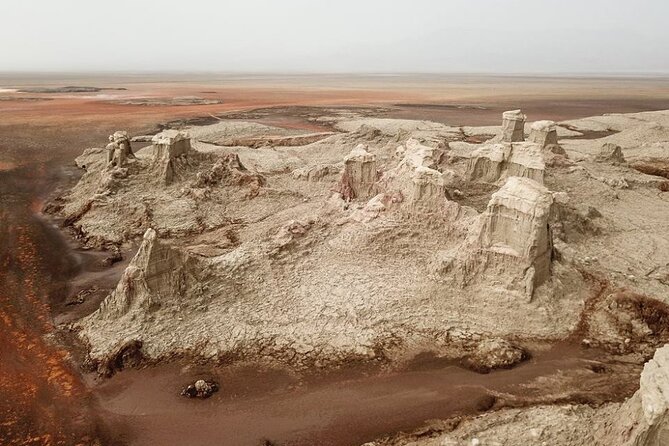
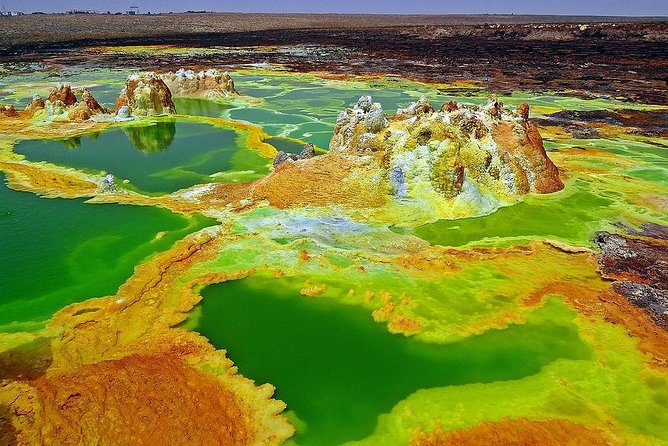
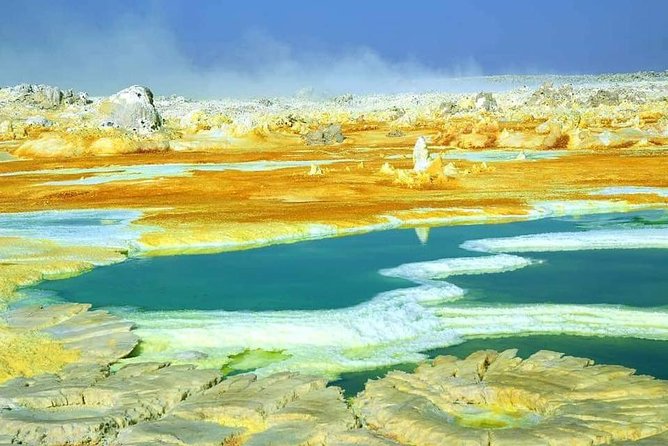
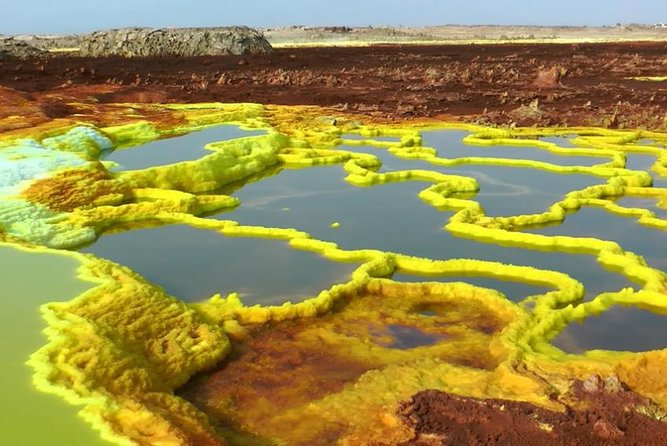
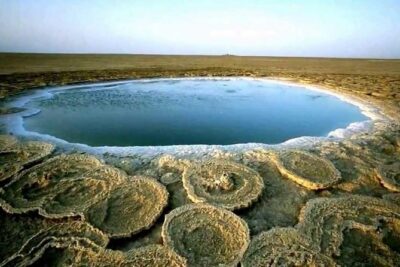
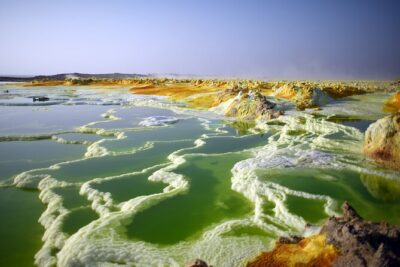
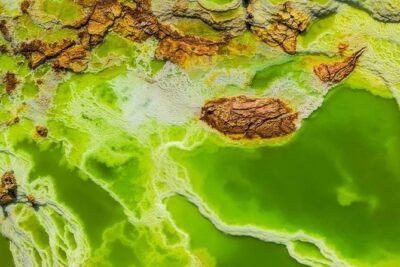
Dallol is the visual centerpiece of the first day. At roughly 116 meters below sea level, it is one of the lowest places on Earth. Volcanic activity has shaped the ground into pools, mineral crusts, salt formations, and unusual colors. You can walk through the area with an Afar guide and see how different the terrain is from ordinary desert.
The colors are striking, but you should follow instructions closely. The region is geologically active, and the appeal comes partly from its harshness. This is not a landscaped park with railings and paved paths. Conditions can be hot, exposed, and demanding underfoot.
Lake Assal adds another low-lying salt-water sight to the day. The plan also allows time to watch the sunset over the colorful terrain before returning to the camping area around Hamedela, identified as the overnight base for the first night.
Camping in the Danakil is part of the appeal, but it is also the point where comfort drops sharply. The supplied information confirms overnight camping, not hotel-style accommodation. You should prepare for a basic night and keep your expectations practical. The desert sky and silence can be special, yet the heat and simple facilities may test you after a full day outside.
Day 2: Camel routes and the climb to Erta Ale
The second day begins early, with a drive back toward Dallol for sunrise. Morning light gives the mineral formations a different look, and cooler temperatures are a welcome advantage. An early start also means you are working around the desert heat rather than facing every major stop at midday.
The route then passes through Berhale, a small town where camel caravans stop before continuing toward the northern highlands. The town provides useful context for the salt trade. You may see caravans heading toward the mines and others leaving with salt loaded on their camels.
After Berhale, the group drives to Askoma. From there, the walk to the Erta Ale area begins with a trek of about 10 minutes to the campsite, followed by the main climb later in the day. The schedule calls for an early dinner around 5 p.m., with the trek up to the volcano starting afterward and arrival around 8 p.m.
The timing is practical. Walking after sunset avoids the worst daytime heat, although it creates its own challenges. You need strong physical fitness, steady footing, and enough energy for a late arrival after a long day in the vehicle.
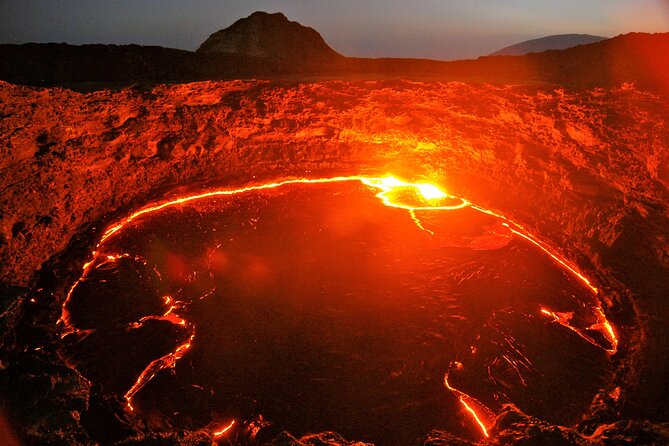
Erta Ale is a shield volcano and one of Ethiopia’s most demanding natural attractions. The reward is the chance to watch boiling lava at night. That sight is the emotional high point of the trip, but conditions can change, and the experience is not designed for people seeking an easy overlook.
A guide is especially important here. One guide associated with this trip is Kebede Dalacho, whose assistance was praised after helping an older visitor through the difficult terrain. If you have concerns about your pace or fitness, ask in advance who will lead your departure and explain what support is available.
The overnight stay near Erta Ale is likely to be basic, just as the Dallol camping is. You are there for the volcano, not for polished accommodation. The lava glow, darkness, and isolation create a powerful setting, but you should be comfortable with limited comfort and a late night.
Day 3: Sunrise over lava and the return to Semera
The final day begins early. You wake to see two striking sights together: sunrise and the volcano’s magma. That combination is the last major view of Erta Ale before the morning trek back to Askoma.
Breakfast is served after the walk back, followed by some time at the campsite. This pause matters because the group has already spent a demanding night on the volcano. The schedule then turns toward Semera, with Lake Afdera appearing again along the return route.
Lake Afdera is a salt-water lake more than 100 meters below sea level. Its visibility depends on the season. The information for this tour says it is mainly visible during the Ethiopian rainy season, though there may be a small chance of seeing it during summer. That uncertainty is worth understanding before you go. You may pass through the area without seeing the lake in the form you expected.
When water is present, the salt flats offer another look at local work. Afar people obtain salt by allowing lake water to evaporate, and the flats create a stark setting for seeing how the region’s natural resources are used.
The final drive lasts about eight hours. This is not a relaxed half-day return. After the volcano trek, you will probably appreciate the air-conditioned vehicle, but the length of the drive can still feel tiring. Plan to keep the third day free of tight onward arrangements.
A different sort of day out, same part of Ethiopia:
- Full Day Tour of Addis Ababa with Hotel Pickup and Drop-off
★ 5.0 · 430 reviews - Taste of Ethiopia
★ 5.0 · 406 reviews - Day Trip From Addis Ababa See Historical Monastery,Stunning Nature,Animals,Birds
★ 5.0 · 303 reviews - Addis Ababa: Debre Libanos, Blue Nile Gorge, and Cave Tour
★ 4.5 · 256 reviews
What the $450 price really covers
At $450 per person, the tour is priced as a bundled remote-area expedition rather than a simple sightseeing day. The package includes an air-conditioned vehicle, fuel surcharge, parking fees, a guide, all entrance fees, three lunches, two breakfasts, and two dinners.
That list gives the price real value. In a region where transport is essential, the vehicle and fuel are major parts of the cost. Entrance fees and guide services are already handled, and the meals reduce the number of arrangements you need to make in the desert.
The package does not include flights or anything not specifically listed. You should also remember that the low price reflects a group trip, basic camping, and a demanding schedule. If you want private transport, upgraded accommodation, or a slower pace, this may not be the right format.
The maximum group size is 15. That is small enough for a more personal outing than a large coach tour, yet large enough to keep the per-person price within reach. The tradeoff is less flexibility. You may not be able to linger at every color formation or adjust the Erta Ale schedule around one person’s preferences.
Heat, fitness, and practical comfort
The strongest warning is the physical requirement. The tour asks you to handle long drives, exposed desert conditions, walking around salt and volcanic areas, a late trek to Erta Ale, and a morning walk back down.
The experience can still work for older participants who are fit and prepared. Assistance from a guide helped one person over 60 complete the difficult Dallol walk, but that should not be treated as a promise that the route will feel easy. You need to judge your own stamina honestly.
Bring practical clothing and footwear suited to heat and uneven ground. The supplied information does not specify a packing list, so I would confirm details with the provider before departure rather than assume equipment is supplied.
Water, rest, and pacing will matter throughout the three days. The air-conditioned vehicle gives you relief between stops, but the major sights are experienced on foot. The Danakil rewards people who accept a little discomfort as part of the setting.
The most authentic parts of the experience
The best moments are not only the famous geological sights. Watching salt being broken into blocks and loaded onto camels connects the dramatic scenery with daily work. Passing Berhale and seeing camel routes continue through the desert adds a human dimension that a quick volcano visit would miss.
Walking with Afar people near the salt areas also gives the trip a local connection. The experience is not limited to looking at strange ground and taking photographs. You see how people use this severe environment and how the salt trade links the lowlands with the highlands.
The night at Erta Ale offers a different kind of authenticity. There is no city nearby to soften the setting. You watch magma in darkness, then see the sun rise over the same volcanic terrain. It is a rare pairing, and it explains why the tour earns such strong praise for the overall experience.
Who should book this Danakil trip?
I would recommend it to you if you want unusual geology, remote scenery, local salt-trade activity, and a serious adventure at a controlled group price. It suits people who prefer a memorable field experience to comfortable lodging and a leisurely timetable.
It is also a good match if you are already in Semera and want a planned route covering Dallol, Lake Assal, Lake Afdera, and Erta Ale. The all-inclusive structure removes much of the transport and meal planning.
I would hesitate if you dislike heat, basic camping, long vehicle journeys, or late-night walking. It is also a poor fit if seeing camel caravans is your main goal and you plan to travel in July, August, or early September.
The tour has a free cancellation policy up to 24 hours before the start time. Changes or cancellations made inside that window are not accepted for a refund, so keep the local cut-off time in mind.
Should you book it?
Book this tour if you want three intense days focused on Dallol’s mineral colors, the salt trade, and Erta Ale’s lava, and you are ready for real physical effort. The $450 price is reasonable for the included vehicle, guide, meals, fees, and remote access.
Skip it if you need predictable comfort or an easy schedule. The best reason to choose this trip is not convenience. It is the chance to see salt caravans, walk below sea level, sleep in the desert, and watch a volcano glow at night, all in one tightly packed journey.
FAQ
Where does the tour begin?
The tour begins in Semera, with pickup from a hotel or the airport at 8 a.m.
How long is the tour?
The experience lasts approximately three days.
What sites are included?
The route includes Dallol, Lake Assal, the Asebo salt-mining area, Erta Ale, Berhale, Askoma, and Lake Afdera when conditions allow.
Are camel caravans visible year-round?
No. Camel caravans are not present in July, August, or early September.
Is the tour physically difficult?
Yes. The tour requires a strong physical fitness level and includes walking in the heat plus a trek to Erta Ale and a morning trek back.
What is included in the $450 price?
The price includes an air-conditioned vehicle, fuel surcharge, parking fees, a guide, entrance fees, three lunches, two breakfasts, and two dinners. Flights and anything not listed are excluded.
New on the Ethiopia list
- Yod Abyssinia Cultural Night: Dinner, Music, and Dance★ 5.0 · 7 reviews
- Tigray Mountain Church’s Day Trip from Mekele★ 5.0 · 2 reviews
- Mekele City Tour★ 5.0 · 2 reviews
- Day trip to Tigray Churches★ 5.0 · 2 reviews
- 2 days Tigray Church★ 5.0 · 3 reviews
- 3 Day Tour of Geralta Churches Tigray Church’s★ 5.0 · 2 reviews
- Trekking in Ethiopia’s Lalibela Wollo Highland 4 Days / 3 Nights★ 5.0 · 6 reviews
- Lalibela Backpacker tours★ 5.0 · 6 reviews
Danakil Depression Tours, compared.
12 Days SIMIEN MOUNTAIN-LALIBELA-DANAKIL-TIGRAY CHURCHES
Read our review →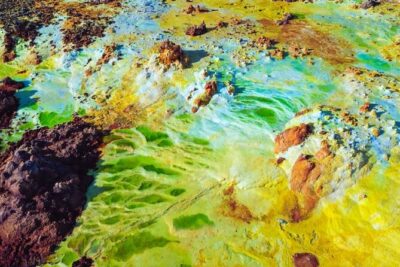
3 Day Danakil Depression Ertale and Dallol Tours
Read our review →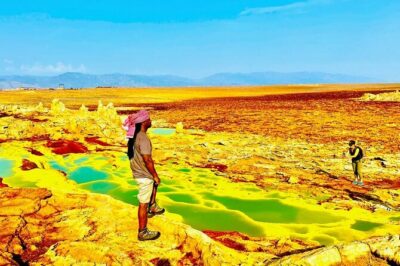
5 DAYS Lalibela, Axum, Tigray churches and Danakil
Read our review →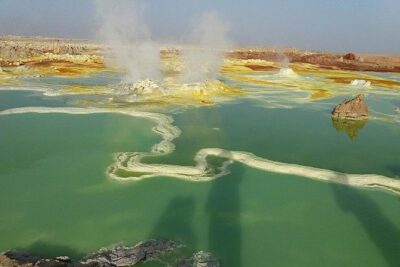
6 Days tour Package (Simien Mountains, Lalibela, and Danakil Depression)
Read our review →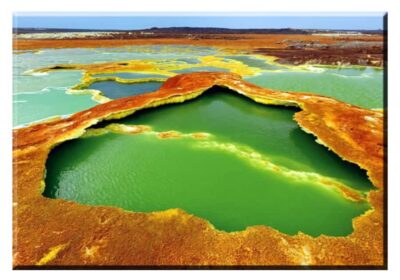
2-Night 3-Day Danakil Depression Tour without Flights
Read our review →Browse the lists this tour appears in