
Reviewed · HISTORIC ROUTE TOURS
Day Trip to Axum, the Heartland of Ethiopian Civilization
Axum keeps its biggest stories in stone. I like the way this private tour brings together towering granite stelae and sacred Christian sites in one well-paced day, and I also like that pickup, transport, a guide, water, and entrance fees are included. The main drawback is the schedule: seven hours covers a lot, so you should expect a focused introduction rather than a slow, scholarly study of every monument.
You’ll visit the Church of Our Lady Mary of Zion, the tombs of two Axumite kings, and places tied to the Queen of Sheba tradition. The tour is especially appealing if you want a private vehicle and direct transfers around town, though food is not included and the legends surrounding several sites require a little historical caution.
In This Review
- Five reasons this Axum day trip earns attention
- Why Axum deserves a full day
- 8:30 a.m. pickup and a private ride through Axum
- Two hours among Axum’s granite stelae
- The Church of Our Lady Mary of Zion and the Ark tradition
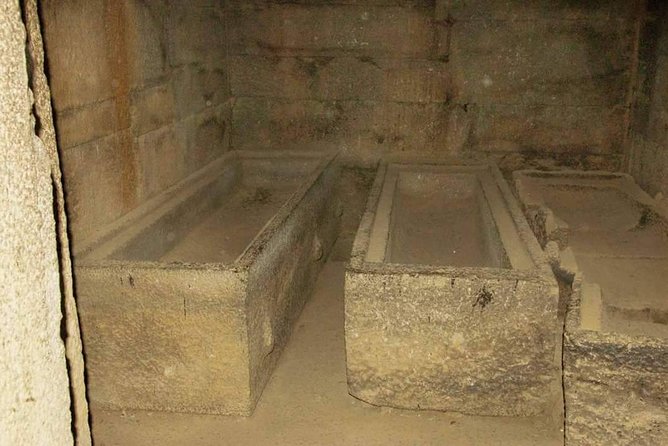
- The sixth-century tombs of King Kaleb and King Gebre Meskel
- Dongur Palace and the Queen of Sheba tradition
- Mayshum, the pool called Queen of Sheba’s Bath
- What the $152.57 price really covers
- Who should book this Axum experience?
- Should you book the Axum day trip?
- FAQ
- Where does the Axum tour begin?
- How long does the experience last?
- Is this a private tour?
- What transportation is provided?
- Are entrance fees included?
- Is food included?
- What is the cancellation policy?
Five reasons this Axum day trip earns attention
- The Great Stelae Field: See the broken Great Stela, once about 33 meters tall, along with other carved granite monuments.
- The Ark of the Covenant tradition: Visit the Church of Our Lady Mary of Zion, one of Ethiopia’s most important Christian sites.
- Royal tombs from the sixth century: Enter the underground burial complex linked to King Kaleb and his son, King Gebre Meskel.
- Queen of Sheba sites: Visit Dongur Palace and Mayshum, the pool traditionally called the Queen of Sheba’s Bath.
- A genuinely private outing: Your group travels together in an air-conditioned minivan with pickup and drop-off within Axum.
Why Axum deserves a full day
Axum is not simply a town with a few old monuments. It was the center of the Axumite Kingdom, a major power in the Horn of Africa that maintained connections with the wider ancient world. Its importance can be difficult to grasp from a modern map, but the stone monuments make the point quickly.
The city’s obelisks, churches, tombs, inscriptions, and royal sites are spread across several locations. Seeing them with transport is much easier than trying to arrange every stop independently, especially when your time in Axum is limited.
I like this tour because it connects several different parts of Axum’s past. You move from pre-Christian funerary monuments to the arrival of Christianity, then on to royal burial chambers and local traditions about Solomon, the Queen of Sheba, and the Ark of the Covenant.
The experience is also private. That matters here. A smaller group gives you more freedom to ask questions, pause at a monument, or spend a little longer at a place that catches your attention. The tour is listed at $152.57 per person, so it is not a bargain-priced city walk, but the fee includes transport, a professional guide, bottled water, and entrance charges. For a private seven-hour outing, that package can make practical sense.
More Historic Route Tours in Ethiopia:
- 5 DAYS Lalibela, Axum, Tigray churches and Danakil
★ 5.0 · 34 reviews - Lalibela, Axum, Danakil and Omo Valley 8 DAYS
★ 5.0 · 29 reviews - 5 Days North Ethiopia Tours
★ 5.0 · 23 reviews
8:30 a.m. pickup and a private ride through Axum
The day begins at 8:30 a.m., with pickup from a designated meeting point within Axum. You are then taken between the sites in an air-conditioned minivan, with drop-off at your preferred location in Axum at the end.
The vehicle is more than a comfort feature. The itinerary covers sites about two kilometers north of the city as well as monuments in and around the central area. Having a driver and guide means you spend less time working out local transport and more time looking at the places you came to see.
The schedule gives approximately seven hours from pickup to return. It is a busy day, but not an absurdly packed one. The Great Stelae Field and the church each receive about two hours, while the tombs and Queen of Sheba Palace receive roughly an hour apiece. The final pool visit is planned for 30 minutes.
Food and drinks are not included, apart from bottled drinking water. Plan accordingly before setting out, since the tour is designed around sightseeing rather than a restaurant stop. Alcoholic drinks and souvenir photographs are also separate purchases, and accommodation is not part of the price.
Two hours among Axum’s granite stelae
The Northern Stelae Field is the tour’s grand opening. These tall granite monuments were built as memorials and are among Axum’s most recognizable remains. Their carved surfaces give you a sense of the skill and resources available to the Axumite rulers.
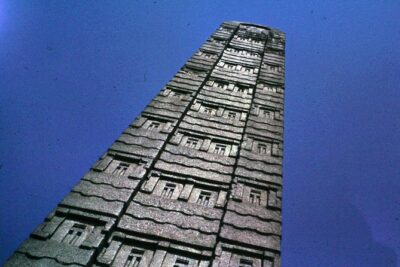
The Great Stela is the field’s dramatic centerpiece, even though it is no longer upright. It fell and broke into six large pieces. When standing, it was about 33 meters tall and weighed roughly 520 tons. That scale is hard to picture until you see the massive sections lying on the ground.
The broken monument is not a disappointment. In some ways, it helps you understand the engineering challenge better than a standing obelisk would. You can study the stone at close range and imagine how such a huge block was shaped, moved, and raised more than 1,700 years ago.
Other stelae remain upright, giving the field a strong visual rhythm. Their surfaces were carved with architectural details that suggest multi-story buildings, though the monuments themselves were funerary markers rather than houses.
Allow the full two hours here. You will want time for the major stelae, smaller monuments, and the guide’s explanation of Axum’s pre-Christian traditions. The open setting can also make the scale of the field easier to appreciate than a quick photo stop would.
The tour also highlights King Ezana’s inscription, an important stone text written in three languages. It is often described as Ethiopia’s answer to the Rosetta Stone because multilingual inscriptions help connect different audiences and historical records. If this is a major priority for you, ask the guide when and where it will be shown during the Axum portion of the day.
The Church of Our Lady Mary of Zion and the Ark tradition
The Church of Our Lady Mary of Zion brings the tour into Ethiopia’s Christian era. The first church on this site was built in the fourth century under the early Christian kings Ezana and Syzana, making it one of the country’s most important religious locations.
The church is traditionally linked with the Ark of the Covenant. According to Ethiopian belief, the Ark was brought to Axum by Menelik I, the son of King Solomon and the Queen of Sheba. The sacred object is said to be kept in a chapel beside the church.
This is a place where history, faith, and tradition overlap. You do not need to settle every question about the Ark to understand why the site matters. For Ethiopian Christians, Axum has a special spiritual status, and the church is sometimes compared with Jerusalem in its religious importance.
The visit is scheduled for about two hours, which gives you time to consider the church’s long role in Ethiopian Christianity rather than treating it as a quick exterior stop. Your guide can help place the building and its traditions within Axum’s larger story.
Keep your expectations measured. This is an active sacred site, not simply an archaeological display. Follow any instructions about conduct, photography, and access. The emotional weight of the place comes partly from its continued religious role.
A few more Ethiopia trips worth comparing
- Day Trip From Addis Ababa See Historical Monastery,Stunning Nature,Animals,Birds
★ 5.0 · 303 reviews - Addis Ababa Monasteries, Wildlife, & Hike Day Trip
★ 4.9 · 75 reviews - Day Trip From Addis Ababa To Debre Libanos & Portuguese Bridge
★ 4.5 · 64 reviews - Day trip Debre Libanos, Bule nile George &Portugal Bridge
★ 4.4 · 25 reviews
The sixth-century tombs of King Kaleb and King Gebre Meskel
The tombs of King Kaleb and his son, King Gebre Meskel, are about two kilometers north of Axum. The complex was built in the sixth century in a strategic location and later excavated in 1906 by a German archaeologist.
This stop changes the mood. At the stelae field, the monuments are broad and public. At the tombs, the setting is quieter and more enclosed. You get a clearer sense of how Axumite rulers prepared burial places beneath or near monumental structures.
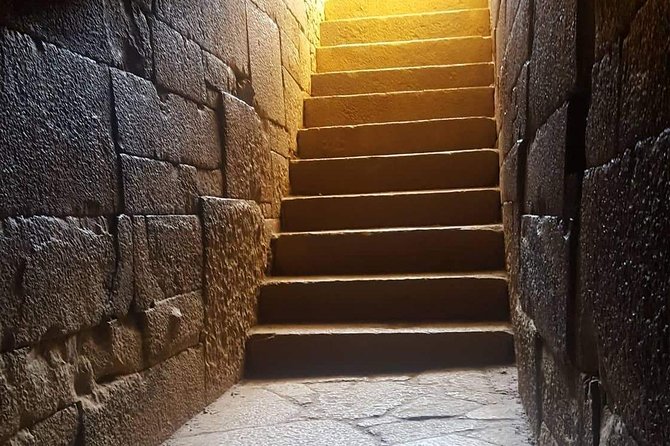
The tour allows about an hour here. That is enough for a meaningful visit, especially if your guide explains the layout and the history of the excavation. The word underground is important: this is not simply a royal monument viewed from a distance. You may enter the tomb areas and see the stonework at close range.
The site is best for people who enjoy archaeological remains in their original setting. If you prefer polished museums with extensive labels, you may find the presentation more basic. The guide therefore matters a great deal, since context helps turn stone chambers into a story about Axumite kingship.
Dongur Palace and the Queen of Sheba tradition
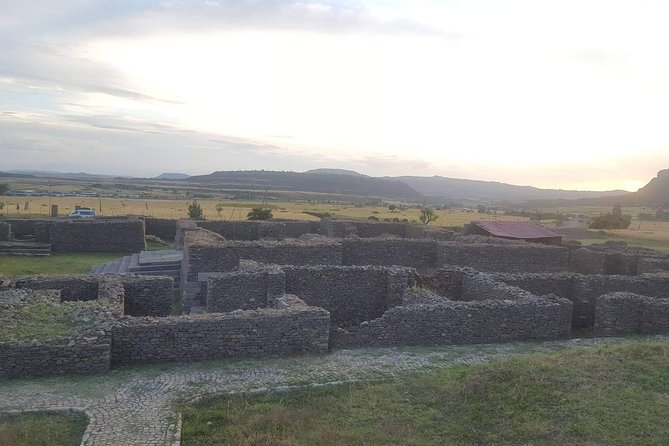
The Queen of Sheba Palace is locally known as Dongur Palace. Local tradition connects it with the Queen of Sheba, who is said to have lived in the tenth century B.C. and later become the mother of Menelik I.
The palace ruins invite you to picture royal life, but you should treat the Queen of Sheba connection as tradition rather than a point proven by modern archaeology. That does not make the visit pointless. Legends are part of how Axum understands its own past, and they remain closely tied to Ethiopian identity.
You have about an hour at the site. The ruins are valuable because they help broaden the day beyond obelisks and churches. You see evidence of domestic and royal architecture, not only monuments built for burial or worship.
I would listen closely to how the guide explains the difference between local belief, written tradition, and archaeological evidence. That is the most rewarding way to visit a place with such a powerful name. You can appreciate the story without accepting every detail as settled fact.
Mayshum, the pool called Queen of Sheba’s Bath
The final major stop is Queen of Sheba’s Bath, locally called Mayshum, meaning the chieftain water. Local tradition says the pool was built for the Queen’s recreation.
Today, local people use the pool for swimming, and it also plays a role during the Epiphany festival. This gives the site a living connection that many ruins lack. You are not looking only at a relic from the past. You are seeing a place that remains part of local custom.
The visit lasts about 30 minutes, so expect a brief stop rather than a long swim or extended exploration. The appeal is the combination of legend, public use, and religious tradition. It is a useful reminder that Axum’s past is not sealed behind museum glass.
What the $152.57 price really covers
At $152.57 per person, this is a premium half-day experience rather than a low-cost sightseeing loop. The price includes pickup and drop-off within Axum, an air-conditioned minivan, a professional guide, bottled water, entrance fees, and the privacy of traveling only with your own group.
That last point is important. Private touring usually costs more than joining a large shared vehicle, but it can be worthwhile in Axum because the stops are varied and some need explanation. You are paying for transport and organization as much as for the monuments themselves.
The value is strongest if you have limited time, want a guide, or do not want to arrange separate rides to the tombs and palace. It is less compelling if you already have a vehicle, prefer to explore independently, or plan to spend several days studying Axum at a slower pace.
The tour has received a five-star rating from the two posted ratings, with special praise for the organization and for the range of major sights. One review specifically praised Beka for arranging the visit well, while another described the obelisks, church, and trilingual inscription as especially impressive. Since the group is private, Beka’s role can make the day feel more personal and better coordinated.
Who should book this Axum experience?
I would recommend this tour to first-time visitors who want a strong overview of Axum’s main historic and religious sites. It suits couples, families, and small groups who value a private vehicle and want the day organized from beginning to end.
It is also a good fit for travelers with only one day in Axum. The route brings together the city’s most famous monuments, the royal tombs, and the Queen of Sheba traditions without asking you to manage the details yourself.
You should think twice if your main goal is a slow archaeological study. The schedule gives generous time at the stelae field and church, but the full route still covers six major stops. A specialist may want longer at the inscriptions or tombs than this format allows.
Most people can participate, according to the tour information, but the experience includes historic tombs and several outdoor monuments. If you have concerns about walking or access, ask the provider before booking because the available details do not describe the exact surfaces or accessibility arrangements.
Free cancellation is available if you cancel at least 24 hours before the local start time. Inside that window, the payment is not refunded, and changes are not accepted.
Should you book the Axum day trip?
Book it if you want Axum’s essential sights in one private day, especially the Great Stelae Field, Mary of Zion, the royal tombs, and the Queen of Sheba sites. The included transport, guide, water, and entrance fees make the $152.57 price easier to justify for a small group.
Skip it if you want an unhurried, self-directed visit or if food-inclusive touring is important to you. For most first-time visitors, though, this is a practical way to understand why Axum remains one of Ethiopia’s most important ancient centers.
FAQ
Where does the Axum tour begin?
Pickup is offered from designated meeting points within Axum town. The listed start time is 8:30 a.m.
How long does the experience last?
The tour lasts approximately seven hours, including pickup and return within Axum.
Is this a private tour?
Yes. Only your group participates in the activity.
What transportation is provided?
Transport is provided in an air-conditioned minivan, with pickup and drop-off within Axum town.
Are entrance fees included?
Yes. Entrance fees for the included attractions are covered in the tour price.
Is food included?
No. Food and drinks are not included, although bottles of drinking water are provided. Alcoholic drinks are available to purchase separately.
What is the cancellation policy?
You can cancel at least 24 hours before the local start time for a full refund. Cancellations or changes made less than 24 hours before the start time are not accepted for a refund.
New on the Ethiopia list
- Yod Abyssinia Cultural Night: Dinner, Music, and Dance★ 5.0 · 7 reviews
- Tigray Mountain Church’s Day Trip from Mekele★ 5.0 · 2 reviews
- Mekele City Tour★ 5.0 · 2 reviews
- Day trip to Tigray Churches★ 5.0 · 2 reviews
- 2 days Tigray Church★ 5.0 · 3 reviews
- 3 Day Tour of Geralta Churches Tigray Church’s★ 5.0 · 2 reviews
- Trekking in Ethiopia’s Lalibela Wollo Highland 4 Days / 3 Nights★ 5.0 · 6 reviews
- Lalibela Backpacker tours★ 5.0 · 6 reviews
Historic Route Tours, compared.

5 DAYS Lalibela, Axum, Tigray churches and Danakil
Read our review →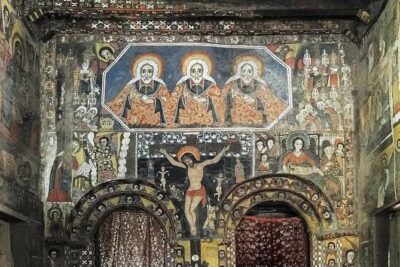
Lalibela, Axum, Danakil and Omo Valley 8 DAYS
Read our review →
5 DAYS Axum, Lalibela, Tigray churches and Danakil
Read our review →
North Ethiopia Round Trip Tours From Addis Ababa
Read our review →
Historical tours – in five days, Addis Ababa, Axum, Laliebla and Gonder
Read our review →
5-Day Northern Ethiopia Tour : 3D Simien Mountains Trek & Axum.
Read our review →Browse the lists this tour appears in