

Reviewed · MARKETS
Addis Ababa +Mount Entoto View Point,Museums Palace Market Tours
Addis Ababa reveals itself from above. This half-day outing combines Mount Entoto views with palaces, churches, museums, markets, monuments, coffee, and honey, giving you a useful first look at Ethiopia’s capital without the strain of arranging each stop yourself. I especially like the mix of big historical sights and ordinary local shopping at Shiro Meda Market.
The tour also works well for a short stay or airport layover, since pickup and drop-off are offered and the schedule can be adjusted to your interests. The main caution is time: the advertised four to six hours is tight for so many stops, and cloudy or rainy weather can hide Entoto’s famous view.
In This Review
- Key points to know before booking
- Why this Addis Ababa route works well
- Climbing Mount Entoto to 3,200 meters
- Menelik II’s palace and the founding of the capital
- Saint Mary Church and the museum stop
- Shiro Meda Market: the best place to shop for textiles
- The National Museum and the famous Lucy fossil
- Monuments that explain modern Ethiopian history
- Ethiopian coffee at Tomoca
- Lunch, honey, and the final city stops
- Timing, transport, and what the price covers
- Who should choose this tour?
- Should you book the Addis Ababa and Entoto tour?
- FAQ
- How long does the Addis Ababa and Mount Entoto tour last?
- Is pickup included?
- Is lunch included in the price?
- Is the Entoto Park entrance fee included?
- What can I buy at Shiro Meda Market?
- Does the tour visit Lucy?
- How many people can join the tour?
Key points to know before booking
- Mount Entoto reaches about 3,200 meters, giving you a cool highland setting and wide views over Addis Ababa when the sky is clear.
- Menelik II’s palace and museum add useful context to the founding of Addis Ababa and Ethiopia’s imperial past.
- Shiro Meda Market is the shopping highlight, with handwoven cotton clothing, scarves, linens, jewelry, and gifts where bargaining is expected.
- The National Museum includes Lucy, the famous Australopithecus afarensis fossil that changed ideas about early human development.
- Tomoca Coffee brings a strong local finish, with Ethiopian beans, roasting aromas, and coffee or macchiato available to buy.
- The $65.55 price includes transport, guide services, Wi-Fi, and most admission fees, but lunch, tips, and the $9 Entoto Park fee are extra.
Why this Addis Ababa route works well

At $65.55 per person, this is not the cheapest way to see Addis Ababa, but it offers solid value if you want transport, a guide, and a broad introduction to the city in one outing. Airport or hotel pickup matters here. Addis Ababa is spread out, and moving from Entoto Hill to the museum, markets, monuments, and coffee shop would take planning and local transport knowledge.
The group can reach a maximum of 15 people. That is small enough for a more personal day than a large coach tour, though the experience will feel more relaxed with a smaller group. The guide is a major part of the value. Yonas receives repeated praise for his friendly manner, clear explanations, and ability to shape the day around individual interests.
The route packs in a lot. You may spend only 10 to 20 minutes at some monuments, while the palace and museum receive more time. This suits you if you prefer a broad introduction rather than one site explored at length. It is less suitable if you want a slow museum visit, an extended market session, and a long meal all in the same half-day.
More market wanders in Addis Ababa:
- Ethiopian Culinary Tour – Market, Food, Coffee Ceremony & more
★ 5.0 · 65 reviews - Go wheretheLocalsgo, Eatwhat thelocalseat!open Market&More Tours
★ 5.0 · 33 reviews - Market Tour and Cooking Class with a Coffee Ceremony at a Home in Addis Ababa
★ 5.0 · 32 reviews
Climbing Mount Entoto to 3,200 meters
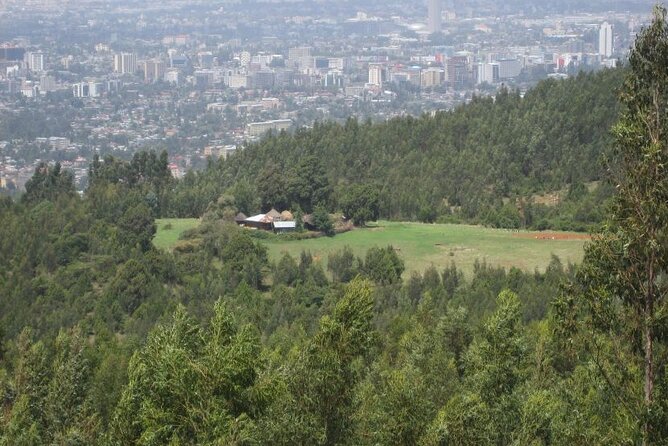
The drive up Entoto Hill is one of the most memorable parts of the experience. As the road climbs, the city drops away and eucalyptus trees line the slopes. You pass homes, small settlements, and highland vegetation before reaching the upper part of the mountain.
Entoto is often described as the roof of Addis Ababa. At roughly 3,200 meters, it offers a cooler setting than the city below and, on a clear day, a broad view across the capital and surrounding countryside. The view is the main reason to make the climb, so weather matters. During the rainy season, cloud can cover much of the panorama.
You receive time at the Mount Entoto viewpoint, but entrance to Entoto Park is not included. The park fee is listed as $9 per person. That extra charge is worth checking before you arrive, especially if the park itself is important to you. The viewpoint and the park should not be treated as the same included experience.
The altitude may also affect how you feel. You do not need to turn this into a strenuous hike, since the outing is vehicle-based, but take your time when getting out of the car. The cool air, steep roads, and high elevation make this a sightseeing stop rather than a place to rush through.
Menelik II’s palace and the founding of the capital
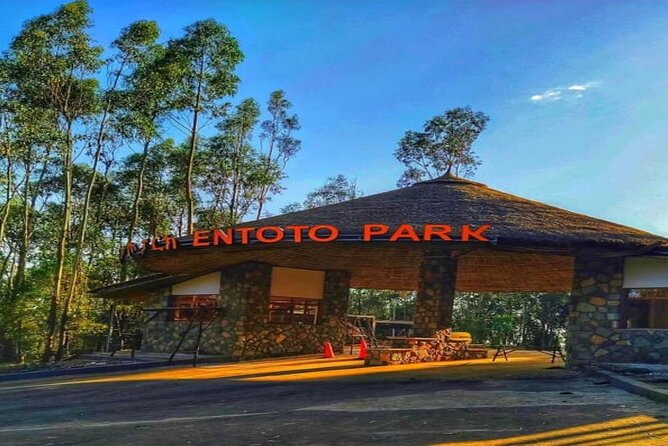
Menelik II built his palace on Entoto after coming from Ankober and establishing Addis Ababa. The mountain served as his permanent camp and headquarters during the early development of the capital. That setting helps explain why Entoto is more than a scenic overlook.
The palace area also has religious importance. Entoto is regarded as a sacred mountain and includes monasteries and important churches, including Saint Mary and Saint Raguel. Admission to Menelik’s palace and the Saint Mary church is included, along with the Menelik Museum.
Allow about an hour here. That is enough to see the palace complex and museum without turning the stop into a rushed photo break. You can expect a focus on imperial life, the formation of Addis Ababa, and the people and institutions connected to Menelik II.
The eucalyptus forest adds another layer to the visit. The trees were brought from Australia during Menelik’s reign and planted widely during Emperor Haile Selassie’s time. The forest later became an important source of firewood and building material for the city, which gives the mountain practical importance as well as religious and historical meaning.
Saint Mary Church and the museum stop
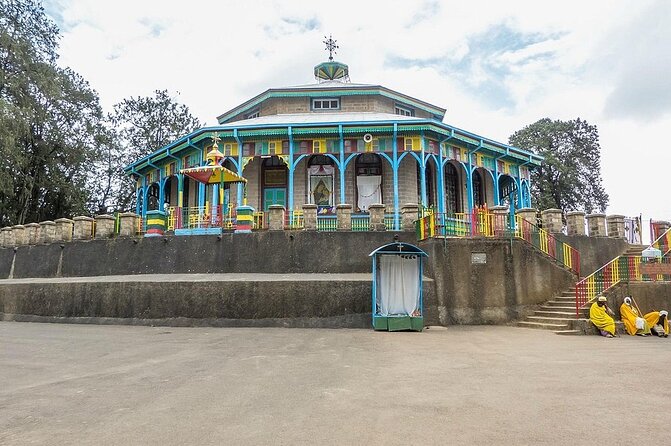
Saint Mary, also known as Entoto Maryam Cathedral, is worth treating as more than a quick exterior stop. The church and its museum connect the mountain’s religious life with Ethiopia’s royal past.
The included admission is useful because several separate entry costs can quickly make a city tour more expensive. Still, the exact pace depends on traffic, opening conditions, and how much time you spend at the palace. If church art or religious history matters to you, tell the guide early so the visit does not get squeezed by later stops.
The high setting and forest around the church make this part of the tour feel different from central Addis Ababa. You move from city streets to a quieter mountain environment, then return downhill toward the markets and museums.
Museums worth an hour in Addis Ababa:
- Museum Highlights Guided Day Tour in Addis Ababa
★ 5.0 · 9 reviews - Airport Layover Tour | Half Day Addis City Tour : sightseeing, museum , markets
★ 5.0 · 4 reviews - Addis Ababa Museums Tour
★ 5.0 · 2 reviews - Tour 11 monolithic rock churches & museum in Lalibela & cave church with mummies
★ 5.0 · 37 reviews
Shiro Meda Market: the best place to shop for textiles
Shiro Meda, also spelled Chiromeda, is one of the most useful stops for buying Ethiopian cloth and small gifts. The market specializes in handwoven cotton goods, including clothing, wedding dresses, linens, scarves, tablecloths, and bed covers.
You may also find T-shirts, necklaces, earrings, and other small items. The textiles are the real reason to come. Ethiopian cotton garments often feature colorful embroidery, and the market gives you a chance to see locally made clothing rather than only souvenir-shop products.
Bargaining is expected. Set a price in your mind before you begin, compare a few items, and keep the exchange friendly. The 35-minute stop is enough for a look and a modest purchase, but not for a long, unhurried shopping session. If you are serious about buying fabric or clothing, ask whether the schedule can give you more time.
This is also a good place to watch how a local market works. The stop is near the US Embassy, but it feels practical and commercial rather than designed for sightseeing. I like that contrast. It gives the tour a more everyday side after the formal palace and church visits.
The National Museum and the famous Lucy fossil
The National Museum of Ethiopia is the strongest museum stop on the route. Its collections cover archaeology, early civilizations, art, and cultural objects, with Lucy as the star attraction.
Lucy is a roughly 3.5-million-year-old fossil of Australopithecus afarensis. Her Ethiopian name is Dinkinesh, meaning thou art wonderful. The 1974 discovery helped change scientific ideas about early human development by showing that human ancestors walked upright much earlier than many experts had believed.
You have about 45 minutes here. That is enough to see the principal exhibits and understand why Lucy matters, but it is not enough for a careful look at every gallery. If you want time with the archaeological collections from pre-Aksumite civilization, keep your pace steady and avoid spending the entire visit in one room.
The museum adds essential context to the rest of the day. Entoto and Menelik II show you the story of the modern capital and imperial Ethiopia. The National Museum reaches much farther back, placing the country in the story of human origins and early African civilization.
Monuments that explain modern Ethiopian history
Several short stops bring the tour into the 20th century. They are brief, but they add useful reminders that Addis Ababa’s public spaces carry political memory.
The Tiglachin Monument, also called the Derg Monument, honors Ethiopian and Cuban soldiers involved in the Ogaden War. It includes a central statue, a tall pillar, wall reliefs, and areas showing Cuban soldiers. Some of the sculptures were provided by North Korea in 1984 during the rule of Mengistu Haile Mariam.
You have about 20 minutes here, which is enough to see the monument and hear its basic story. The site may interest you most if you want to understand Ethiopia’s more recent political past, rather than focusing only on emperors and ancient archaeology.
The Yekatit 12 monument at Sidist Kilo Square commemorates the Italian war crime and pogrom that took place from February 19 to 21, 1937. Its name comes from the Ethiopian calendar date. The obelisk sits in the center of the roundabout, making it a quick but meaningful urban stop.
The Lion of Judah offers a different symbol. The lion has biblical links to the tribe of Judah and became associated with the Ethiopian monarchy, especially Emperor Haile Selassie. Menelik II Square adds another imperial marker, with an equestrian statue of the emperor and a role as a gathering place for religious and national holidays.
These stops are not long guided walks. Think of them as focused introductions from the vehicle or at the roadside. Traffic and access can affect how much time you spend outside.
Ethiopian coffee at Tomoca
Tomoca Coffee gives the route a welcome sensory pause. Ethiopia is widely associated with coffee, and the stop lets you smell freshly roasted Yirgacheffe beans and order coffee or a macchiato.
The shop is described as the oldest Tomoca location, with more than half a century of coffee-making tradition. You can buy roasted or ground beans to take home, which is more practical than carrying a fragile souvenir from one of the earlier stops.
Frankincense may also be part of the traditional Ethiopian coffee setting. If you have never experienced Ethiopian coffee culture, ask the guide or staff to explain what you are seeing. The stop is only about 15 minutes, so it is best viewed as a taste and a buying opportunity, not a full coffee ceremony lasting an hour.
I like this stop because it connects an internationally known product with a local shop. It also breaks up the historical material with something simple: smell, taste, and a small souvenir.
Lunch, honey, and the final city stops
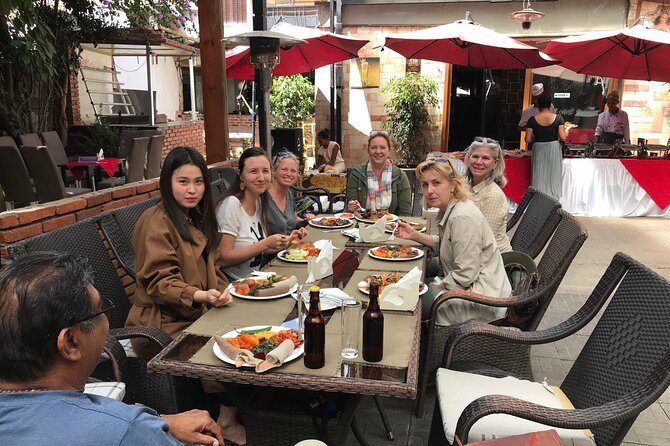
Lunch at the Addis Ababa Restaurant is not included, so plan for an additional food bill. The restaurant is named after Ethiopia’s capital and uses murals and lamps decorated with Ethiopian cultural and historical images, including angels from Debre Birhan Selassie Church and a painting of the Queen of Sheba with King Solomon.
The scheduled lunch stop lasts about 45 minutes. That gives you time for a proper meal, though the overall route may require flexibility. If you want a leisurely lunch or a coffee ceremony, you may need to shorten another stop.
The final honey visit takes about 10 minutes in the Bole area near Flamingo, in front of the Hyatt Regency Hotel. Safi Honey offers different Ethiopian honey varieties, including light and stronger flavors, raw honey, and infused products. This is a straightforward shopping stop rather than a long cultural visit.
You can buy honey as another food souvenir, but remember that any purchases are separate from the tour price. The stop may be especially convenient if your hotel is in the Bole area or if you want a small gift that is easy to explain and use at home.
Timing, transport, and what the price covers
The experience lasts approximately four to six hours and includes air-conditioned transport, hotel or airport pickup and drop-off, a driver-guide, Wi-Fi on board, taxes, and listed attraction fees. That package is useful in Addis Ababa, where traffic can change the timing from one stop to the next.
The advertised route contains more stops than most four-hour city tours. You should expect a brisk pace, especially if you want the mountain, palace, museum, market, lunch, monuments, coffee, and honey in one outing. A flexible itinerary helps, but flexibility has limits when the day includes long drives and several admissions.
Included fees cover Menelik Palace, Saint Mary church, the Menelik Museum, Mount Entoto viewpoints, and the listed attractions. You still pay for lunch, alcoholic drinks, tips, and Entoto Park if you choose to enter it. The park charge is specifically listed as $9 per person.
Most people can participate, and service animals are allowed. The tour is near public transportation, though the included pickup is the more practical choice for an airport arrival or hotel stay. Confirmation is provided at booking, and cancellation is free if you cancel at least 24 hours before the start time.
Who should choose this tour?
I would choose this experience if you have a short stay in Addis Ababa, want airport pickup, or prefer a guided overview before exploring the city on your own. It is also a good fit for solo visitors who want a structured day without joining a very large group.
You will get the most from it if you enjoy switching between subjects: imperial history, religion, archaeology, shopping, political monuments, coffee, and food. The guide’s role matters, and Yonas has been praised for making the day personal and informative when assigned to the group.
I would look elsewhere if your priority is a long hike on Entoto, a full museum day, or extended bargaining time at Shiro Meda. Cloud and rain can also weaken the mountain viewpoint, so keep expectations realistic. The city’s history and museums still make the outing worthwhile in poor weather, but the panorama may disappear.
The experience has a five-star rating from 42 reviews and a 100 percent recommendation rate. Those figures support its reputation for organization, friendly guiding, and efficient use of limited time, though a high rating cannot remove the practical limits of a packed schedule.
Should you book the Addis Ababa and Entoto tour?
Book it if you want the city’s major themes in one well-managed half-day. The combination of Entoto, Menelik’s palace, Lucy, Shiro Meda, monuments, coffee, and honey gives you far more variety than a simple viewpoint tour, and the included transport makes the $65.55 cost reasonable for a short visit.
Before paying, decide if you want Entoto Park itself, since its $9 fee is extra. Also tell the guide which stops matter most, especially if you care about museum time, shopping, or lunch. For a first look at Addis Ababa, a short layover, or a single free day, this is an efficient and worthwhile choice.
FAQ
How long does the Addis Ababa and Mount Entoto tour last?
The tour lasts approximately four to six hours. The exact timing can vary because the route includes several stops and Addis Ababa traffic.
Is pickup included?
Yes. Pickup and drop-off are offered from your airport or hotel.
Is lunch included in the price?
No. Lunch at the Addis Ababa Restaurant is not included. Alcoholic drinks are also extra.
Is the Entoto Park entrance fee included?
No. The Entoto Park entrance fee is listed as $9 per person. Other listed attraction fees, including Menelik Palace, Saint Mary church, the Menelik Museum, and Mount Entoto viewpoints, are included.
What can I buy at Shiro Meda Market?
You can shop for Ethiopian handwoven cotton clothing, wedding dresses, linens, scarves, bed covers, tablecloths, T-shirts, necklaces, and earrings. Bargaining is expected.
Does the tour visit Lucy?
Yes. The National Museum of Ethiopia includes Lucy, the approximately 3.5-million-year-old Australopithecus afarensis fossil.
How many people can join the tour?
The maximum group size is 15 people. The tour is also described as suitable for most participants, and service animals are allowed.
Shopping Around Addis Ababa
- Addis Mercato Market
★ 5.0 · 22 reviews - Vintage Coffee Shops, Restaurants, Sightseeing in Addis Ababa
★ 5.0 · 17 reviews - Ethiopian Culinary Tour – Market, Coffee Ceremony and More
★ 5.0 · 10 reviews - Addis Ababa: Entoto hill and Mercato Market layover tour
★ 5.0 · 5 reviews
New on the Addis Ababa list
- Yod Abyssinia Cultural Night: Dinner, Music, and Dance★ 5.0 · 7 reviews
- Locally crafted beer and wine tasting and nightlife in Addis tour★ 5.0 · 6 reviews
- Addis Ababa City Tours Full-Day Tours★ 5.0 · 5 reviews
- Stunning Views Wonchi Crater Lake a Private Day Trip★ 5.0 · 3 reviews
- Visiting the wonders of Lalibela in Three (3) days and Two ( 2) nights★ 5.0 · 2 reviews
- Unique Ethiopian Cooking Class and Coffee Ceremony with a Local in Addis Ababa★ 4.5 · 7 reviews
- Tribes of the Ethiopian Omo Valley – 9 Day Tour★ 5.0 · 5 reviews
- Two days Lake Wenchi and Menagesha Forest★ 5.0 · 3 reviews
Markets, compared.

Ethiopian Culinary Tour – Market, Food, Coffee Ceremony & more
Read our review →
Go wheretheLocalsgo, Eatwhat thelocalseat!open Market&More Tours
Read our review →
Market Tour and Cooking Class with a Coffee Ceremony at a Home in Addis Ababa
Read our review →

Ethiopian Culinary Tour – Market, Coffee Ceremony and More
Read our review →

Browse the lists this tour appears in