

Reviewed · OMO VALLEY TRIBE TOURS
3-Day Cultural Tour in South Omo Valley
South Omo rewards curious travelers. This three-day cultural tour links Jinka, Turmi, Omorate, Mago National Park, and a Mursi village in a tight schedule from Addis Ababa. I like its small maximum of six people and the care provided by guide Tariku and driver Sitotaw, two details that can make long drives and quick cultural visits feel far more personal.
I also like the mix of ethnic communities: Hamer, Bana, Dassanech, and Mursi traditions differ in dress, language, body adornment, work, and ceremony. The main caution is time. You cover large distances in three days, and the $700 price does not include lunch, dinner, or tips.
In This Review
- Key points to know before booking
- Why this corner of Ethiopia is worth the effort
- Addis Ababa to Jinka, then onward to Turmi
- Turmi and the Hamer ceremonial calendar
- Omorate and the Omo River crossing
- Mago National Park and the Mursi village
- A small group makes a practical difference
- What the $700 price really includes
- Who will enjoy this tour most
- Booking details and cancellation terms
- Should you book the South Omo tour?
- FAQ
- Where does the tour start and finish?
- What time does the tour start?
- How many people can join the tour?
- Is pickup available?
- Is transportation included?
- Which communities does the tour visit?
- Is accommodation included?
- Are lunch and dinner included?
- Can I cancel for a full refund?
Key points to know before booking

- A flight begins the journey: You fly from Addis Ababa to Jinka, saving valuable road time in a region where distances are long.
- Four cultural encounters are possible: The route includes Bana, Hamer, Dassanech, and Mursi communities, each with distinct customs and appearance.
- Turmi is the cultural center: A Hamer marriage ceremony and bull-jumping event may take priority if one is taking place.
- Omorate adds a river crossing: You cross the Omo River in a dugout canoe on the way to Dassanech communities.
- The group is capped at six: This is useful for a flexible, more attentive experience with the English-speaking guide.
- The price covers the basics, not every meal: Transport, park and entry fees, accommodation with breakfast, and the guide are included. Lunch, dinner, and tips are extra.
Why this corner of Ethiopia is worth the effort
The Lower Omo River region is known for its remarkable cultural variety. Eight ethnic communities live across the wider Omo area, with a combined population of about 200,000. The value of this trip is not simply seeing people in distinctive clothing. It is the chance to learn how different communities maintain their own customs, crafts, food traditions, and ways of life within one broad region.
That also calls for care. A community visit should be approached as a meeting between people, not a collection of photographs. Ask before taking pictures, listen to the guide, and remember that ceremonies such as marriage rituals belong to the community first. The guide’s role matters here. A local-led visit can help you understand what you are seeing and avoid treating a serious tradition like a staged show.
The route is designed for people who want a concentrated look at South Omo rather than a slow, single-region stay. You will see several communities, but you will also spend many hours in the vehicle. The trip is best understood as an active introduction, not a relaxed resort holiday.
More Omo Valley Tribe Tours in Addis Ababa
- 6 Days Omo Valley Tribes Tours From Addis Ababa
★ 5.0 · 33 reviews - 3 Days Omo Valley Tour
★ 5.0 · 24 reviews - Danakil Depression, Lalibela, Omo Valley and Simien Mountains
★ 5.0 · 23 reviews
Addis Ababa to Jinka, then onward to Turmi
The tour starts at 9:00 a.m. at Bole Addis Ababa International Airport. The first major transfer is a flight to Jinka, followed by a road journey to Turmi, home of the Hamer people. An air-conditioned vehicle is included, an important comfort in a hot region with long drives.
The Hamer, also called Hamar, live east of the Omo River, with communities around Turmi and Dimeka. They are well known for colorful beadwork and body adornment. Hamer women may wear heavy polished iron jewelry around the neck, while scarification and other forms of adornment carry social and personal meaning.
The itinerary also includes a visit to a Bana village on the way. This gives you an early comparison between two communities rather than waiting until the final day to see cultural differences. The first day is listed as about six hours, including the journey and visit.
The Hamer material requires respectful attention. The description refers to ritual flogging connected with marriage customs, including scars that can be viewed by Hamer women as signs of devotion. This is not light entertainment, and you should not assume that a dramatic ritual is available on demand. Listen closely to how Tariku explains the practice and follow local guidance around photography and personal space.
The accommodation includes breakfast, but lunch and dinner are not part of the stated inclusions. Plan your food budget accordingly. The available feedback praises the way the team arranged transport, accommodation, and meals, but the formal tour details specifically list breakfast only, so you should confirm what is provided on your travel dates.
Turmi and the Hamer ceremonial calendar
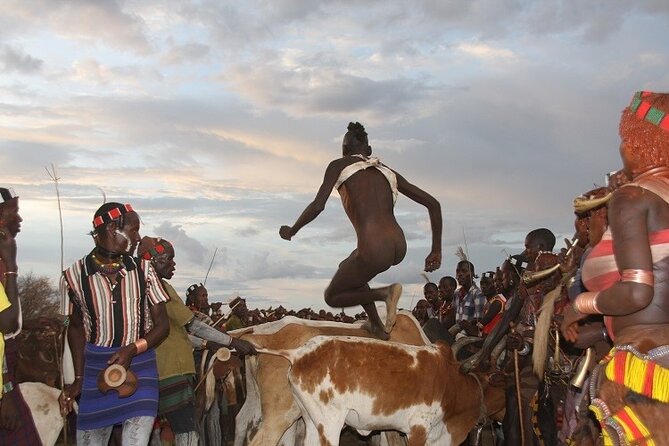
Turmi is the emotional center of the route. It is associated with Hamer villages, traditional gatherings, and marriage ceremonies. If a ceremony is taking place, the schedule may change so you can see a bull-jumping event and related customs rather than make the planned afternoon excursion.
That flexibility is a real benefit. A ceremony is tied to community life and timing, not a fixed tourist timetable. If you are lucky enough to encounter one, it may become the strongest part of the trip. At the same time, you should accept that the final program can change. The Omorate outing may be canceled or adjusted if a bull-jumping event makes more sense for the day.
Bull jumping is connected with Hamer marriage traditions. The event is important because it marks a young man’s passage into a new stage of life. You are seeing a public ritual with meaning for the community, not simply an action display.
This is also where an experienced guide adds value. Tariku received especially warm praise for looking after people throughout the trip. That kind of practical attention matters when plans shift, roads take longer than expected, or you need help understanding what is happening around you.
Omorate and the Omo River crossing

Day two takes you to Omorate, about 70 kilometers from Turmi each way. The drive takes time, but it leads to a very different setting and a visit with the Dassanech people, known for a nomadic way of life and distinctive body decoration and scarification.
The Omo River crossing is one of the day’s clearest physical moments. You cross by dugout canoe, with views of the river along the way. The crossing is not just transport. It helps you understand how the river shapes movement, settlement, and daily life in this part of Ethiopia.
The day is scheduled for roughly eight hours, so you should expect an early start and a tiring return. This is not the day for a slow lunch or an unplanned rest stop. It is a good fit if you prefer seeing more of the region and can handle long road transfers.
Because lunch and dinner are excluded, ask the operator how meal stops work during this long outing. The vehicle is air-conditioned, which helps, but comfort cannot remove the distance. Bring water and keep your day bag organized, especially if you need to change transport for the river crossing.
The Dassanech visit also gives the tour a useful contrast. The Hamer are associated with settled villages around Turmi, while the Dassanech are described through their nomadic lifestyle. The point is not to rank one culture against another. It is to notice how geography and local history produce different ways of living in the same wider region.
A different sort of day out, same part of Ethiopia:
- Full Day Tour of Addis Ababa with Hotel Pickup and Drop-off
★ 5.0 · 430 reviews - Taste of Ethiopia
★ 5.0 · 406 reviews - Day Trip From Addis Ababa See Historical Monastery,Stunning Nature,Animals,Birds
★ 5.0 · 303 reviews - Addis Ababa: Debre Libanos, Blue Nile Gorge, and Cave Tour
★ 4.5 · 256 reviews
Mago National Park and the Mursi village
On the third day, you drive through Mago National Park to a Mursi village. The park adds a natural setting to a tour otherwise focused on people and culture. The route is listed as about four hours, though road conditions and the day’s exact timing may affect the schedule.
The Mursi are widely recognized for lower-lip and earlobe plates. These forms of body adornment are often the first thing people notice, but they are only one part of Mursi identity. You will get more from the visit if you allow the guide to explain the social meaning and avoid reducing an entire community to one visual custom.
The park drive also changes the pace. After the long second day, the final outing is shorter on paper, but it still involves a substantial road journey from Jinka and back toward the airport connection. Confirm the flight and return timing carefully before booking, since the tour ends at Bole airport in Addis Ababa.
The route description places Mago National Park on both the first and third day, although the first day’s details focus mainly on the journey to Turmi and a Bana village, while the third day clearly describes the drive to a Mursi village. Treat the exact order as flexible and ask Liyu Ethiopia Tours to confirm the current schedule.
A small group makes a practical difference
The maximum group size is six people. That is one of the strongest features of the trip. A small group makes it easier to hear the English-speaking guide, ask questions, adjust the pace, and avoid the impersonal feel of a large coach.
The strongest praise for this tour centers on the team’s care and organization. Tariku is named as the guide, and Sitotaw as the driver. The feedback describes them as responsible and attentive, with one person saying the pair felt like family during the three days. That is high praise, especially for a route involving flights, long road journeys, changing plans, several communities, and overnight arrangements.
The driver’s work deserves attention too. South Omo is not a simple point-to-point sightseeing route. You need someone who can manage the roads, time the transfers, and keep the day moving while the guide handles interpretation. Sitotaw’s role appears to have been an important part of the positive experience.
Group discounts are available, although no discount amount is given. If you are traveling with friends or family, ask for the current group rate. The mobile ticket and pickup option also make the booking process easier, but you still need to confirm the precise pickup instructions at Bole airport.
What the $700 price really includes
At $700 per person, this is not a budget trip. The price should be judged against the difficult logistics rather than only the number of sightseeing stops. A flight from Addis Ababa to Jinka, private road transport in an air-conditioned vehicle, park and entry fees, accommodation with breakfast, and an English-speaking guide are included.
Those inclusions cover the parts that would be hardest to arrange independently. The small group and local-led approach also add value. You are paying for coordination in a remote region, not just for a driver and a list of stops.
The value is less convincing if you want a slow cultural stay or a fully inclusive package. Lunch, dinner, and tips are extra, and three days leaves little room for delays or rest. You should also budget for any customary photography payments or local charges only after confirming the policy with the operator. No extra amount is stated here, so do not rely on guesswork.
Accommodation is included with breakfast, but the property name and room standard are not specified. If comfort matters to you, ask where you will stay in Turmi and Jinka, and whether the accommodation is twin, double, or single occupancy. Those details can affect the final value.
Who will enjoy this tour most
I would choose this trip if I wanted a short, organized introduction to South Omo and had limited time in Ethiopia. It suits you if you are comfortable with early starts, long drives, basic accommodation details, and a schedule that may change for an important local ceremony.
It is also a good match if you care about cultural variety. In only three days, you may meet Hamer, Bana, Dassanech, and Mursi communities, with the added setting of Mago National Park and the Omo River.
I would hesitate if you need a leisurely pace, fixed meal arrangements, or a detailed comfort standard before departure. The tour is compact and ambitious. You will see a great deal, but you will not have much spare time.
You should also think about your approach to cultural tourism. The best experience comes from listening, asking permission, and accepting that some traditions are not performances. A good guide can help, but respectful behavior remains your responsibility.
Booking details and cancellation terms
Pickup is offered, and both the starting and ending points are Bole Addis Ababa International Airport. The stated start time is 9:00 a.m. Confirmation is received at booking, and the maximum group size is six people.
Most people can participate, but the listing does not provide a detailed accessibility assessment. If you have mobility needs or concerns about the dugout canoe crossing, long drives, or walking in village and park settings, ask Liyu Ethiopia Tours before paying.
Free cancellation is available if you cancel at least 24 hours before the local start time. Within 24 hours, you receive no refund, and changes are not accepted. The experience also depends on good weather and a minimum number of participants. If the operator cancels for either reason, you are offered another date or experience, or a full refund.
Should you book the South Omo tour?
Book it if you want maximum cultural variety in minimum time, value a small group, and appreciate having the major logistics handled for you. The combination of Hamer ceremony possibilities, a Dassanech visit and river crossing, a Mursi village, and Mago National Park gives the trip real range.
Before booking, confirm the current flight times, accommodation, meal arrangements, exact Mago National Park schedule, and what happens if a ceremony changes the plan. If those details suit you, the $700 cost can be reasonable for a tightly organized three-day introduction led by a caring team.
FAQ
Where does the tour start and finish?
It starts at Bole Addis Ababa International Airport in Addis Ababa and ends at the same airport.
What time does the tour start?
The stated start time is 9:00 a.m.
How many people can join the tour?
The tour has a maximum of six travelers.
Is pickup available?
Yes, pickup is offered.
Is transportation included?
Yes. An air-conditioned vehicle is included, along with the flight from Addis Ababa to Jinka described in the itinerary.
Which communities does the tour visit?
The route includes Bana, Hamer, Dassanech, and Mursi communities.
Is accommodation included?
Yes. Accommodation with breakfast is included.
Are lunch and dinner included?
No. Lunch and dinner are not included. Tips are also excluded.
Can I cancel for a full refund?
Yes, if you cancel at least 24 hours before the experience start time. Cancellations within 24 hours are not refunded.
History-Led Days in Addis Ababa
- Hidden Treasures of Addis Ababa – Food, Culture and History Tour
★ 5.0 · 57 reviews - Northern Ethiopia Historic Route
★ 5.0 · 12 reviews - 5 Days Tour to World Heritage–listed Harrar, Dire Dawa and Awash NATIONAL PARK
★ 4.5 · 10 reviews - DAY TRIP TO THE UNESCO HERITAGE SITE TIYA & Melka Kunture
★ 4.5 · 10 reviews
New on the Addis Ababa list
- Yod Abyssinia Cultural Night: Dinner, Music, and Dance★ 5.0 · 7 reviews
- Locally crafted beer and wine tasting and nightlife in Addis tour★ 5.0 · 6 reviews
- Addis Ababa City Tours Full-Day Tours★ 5.0 · 5 reviews
- Visiting the wonders of Lalibela in Three (3) days and Two ( 2) nights★ 5.0 · 2 reviews
- Stunning Views Wonchi Crater Lake a Private Day Trip★ 5.0 · 3 reviews
- Unique Ethiopian Cooking Class and Coffee Ceremony with a Local in Addis Ababa★ 4.5 · 7 reviews
- Tribes of the Ethiopian Omo Valley – 9 Day Tour★ 5.0 · 5 reviews
- Two days Lake Wenchi and Menagesha Forest★ 5.0 · 3 reviews
Omo Valley Tribe Tours, compared.
6 Days Omo Valley Tribes Tours From Addis Ababa
Read our review →
Lalibela, Axum, Danakil and Omo Valley 8 DAYS
Read our review →

3 days around Arbaminch and Konso Adventure Tours Life Time
Read our review →Danakil Depression, Lalibela, Omo Valley and Simien Mountains
Read our review →

Browse the lists this tour appears in