

Reviewed · OMO VALLEY TRIBE TOURS
5-Day Omo Valley Guided Tour with Accommodation from Addis Abada
Africa changes fast once you leave Addis. This five-day Omo Valley trip combines domestic flights, long 4WD drives, village visits, a Mago National Park outing, and a Lake Chamo boat trip. I like the chance to see several distinct communities in one compact journey, and I like that accommodation, local guides, scouts where needed, and four breakfasts are included.
The main drawback is the pace. You will cover large distances on rough and dry roads, with days of about seven hours and early starts. The $1,170 price can make sense because flights, transport, lodging, and the boat trip are bundled, but you should choose this tour for access and convenience, not for a slow holiday.
In This Review
- What makes this Omo Valley journey different
- From Addis Ababa to Konso on day one
- Karo art and Hamer village life on day two
- Key Afar, Jinka, and a useful museum stop
- Mago National Park and the Mursi visit
- Dorze homes and the Lake Chamo boat trip
- What the $1,170 price really covers
- Practical points that shape the experience
- Who should book this five-day trip?
- Should you book it?
- FAQ
- Where does the tour start?
- Where does the tour end?
- How long is the tour?
- What type of vehicle is used?
- How many people can join the tour?
- Are domestic flights included?
- Is the Lake Chamo boat trip included?
- Are meals included?
- What happens if bad weather cancels the tour?
What makes this Omo Valley journey different

- Karo body painting at Kolcho: Visit the Karo people near the Omo River, where traditional body decoration is a central art form.
- Hamer village life: See mud, wood, and thatch homes arranged around extended family life, with Hamer women known for red-dyed braids and decorated leather skirts.
- Mursi village near Mago National Park: Meet a community associated with clay lip plates, a custom now used less often than in the past.
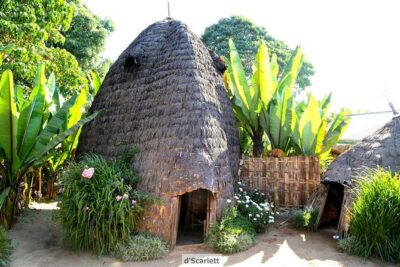
- Dorze homes in the Chencha mountains: Enter tall, beehive-shaped houses and see weaving plus the many uses of false banana.
- Lake Chamo by boat: Search for large crocodiles and possibly hippos before flying back to Addis Ababa.
- Small group transport: A maximum of 11 people and a 4WD Toyota Land Cruiser keep the trip more personal than a large coach tour.
From Addis Ababa to Konso on day one
The journey begins with a domestic flight from Addis Ababa to Arba Minch. From there, you drive to Konso, shifting from city travel to the long roads of southern Ethiopia in a single day.
This first day is mainly a transfer day, so set your expectations accordingly. The benefit is efficiency: you do not spend several extra days driving south from Addis. The trade-off is that the five-day schedule leaves little spare time if a flight, road condition, or village visit takes longer than expected.
The 4WD Toyota Land Cruiser is an important part of the experience. The tour is not built around standard highway travel. A proper four-wheel-drive vehicle is better suited to the dry plains, mountain roads, and long stretches between communities. You also have local guides and a scout when needed, which adds practical support in areas where conditions can change.
Your start time is 7:30 a.m. Pickup is offered in Addis Ababa, and the activity returns you to the same general meeting point after the final flight. The exact accommodation names are not provided, so I would ask the operator about each night’s property before booking if room style or location matters to you.
More Omo Valley Tribe Tours in Addis Ababa
- 6 Days Omo Valley Tribes Tours From Addis Ababa
★ 5.0 · 33 reviews - 3 Days Omo Valley Tour
★ 5.0 · 24 reviews - Danakil Depression, Lalibela, Omo Valley and Simien Mountains
★ 5.0 · 23 reviews
Karo art and Hamer village life on day two
The second day takes you toward the Omo River and Kolcho village, associated here with the Karo people. The Karo are particularly known for traditional body painting, making this one of the more visually distinctive encounters on the route.
The important point is to look beyond the striking paint. The visit is meant to show an artistic tradition tied to community identity and presentation, not simply provide a colorful photo stop. You should listen to your local guide and follow instructions about photography, personal space, and any payment requested for photographs or village access.
The day’s schedule is listed at roughly seven hours, and the driving itself is part of the commitment. Roads through the dry, sandy areas can feel demanding, especially after a flight and another long transfer the day before. Pack water, sun protection, and only the luggage you can manage easily in a 4WD.
Later, you visit a Hamer village near the accommodation. The Hamer are described as taking great pride in their appearance. Women may be seen with red-dyed, plaited hair and leather skirts decorated with shells.
The homes are made from mud, wood, and thatch. Villages are described as small extended-family units, often with roughly 10 to 15 huts placed close together. That arrangement gives you a clearer sense of how daily life is organized around family and shared space.
This is one of the tour’s strongest cultural stops, but it also calls for care. The description presents the villages as largely free from western influence and non-organic materials. That may sound appealing, yet it can encourage an artificial idea of a community frozen in time. Customs and material use change. Treat the visit as a meeting with living communities, not a museum display.
Key Afar, Jinka, and a useful museum stop
On day three, the route crosses dry sandy plains toward Key Afar, then moves into more fertile rolling hills on the way to Jinka. The contrast makes the day worthwhile even before the cultural visits begin.
Jinka provides a change of rhythm. You visit a small museum designed to explain tribal customs and local traditions. I value this kind of stop because it gives context before more village visits. Without background, clothing, body decoration, and household design can become a list of eye-catching details. A museum can help you understand what you are seeing.
There is also an optional walk into town, meeting people along the way before continuing to the accommodation. Since this walk is optional, you can decide how much energy you have after another long drive. The itinerary again allows about seven hours, so a quiet evening may be the better choice for anyone who finds the road tiring.
The route description uses Dasenech Village as the stop heading for this part of the trip, while the detailed plan focuses on Key Afar and Jinka. Because the schedule contains this inconsistency, ask Gelila Ethiopia Tours to confirm the exact villages and overnight location before you pay. That simple check can prevent confusion about what you will see each day.
Mago National Park and the Mursi visit
Day four begins early. You drive through the mountains, with some of the most attractive scenery of the journey, then enter the drier Mago National Park area.
The park adds a wildlife element, although sightings are not promised. You may see dik-dik and lesser kudu. These are smaller antelope, so keep your eyes open and do not expect a full safari with guaranteed large-animal encounters. The value here is the mix of mountain roads, open dry country, and a chance to see wildlife between cultural visits.
The major stop is a Mursi village. Mursi women are known for decorated clay plates placed in the lower lip. The custom begins in adolescence, and some plates can reach the size of a bread-and-butter plate. The description also notes that the practice appears less common now, and some older women have loose skin without a plate inserted.
That detail matters. It reminds you that customs are not static and that the famous image associated with the Mursi does not describe every person you meet. Keep your attention on the people and their lives rather than treating the lip plates as a spectacle.
The day ends with a drive to Konso. Once again, the planned seven-hour day means you should be comfortable with long vehicle transfers. If you want several short stops, unhurried meals, and extra time in each community, this schedule may feel too compressed.
A different sort of day out, same part of Ethiopia:
- Full Day Tour of Addis Ababa with Hotel Pickup and Drop-off
★ 5.0 · 430 reviews - Taste of Ethiopia
★ 5.0 · 406 reviews - Day Trip From Addis Ababa See Historical Monastery,Stunning Nature,Animals,Birds
★ 5.0 · 303 reviews - Addis Ababa: Debre Libanos, Blue Nile Gorge, and Cave Tour
★ 4.5 · 256 reviews
Dorze homes and the Lake Chamo boat trip
The final day begins early with a drive toward Arba Minch. The route crosses dry plains before reaching the fertile valley known for ensete, often called false banana. Arba Minch means Forty Springs, and the area is presented as a productive fruit-growing region.
From Arba Minch, you head into the Chencha mountains to visit a Dorze village. The Dorze are known for fine wool and cotton weaving, so this is the clearest shopping opportunity on the route. If you are interested in textiles, allow room in your luggage and ask about prices before buying.
The Dorze homes are tall and beehive-shaped, made with thatch. You can visit a home, see weaving, and watch a demonstration of the many uses of false banana. This stop has a practical feel because it connects architecture, food, farming, and craft rather than showing only one custom.
After a picnic lunch, the tour goes to Lake Chamo for a boat trip. The main search is for enormous crocodiles, with a chance of seeing hippos as well. Wildlife sightings are never guaranteed by the description, but the boat ride gives the final day a welcome change from the vehicle.
You then return to the airport and fly from Arba Minch to Addis Ababa. Since the flight is part of the final day, keep your schedule flexible after arrival in Addis. The supplied timing describes about five hours for the day, but air travel and road transfers can still make the day feel full.
What the $1,170 price really covers
At $1,170 per person, this is not a budget road trip. It is a specialist route through a remote part of Ethiopia, and the price includes several costly pieces: domestic flights, ground transport in a 4WD Toyota Land Cruiser, bed-and-breakfast accommodation, local guides, a scout where needed, and the Lake Chamo boat trip.
You also receive four breakfasts. Lunches and dinners are not listed among the inclusions, so budget separately for those meals. Alcohol, laundry, internet, fax, telephone, and personal purchases are also excluded.
I see the value mainly in the logistics. Organizing flights, a suitable vehicle, local support, park access, village visits, and a boat trip independently would require time and careful coordination. A maximum group size of 11 also helps. You are not being moved around in a large bus, though the actual group size may be smaller or close to that limit.
The price is harder to justify if you want a relaxed pace or luxury accommodation. The accommodation standard is described only as bed and breakfast, and no hotel details are supplied. Ask what is included in the overnight stays, how many people share each vehicle, and which fees are paid locally before booking.
Practical points that shape the experience
This is an active touring schedule, though no special fitness level is stated. Most people can participate according to the supplied information, but the long drives, early starts, dry conditions, and repeated transfers demand patience.
The tour requires good weather. If poor weather cancels the experience, you are offered another date or a full refund. You can cancel for a full refund if you do so at least three full days before the local start time. A cancellation made inside that window is not refundable, and late changes are not accepted.
Mobile tickets and pickup make the start simple. Public transportation is nearby, but the tour itself depends on arranged transport once you leave Addis Ababa. Confirmation is provided at booking.
Bring light clothing suitable for heat, a layer for mountain areas, sun protection, sturdy shoes, and space for woven goods. A camera can be useful, but respectful behavior is more important than getting a perfect photograph. Ask permission, let the guide explain local expectations, and do not assume every village visit works like a standard attraction.
Who should book this five-day trip?
I would recommend it to you if you want a concentrated introduction to southern Ethiopia and prefer having transport, accommodation, local support, and domestic flights arranged together. It suits curious, flexible people who care about community life, traditional craft, regional scenery, and unusual wildlife encounters.
It is less suitable if you dislike long road journeys, want guaranteed wildlife sightings, need detailed hotel information before departure, or prefer to spend several days in one place. The cultural encounters are the heart of the trip, but they require sensitivity. You should be ready to meet people on their own terms rather than chase staged images.
Gelila Ethiopia Tours has received strong praise for broader Ethiopia trips, including the beauty and range of places visited over ten days. Customer-service replies are signed by Asgedom. That is encouraging, but the available comments are not specific enough to prove how every part of this five-day Omo Valley route operates, so confirm the daily schedule and accommodation directly.
Should you book it?
Book this tour if you want efficient access to the Omo Valley and accept that efficiency means long drives and little free time. The combination of Karo body painting, Hamer homes, the Mursi village, Dorze weaving, Mago National Park, and Lake Chamo gives you a remarkably broad sample of southern Ethiopia in five days.
Before committing, confirm the village names, overnight stays, flight times, meal arrangements, and any local photography or access fees. If those details suit you, the $1,170 cost offers practical value for a demanding but memorable route. If you want a slower and more reflective cultural trip, ask about extending the journey rather than trying to squeeze more into these five days.
FAQ
Where does the tour start?
The tour starts in Addis Ababa, Ethiopia, with a stated start time of 7:30 a.m. Pickup is offered.
Where does the tour end?
The activity ends back at the meeting point in Addis Ababa after the return flight from Arba Minch.
How long is the tour?
The tour lasts approximately five days.
What type of vehicle is used?
Ground transportation is provided in a 4WD Toyota Land Cruiser.
How many people can join the tour?
The maximum group size is 11 people.
Are domestic flights included?
The schedule includes a flight from Addis Ababa to Arba Minch on day one and a flight from Arba Minch back to Addis Ababa on day five. The supplied information does not separately state flight costs, so confirm this with Gelila Ethiopia Tours before booking.
Is the Lake Chamo boat trip included?
Yes. The included services specify a boat trip on Lake Chamo.
Are meals included?
Four breakfasts are included through the bed-and-breakfast arrangement. Lunches and dinners are not listed as included.
What happens if bad weather cancels the tour?
If poor weather causes cancellation, you are offered a different date or a full refund.
New on the Addis Ababa list
- Yod Abyssinia Cultural Night: Dinner, Music, and Dance★ 5.0 · 7 reviews
- Locally crafted beer and wine tasting and nightlife in Addis tour★ 5.0 · 6 reviews
- Addis Ababa City Tours Full-Day Tours★ 5.0 · 5 reviews
- Stunning Views Wonchi Crater Lake a Private Day Trip★ 5.0 · 3 reviews
- Visiting the wonders of Lalibela in Three (3) days and Two ( 2) nights★ 5.0 · 2 reviews
- Unique Ethiopian Cooking Class and Coffee Ceremony with a Local in Addis Ababa★ 4.5 · 7 reviews
- Tribes of the Ethiopian Omo Valley – 9 Day Tour★ 5.0 · 5 reviews
- Two days Lake Wenchi and Menagesha Forest★ 5.0 · 3 reviews
Omo Valley Tribe Tours, compared.
6 Days Omo Valley Tribes Tours From Addis Ababa
Read our review →
Lalibela, Axum, Danakil and Omo Valley 8 DAYS
Read our review →

3 days around Arbaminch and Konso Adventure Tours Life Time
Read our review →Danakil Depression, Lalibela, Omo Valley and Simien Mountains
Read our review →

Browse the lists this tour appears in