
Reviewed · OMO VALLEY TRIBE TOURS
5 days Omo valley
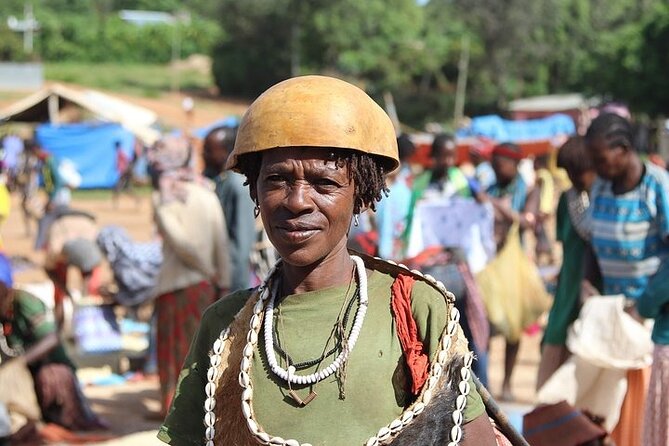
Culture comes first in Ethiopia’s Omo Valley. This five-day journey from Addis Ababa combines village visits, market days, a Lake Chamo boat safari, and long drives through southern Ethiopia. I like the intimate group size, capped at 13 people, and the fact that the price of $830 per person covers private transport, accommodation, guides, taxes, and village entry fees. I also like the chance to meet several distinct communities rather than stopping at just one famous village.
The main drawback is the schedule. The itinerary packs a great deal into four listed sightseeing days, while the tour is advertised as five days. Some drives are long, and the final day is not clearly described. You should confirm the exact day-five plan, flight arrangements, meals, and whether the Mursi visit is included before paying.
In This Review
- What makes this Omo Valley trip worth considering
- The big picture: culture, roads, and a demanding schedule
- Day 1: Arbaminch and the Dorze villages above the city
- Day 2: Lake Chamo, Konso, and the road toward Turmi
- Day 3: Karo art, Nyangatom traditions, and a Hamer village
- Day 4: Dassenech life beside the Omo River
- The missing fifth day needs clarification
- What the company appears to do well
- Accommodation, transport, and the real cost of comfort
- Who should book this five-day route
- Cancellation and booking advice
- Should you book the Omo Valley tour?
- FAQ
- Where does the Omo Valley tour begin?
- How long is the tour?
- How much does the tour cost?
- What is the maximum group size?
- Which communities are included?
- Are market visits included?
- Is transportation included?
- Are meals included?
- Can I cancel for a full refund?
What makes this Omo Valley trip worth considering
- A small group of up to 13 people: This is a more manageable size for village visits, vehicle travel, and questions for your guide.
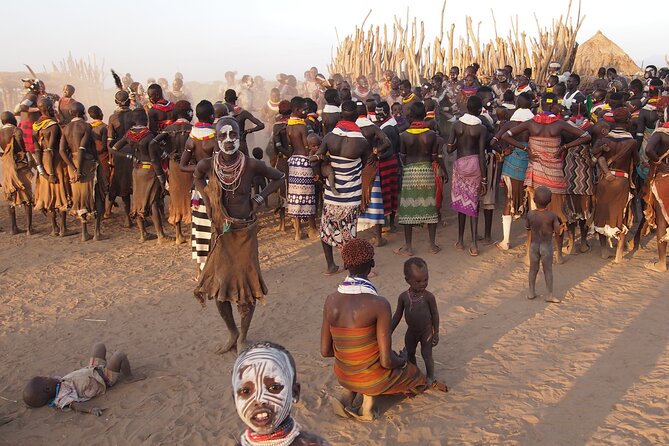
- Several cultural regions in one trip: You visit Dorze, Konso, Karo, Nyangatom, Hamer, Dassenech, and Ari communities.
- Lake Chamo by boat: The water excursion gives the trip a break from road travel and adds a wildlife-oriented stop.
- Markets timed to certain weekdays: Keyafer is listed for Thursdays and Dimeka for Saturdays, so your departure date matters.
- Private transport and four nights of lodging: The package reduces the need to arrange separate vehicles and hotels in southern Ethiopia.
- Strong praise for organization and service: Company feedback repeatedly highlights careful planning, warm guides, and responsive coordination from people such as Yenew and Henok, also written as Enock in one account.
The big picture: culture, roads, and a demanding schedule
The Omo Valley is known for its many distinct peoples, each with its own clothing, body decoration, customs, and village life. The tour description places strong emphasis on painted bodies, clay colors, bright accessories, and elaborate hair or head decorations. These details are not simply costumes for a show. They are part of how people present themselves within their own communities.
That said, this is not a gentle, slow-paced cultural retreat. You will cover a lot of ground in five days, and the route includes repeated drives between towns and villages. I would choose this trip for its range, not for leisurely mornings or long stays in one place.
The tour begins in Addis Ababa, but the southern journey starts with a flight to Arbaminch. Private, air-conditioned transport is included after that, along with an English-speaking driver-guide and professional guiding. A group limit of 13 is useful here because smaller vehicles and smaller groups generally make roadside stops and village visits easier to manage.
The listed price is $830 per person. That is a fair package price if the flights, hotels, transfers, and entry costs are arranged as expected, but the supplied details do not clearly say if the flight to Arbaminch is included. They also do not spell out meals or the exact hotel standard. Ask those questions directly. The price has good value when you consider the number of communities visited, but only if the transport and lodging arrangements match your expectations.
More Omo Valley Tribe Tours in Addis Ababa
- 6 Days Omo Valley Tribes Tours From Addis Ababa
★ 5.0 · 33 reviews - 3 Days Omo Valley Tour
★ 5.0 · 24 reviews - Danakil Depression, Lalibela, Omo Valley and Simien Mountains
★ 5.0 · 23 reviews
Day 1: Arbaminch and the Dorze villages above the city

The first day takes you by air to Arbaminch, followed by a cultural visit to a Dorze village in the mountains above the city. The setting is one of the attractions. You are not simply walking through a city museum. You are heading into a highland community with views over the area around Arbaminch.
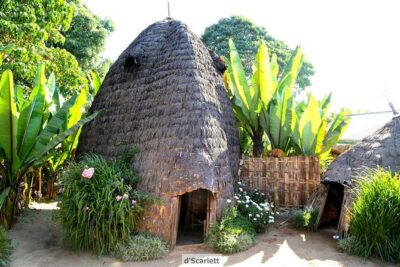
The Dorze are especially associated with traditional village life and distinctive home construction. The supplied program does not give a detailed list of demonstrations, meals, or household activities, so I would avoid assuming that a specific craft or cooking session is guaranteed. Your guide can explain what is available on the day.
This first stop gives you a useful introduction before the route heads farther south. It also lets you see how highland life differs from communities near the Omo River. I like that the tour begins with Dorze culture instead of rushing straight to the most photographed groups.
There is a practical issue here: the flight schedule is not stated. Ask what time you leave Addis Ababa, how much village time is planned, and whether the flight is part of the $830 price. If you are arranging an international connection in Addis Ababa, leave a generous buffer. The itinerary does not provide enough detail to build a tight same-day connection.
Day 2: Lake Chamo, Konso, and the road toward Turmi
Day two opens with a boat safari on Lake Chamo. This is a welcome change of pace after the first day and the start of what can become a very road-heavy journey. The description calls it a boat safari but does not specify which animals you will see, so treat it as a scenic water outing rather than a guaranteed wildlife encounter.
After the lake, the route continues toward Turmi, with a visit to a local Konso village along the way. The Konso stop adds another cultural setting to the trip and helps show that southern Ethiopia is not one single tribal region with one shared way of life.
The day also includes a market visit, but the timing is important:
- Keyafer market is listed for Thursdays.
- Dimeka market is listed for Saturdays.
Those market days are not interchangeable details. If you want a particular market, confirm that your departure date matches it. The program later lists both markets again, which makes the schedule somewhat unclear. Ask exactly which market you will visit and on which day.
The drive to Turmi may be tiring, especially after the boat trip and village stop. The benefit is efficient coverage of a large area. The cost is less time on foot and less flexibility for unexpected stops. I would bring water, sun protection, and a way to keep small essentials accessible during the drive, though the supplied details do not specify what the vehicle provides.
Day 3: Karo art, Nyangatom traditions, and a Hamer village
Day three brings some of the most visually distinctive encounters on the route. You drive to a Karo village, known in the program for skin scarification and ornamental decoration. Body painting and scarification carry serious cultural meaning, so this is a place where respectful behavior matters more than collecting dramatic photographs.
Your guide should help explain when photography is acceptable. Do not assume that a colorful outfit or decorated body is an invitation to take a close portrait. Ask first, keep a respectful distance, and listen to local instructions. The experience is more meaningful when you treat people as hosts and community members, not as displays.
The route then continues to a Nyangatom village. The program does not describe a specific ceremony or activity, so you should expect a cultural visit rather than a guaranteed performance. The variety is the real strength here. Within a short trip, you encounter communities with different styles of dress, decoration, and village life.
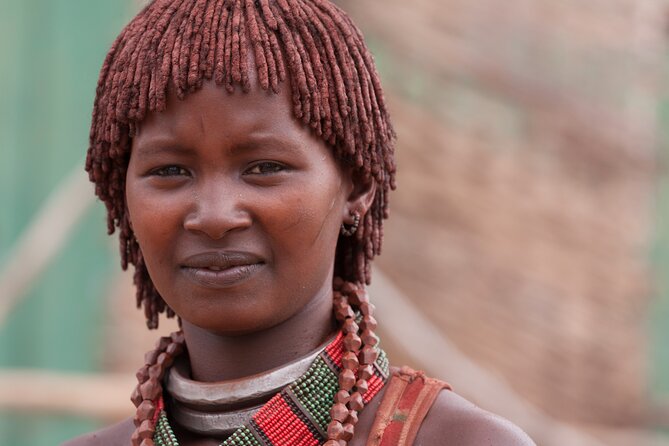
In the afternoon, you visit a Hamer village. The Hamer are among the communities most associated with the Omo Valley in popular travel photography, especially because of their distinctive clothing, jewelry, hair styling, and body decoration. The visit can be memorable, but it is also the kind of setting where a guide’s judgment matters greatly.
A good guide does more than drive you from one stop to the next. The strongest company feedback praises guides for explaining local details, answering questions, and making visitors feel welcome. Henok, also written as Enock in one account, is described as passionate and careful in his explanations. You should confirm who will lead your particular departure, since guide assignments may vary.
A different sort of day out, same part of Ethiopia:
- Full Day Tour of Addis Ababa with Hotel Pickup and Drop-off
★ 5.0 · 430 reviews - Taste of Ethiopia
★ 5.0 · 406 reviews - Day Trip From Addis Ababa See Historical Monastery,Stunning Nature,Animals,Birds
★ 5.0 · 303 reviews - Addis Ababa: Debre Libanos, Blue Nile Gorge, and Cave Tour
★ 4.5 · 256 reviews
Day 4: Dassenech life beside the Omo River
Day four takes you to Omorate, a town by the Omo River, for a visit to a Dassenech village. The river is central to the character of this part of the route. It gives the day a different setting from the highlands, markets, and dry-road journeys earlier in the trip.
The village visit is listed as including admission, as are the other named communities. That matters because local entry costs can otherwise appear as surprise expenses during a multi-stop tour. Here, the package says village fees and taxes are covered.
After Omorate, the plan returns to Turmi and then continues to Jinka. This is a demanding amount of driving for a single day. The itinerary also lists an Ari village and the South Omo Ethnography Museum in Jinka, which could be useful for putting the preceding visits into a wider cultural context.
The Ari visit gives you another community encounter, while the museum offers a more structured way to understand the region. I like this combination because village visits provide direct contact, while a museum can help organize what you have seen. The program does not state how long you spend at either stop, so ask whether both are guaranteed if the day runs late.
The schedule again mentions Keyafer and Dimeka markets. Since market visits depend on Thursdays and Saturdays, there may be a planning conflict with the village and museum route. Confirm the final sequence rather than relying only on the summary.
The missing fifth day needs clarification
The tour is sold as five days, but the supplied itinerary gives detailed plans for only four days. That is the clearest weakness in the program description.
The listed inclusions mention entry to a Mursi village, yet the daily schedule does not clearly place a Mursi visit. This could mean the stop is intended for the unlisted fifth day, or it could be an itinerary error. Do not assume. Ask these questions before booking:
- What happens on day five?
- Is the Mursi village visit included in the actual route?
- Where do you sleep on the fourth and fifth nights?
- Is the return to Addis by air or by road?
- Is the Arbaminch flight included in the quoted price?
- Which market is visited, based on your travel dates?
These are not minor details. They affect the tour’s pace, the value of the price, and the planning of any onward journey.
What the company appears to do well
The strongest pattern in the company’s feedback is service. People describe the organization as careful and the staff as willing to adjust to their needs. One French group of seven praised the coordination before and during the trip, along with a professional guide and driver.
The company also receives praise for local hospitality. On a longer private journey, a guide named Gabriel was associated with excellent lodges and invitations for coffee in local homes. That account was for a 12-day trip rather than this five-day route, so I would not treat every detail as guaranteed here. Still, it gives you a useful sense of the company’s preferred style: personal contact, local interaction, and attention to the small moments between scheduled stops.
Another account describes a short Addis Ababa stopover with Henok, who explained the city and the road ahead in detail. Other feedback highlights local coffee, tasty food, a monastery visit, and a welcoming attitude. Those comments do not prove that the same guide, meals, or Addis activities belong to this Omo Valley package, but they suggest that guide quality is one of the company’s main strengths.
I would ask for the name of your guide and driver before departure. You can also ask how the company handles photography, village etiquette, and changing local conditions. Those answers will tell you more about the quality of the experience than a polished itinerary can.
Accommodation, transport, and the real cost of comfort
Four nights of accommodation are included, and the tour also promises private transport in an air-conditioned vehicle. That combination is valuable in southern Ethiopia, where the route covers several towns and remote village areas.
The accommodation standard is not described. You should ask for the names of the hotels or lodges, whether rooms are private, and what is included in the nightly rate. The company has received praise for lodging on a longer tour, but no property names are supplied for this itinerary.
Private transport gives you more control than a public bus and avoids arranging separate transfers between stops. It does not remove the long-drive issue. A comfortable vehicle helps, but it cannot make every road segment short. If you dislike extended road days, this may feel rushed.
Meals are also not specified in the included section. Do not assume breakfast, lunch, dinner, drinks, or bottled water are covered. Ask for a written list of inclusions, especially because the phrase all which are not included in the inclusion section leaves plenty of room for uncertainty.
Who should book this five-day route
I would recommend this trip to you if you want a concentrated introduction to southern Ethiopia and prefer having transport, hotels, local entries, and a guide arranged in one package. It suits people who are comfortable with early starts, changing scenery, and a busy schedule.
It is also a good fit if you want cultural variety. Dorze, Konso, Karo, Nyangatom, Hamer, Dassenech, and Ari communities offer a much broader view than a single village visit. The markets at Keyafer and Dimeka add another side of daily life, provided your dates line up.
I would be more cautious if you need a slow pace, detailed advance planning, or guaranteed access to one particular ceremony. The itinerary does not promise specific performances, and the missing fifth day creates a genuine planning gap.
The tour is suitable for most people according to the supplied information, and service animals are allowed. It is also listed near public transportation, though that matters less when private transport is provided. Confirmation is received at booking, and the group maximum is 13.
Cancellation and booking advice
You can cancel at least 24 hours before the start time for a full refund. Cancellations or changes made inside that window are not accepted for a refund.
The tour depends on good weather and a minimum number of participants. If poor weather or low enrollment causes cancellation, you are offered another date or experience, or a full refund. I would still avoid booking a nonrefundable onward flight too close to the advertised end of the tour, since the fifth-day arrangements are not fully explained.
Should you book the Omo Valley tour?
Book it if your priority is broad cultural coverage, private transport, and a small group at a package price of $830. The range of villages, markets, Lake Chamo, and the South Omo Ethnography Museum gives you a strong introduction to southern Ethiopia in a short period.
Before booking, get written answers about day five, the Mursi visit, flights, meals, hotel names, and the market schedule. If those details are confirmed and the pace suits you, this looks like a well-organized way to reach places that would be difficult to arrange independently. If you want more time with each community, choose a longer private itinerary instead.
FAQ
Where does the Omo Valley tour begin?
The tour is based in Addis Ababa, and the itinerary begins with a flight from Addis Ababa to Arbaminch.
How long is the tour?
The tour is advertised as approximately five days and includes four nights of accommodation.
How much does the tour cost?
The listed price is $830 per person.
What is the maximum group size?
The group can include a maximum of 13 travelers.
Which communities are included?
The included village entries name Dassenech, Hamer, Dorze, Konso, Karo, Nyangatom, Mursi, and Ari communities.
Are market visits included?
Entry to both Dimeka market and Keyafer market is listed as included. Keyafer is associated with Thursdays, while Dimeka is associated with Saturdays.
Is transportation included?
Private transportation and an air-conditioned vehicle are included. The itinerary also begins with a flight to Arbaminch, but the supplied details do not clearly state whether that flight is included in the price.
Are meals included?
Meals are not specified in the included section. You should confirm whether breakfast, lunch, dinner, drinks, and water are covered before booking.
Can I cancel for a full refund?
Yes. You can cancel at least 24 hours before the experience start time for a full refund. Poor weather or failure to reach the minimum number of participants may also lead to an alternative date or a full refund.
New on the Addis Ababa list
- Yod Abyssinia Cultural Night: Dinner, Music, and Dance★ 5.0 · 7 reviews
- Locally crafted beer and wine tasting and nightlife in Addis tour★ 5.0 · 6 reviews
- Addis Ababa City Tours Full-Day Tours★ 5.0 · 5 reviews
- Stunning Views Wonchi Crater Lake a Private Day Trip★ 5.0 · 3 reviews
- Visiting the wonders of Lalibela in Three (3) days and Two ( 2) nights★ 5.0 · 2 reviews
- Unique Ethiopian Cooking Class and Coffee Ceremony with a Local in Addis Ababa★ 4.5 · 7 reviews
- Tribes of the Ethiopian Omo Valley – 9 Day Tour★ 5.0 · 5 reviews
- Two days Lake Wenchi and Menagesha Forest★ 5.0 · 3 reviews
Omo Valley Tribe Tours, compared.
6 Days Omo Valley Tribes Tours From Addis Ababa
Read our review →
Lalibela, Axum, Danakil and Omo Valley 8 DAYS
Read our review →

3 days around Arbaminch and Konso Adventure Tours Life Time
Read our review →Danakil Depression, Lalibela, Omo Valley and Simien Mountains
Read our review →

Browse the lists this tour appears in