
Reviewed · OMO VALLEY TRIBE TOURS
6-Day Omo Valley Cultural Private Tour
Expect long roads and unforgettable encounters. This six-day private trip links Lake Chamo, Omo Valley villages, tribal markets, and mountain communities in one tightly planned route from Addis Ababa. I like the personal scale, since only your group takes part, and I like the mix of cultural visits, wildlife, scenery, and domestic flights. The main drawback is the pace: several days involve six or seven hours on the road, and the price does not include lunch or dinner.
The tour costs $500 per person and includes a car with driver, guide, accommodation, entrance fees, bottled water, and government tax. That is a strong package for a private six-day trip, but you should be comfortable with basic travel conditions, early starts, and a schedule shaped by long distances.
In This Review
- Key Things to Know Before You Go
- Why This Private Omo Valley Route Works
- Day 1: Lake Chamo, Hippos, and Nech Sar National Park
- Day 2: Weyto, Erbore, and the Road to Turmi
- Day 3: Karo Body Painting and a Hamer Village
- Day 4: Jinka, Tribal Context, and Konso
- Day 5: Key Afar Market and Konso Waka Statues
- Day 6: Arba Minch, Chencha, and the Dorze Village
- What the $500 Price Really Includes
- The Practical Challenges You Should Accept
- Who Will Get the Most From This Tour?
- Should You Book the Omo Valley Tour?
- FAQ
- Where does the tour start?
- Where does the tour end?
- Is this a private tour?
- What is included in the $500 price?
- Are meals included?
- What happens if bad weather cancels the tour?
Key Things to Know Before You Go

- Private transport keeps the trip flexible: Only your group participates, with a car, driver, and guide provided throughout the route.
- The Omo Valley visits are varied: You see Hamer, Karo, Erbore, Tsemai, Benna, Konso, and Dorze communities, with markets and village visits built into the route.
- Market days affect the experience: Weyto and Erbore markets are on Saturday, Key Afar is busiest on Thursday, and Konso markets take place on Monday and Thursday.
- The route includes real road time: Days 3 and 5 run about seven hours, while days 2 and 4 take roughly five and six hours.
- Wildlife comes early: A Lake Chamo boat trip and a drive through Nech Sar National Park offer a chance to see hippos and zebras on the first day.
- The final day ends with Dorze weaving: You visit a mountain village known for wool and cotton work before flying back to Addis Ababa.
Why This Private Omo Valley Route Works
The strongest feature is the range. You are not spending six days seeing one type of village or repeating the same cultural stop. The route moves from a lake and national park near Arba Minch to dry southern plains, Omo River settlements, market towns, Konso terraces, and the cooler Chencha mountains.
I also like the private format. A shared bus can make long drives feel even longer, especially on rough or tiring roads. Here, your group has its own vehicle and guide. That gives you a better chance to ask questions, adjust the rhythm of a stop, and make practical requests during the journey.
The experience is designed around contact with local communities. One of its more unusual features is the chance to visit a family house as a guest. That can offer a closer look at daily life than a quick roadside photo stop, although you should approach every village visit with respect and ask before photographing people.
The schedule is ambitious. Six days sounds generous on paper, but the Omo Valley is large and the roads between communities take time. You will spend much of days 2 through 5 in the vehicle. I would choose this trip for its breadth, not for a slow holiday.
More Omo Valley Tribe Tours in Addis Ababa
- 6 Days Omo Valley Tribes Tours From Addis Ababa
★ 5.0 · 33 reviews - 3 Days Omo Valley Tour
★ 5.0 · 24 reviews - Danakil Depression, Lalibela, Omo Valley and Simien Mountains
★ 5.0 · 23 reviews
Day 1: Lake Chamo, Hippos, and Nech Sar National Park
Your trip begins with a flight from Addis Ababa to Arba Minch. Pickup is offered at Arba Minch Airport, and you check into Paradise Lodge before heading out for the first major activity.
The Lake Chamo boat trip is a good opening. From the water, you may see local hippos, then cross toward Nech Sar National Park. The park drive adds a wildlife element to a tour that might otherwise focus entirely on culture. Zebras are specifically listed among the animals you may see.
This first day is relatively short at about three hours of touring, which helps after the flight. It also gives you a gentle introduction to southern Ethiopia before the longer overland sections begin.
Paradise Lodge is your base for the night. Accommodation is included, along with the car, guide, entrance fees, and bottled water. Food beyond the included arrangements is not covered, so remember to budget for lunch and dinner throughout the trip.
Day 2: Weyto, Erbore, and the Road to Turmi
The second day changes the tone quickly. You leave Arba Minch for Turmi, passing through Weyto and the Weyto Valley. Weyto is associated with the Tsemai people, and Saturday is the market day there.
You then continue to Erbore for a brief visit to a local village. Erbore market day is also Saturday, so the day of the week matters a great deal. If your schedule lines up with Saturday, the markets may add trading, movement, and a wider look at local life. If not, the village visits remain part of the route, but the market atmosphere will be different.
The drive to Turmi takes about five hours. This is a useful point to set expectations: the distance between communities is part of the Omo Valley experience. You are not hopping between nearby attractions. You are crossing a large area with changing terrain and settlement patterns.
Turmi is home to the Hamer people. At night, you may see evangadi, a traditional Hamer night dance. This is one of the most memorable cultural events on the schedule, but it is also important to treat it as a living community practice rather than a show staged only for outsiders. Your guide can help you understand what is appropriate.
You spend the night at Turmi Lodge. Two nights in Turmi provide a practical break from changing hotels every evening.
Day 3: Karo Body Painting and a Hamer Village

Day 3 is one of the tour’s most distinctive cultural days. You travel to Kolcho village, home of the Karo people, on the banks of the Omo River.
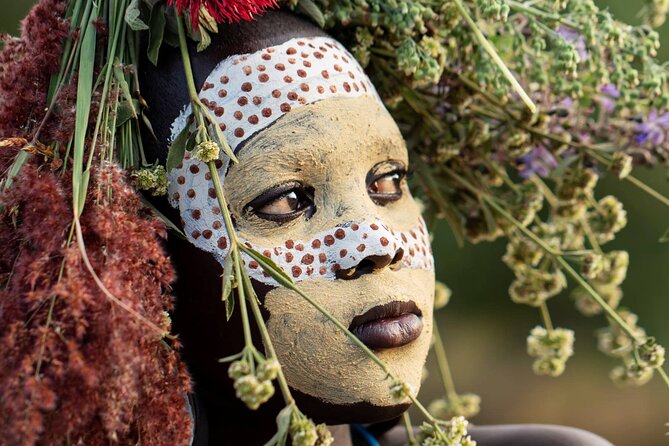
The Karo are known for traditional body painting. This is a strong example of how the Omo Valley expresses identity through appearance, using artistic practices that differ from community to community. The visit is especially valuable if you want more than a general introduction to southern Ethiopia. You see a specific cultural tradition in its own setting.
The road time is long, about seven hours. That is the cost of reaching the Omo River communities. Bring patience, water, and something to occupy you between stops, even though bottled water is provided during the tours.
In the evening, you visit a Hamer village near the accommodation. The village is described as a collection of roughly 10 to 15 huts belonging to an extended family unit. Homes use local materials such as mud, wood, and thatch. The layout helps you see how household life, work, and social activity are organized around a small community rather than a modern town grid.
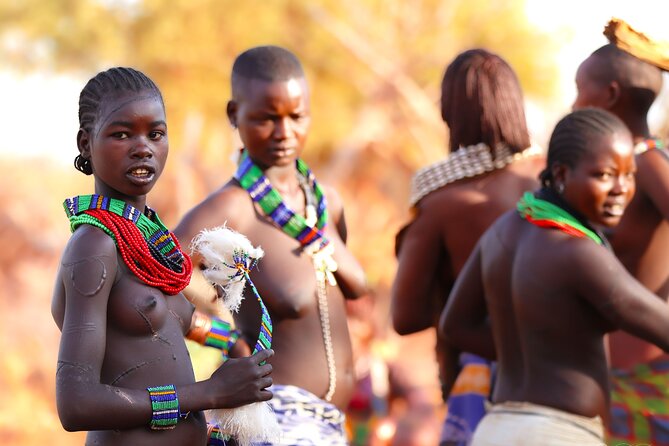
Hamer women are known for red dyed plaited hair and leather skirts decorated with shells. These details are part of the visual identity you will encounter, but avoid reducing people to costumes or photographs. The best visit is curious, polite, and guided by local permission.
You return to Turmi Lodge for a second night.
A different sort of day out, same part of Ethiopia:
- Full Day Tour of Addis Ababa with Hotel Pickup and Drop-off
★ 5.0 · 430 reviews - Taste of Ethiopia
★ 5.0 · 406 reviews - Day Trip From Addis Ababa See Historical Monastery,Stunning Nature,Animals,Birds
★ 5.0 · 303 reviews - Addis Ababa: Debre Libanos, Blue Nile Gorge, and Cave Tour
★ 4.5 · 256 reviews
Day 4: Jinka, Tribal Context, and Konso
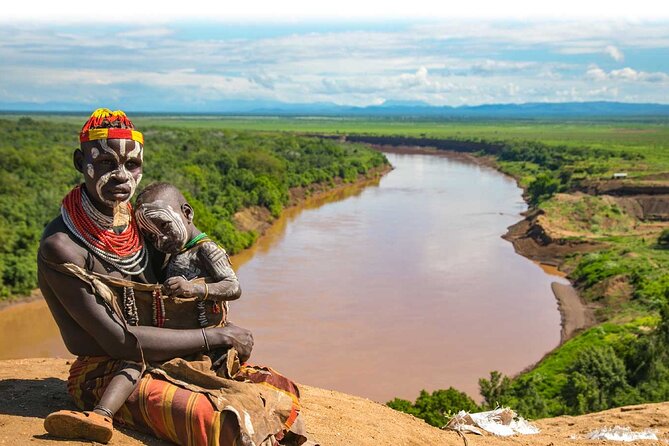
The drive to Jinka takes you across dry sandy plains toward Key Afar, then into more fertile rolling hills. The change in terrain gives the day a clear sense of movement, even though the road trip lasts about six hours.
In Jinka, you visit a small museum. This is an important stop because village encounters can be difficult to interpret without context. The museum offers information about tribal customs and helps connect what you see in the field with the wider cultural setting.
You may also take an optional walk into town, meeting local people along the way. The walk is not compulsory, which is useful after several demanding days. If you prefer a slower afternoon, you can keep it brief. If you want more contact with town life, it gives you a chance to walk rather than simply pass through by car.
The overnight stop is at Kanta Lodge in Konso. The day is not as concentrated on one group as Day 3, but it works as a transition into Konso country and the final section of the trip.
Day 5: Key Afar Market and Konso Waka Statues

Day 5 combines a major market opportunity with Konso cultural sites. You travel from Jinka toward Arba Minch via Key Afar and Konso, with about seven hours of driving in total.
Key Afar market day is Thursday. The market brings Benna and Tsemai communities together for trade and is described as one of the most popular markets in the area. If your tour falls on Thursday, this is one of the days to protect your camera battery and leave room in your schedule. Markets often reveal more about daily exchange than a formal presentation can.
Konso has two especially notable features: waka statues and agricultural terraces. Waka are wooden statues made in honor of dead heroes. The cultural museum displays examples of these figures, giving you a more focused way to understand their meaning.
The local village visit adds a human setting to the museum material. Konso agriculture is also known for inventive terracing, which shapes the hillsides and shows how people have adapted to the terrain over time. Here, the physical setting is not just scenery. It is part of how the community farms and lives.
Konso market days are Monday and Thursday. That creates a useful planning tip: Thursday can potentially give you both the Key Afar market and the Konso market, depending on the exact timing of your route.
You stay again at Kanta Lodge in Konso. Since the route lists two nights in the Konso area, confirm the exact accommodation plan when booking, especially if you care about where each night is spent.
Day 6: Arba Minch, Chencha, and the Dorze Village

The final day starts early. You drive from the more fertile areas across dry plains toward Arba Minch, a name meaning Forty Springs. The area is known for fruit production and ensete, often called false banana.
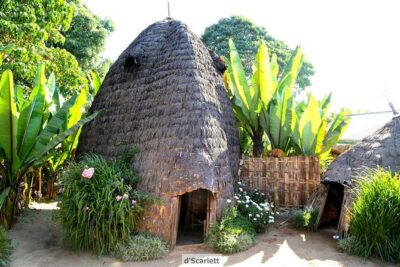
From Arba Minch, you drive into the Chencha mountains to visit a Dorze village. Dorze communities are noted for weaving wool and cotton, so this is the tour’s clearest shopping opportunity. If you want to buy textiles, this is the day to set aside money and luggage space.
The mountain setting also gives the final day a different feel from the dry southern plains. After several village visits and long road sections, the Dorze stop offers a change in climate and scenery before your airport transfer.
After the village visit, you are transferred to the airport and fly back to Addis Ababa. The final touring portion takes about three hours, but you should treat the flight connection as an important part of the day and avoid scheduling a tight onward departure unless the operator confirms the timing.
What the $500 Price Really Includes
At $500 per person, the tour offers solid value for a private six-day route. The price includes a car with driver, guide, accommodation, entrance fees, bottled water during the tours, and government tax. Domestic flights are part of the itinerary, with flights to Arba Minch and back to Addis Ababa described in the schedule, but you should confirm whether the airfare is included in the quoted price before paying.
The private vehicle is the biggest value point. Transport across the Omo Valley is not a minor add-on. The route covers long distances, and having a driver and guide assigned to your group makes the trip easier to manage.
The price does not include lunch, dinner, or laundry service. Those exclusions are normal enough for an organized tour, but they mean the headline price is not your full spending amount. Ask how meals are arranged at each lodge and town stop. You should also confirm whether any local photography or village fees apply, since those are not specified in the provided inclusions.
Accommodation is included at Paradise Lodge, Turmi Lodge, and Kanta Lodge. One positive detail from the available feedback is the repeated praise for the accommodation, food, drivers, and general organization. Another name that appears repeatedly is Solomon, described as a helpful organizer who kept communication going during broader Ethiopia trips. If Solomon is coordinating your booking, that personal contact may be useful before departure.
The Practical Challenges You Should Accept
This is not a luxury-paced holiday. Days 3 and 5 are each about seven hours, and the other driving days still take five or six hours. You need to be comfortable sitting in a vehicle for long periods and moving between towns with different conditions.
The tour also begins at 8:00 a.m. from Bole Addis Ababa International Airport, while the final day calls for an early start. Pickup is available, and the activity ends back at the meeting point in Addis Ababa.
The exact cultural schedule may depend on local events and market days. Saturday is best for Weyto and Erbore, Thursday for Key Afar, and Monday or Thursday for Konso. Ask the operator how your dates match those markets before you book.
Most participants can take part, and service animals are allowed. The tour is also near public transportation, though the main transport for the route is the supplied private car. The experience requires good weather. If weather forces cancellation, you are offered another date or a full refund, but the general booking is non-refundable and cannot be changed for other reasons.
Who Will Get the Most From This Tour?
I would recommend this route to you if you want a broad first look at the Omo Valley and prefer a private arrangement over a large group. It suits people who value cultural contact, local markets, traditional arts, wildlife, and changing scenery more than long hours beside a hotel pool.
It is also a good choice if you want an organized route without arranging separate drivers, hotels, village visits, and regional flights yourself. The guide and driver matter here because the itinerary covers many communities and requires local coordination.
I would hesitate to recommend it if you dislike long road journeys, need a slow schedule, or want every cultural visit to be carefully explained in depth. Six days can show you a lot, but it cannot provide a full study of every group named on the route.
The feedback connected with Ethio Target Tours is strongly positive, especially about friendly staff, reliable organization, experienced drivers, good accommodation, and helpful communication. That praise supports the tour’s main selling point: a complicated southern Ethiopia route handled by one operator.
Should You Book the Omo Valley Tour?
Book it if you want variety, private transport, and a substantial introduction to southern Ethiopia at a moderate price. The route gives you Lake Chamo, hippos, zebras, Hamer dancing, Karo body painting, market towns, Konso statues and terraces, and Dorze weaving in six days.
Before booking, confirm the domestic airfare, exact lodge arrangements, meal costs, and how your dates line up with the markets. If you accept the long drives and keep your expectations respectful and flexible, this tour offers a strong way to see the Omo Valley without having to build the route yourself.
FAQ
Where does the tour start?
The tour starts at Bole Addis Ababa International Airport in Addis Ababa. The listed start time is 8:00 a.m.
Where does the tour end?
The activity ends back at the meeting point in Addis Ababa after the final flight from Arba Minch.
Is this a private tour?
Yes. Only your group participates, and a car with driver and guide is provided.
What is included in the $500 price?
The price includes the car with driver, guide, entrance fees, accommodation, bottled water during the tours, and government tax.
Are meals included?
Lunch and dinner are not included. Laundry service is also excluded.
What happens if bad weather cancels the tour?
The experience requires good weather. If it is canceled because of poor weather, you are offered a different date or a full refund. Normal cancellations are non-refundable and changes are not permitted.
New on the Addis Ababa list
- Yod Abyssinia Cultural Night: Dinner, Music, and Dance★ 5.0 · 7 reviews
- Locally crafted beer and wine tasting and nightlife in Addis tour★ 5.0 · 6 reviews
- Addis Ababa City Tours Full-Day Tours★ 5.0 · 5 reviews
- Visiting the wonders of Lalibela in Three (3) days and Two ( 2) nights★ 5.0 · 2 reviews
- Stunning Views Wonchi Crater Lake a Private Day Trip★ 5.0 · 3 reviews
- Unique Ethiopian Cooking Class and Coffee Ceremony with a Local in Addis Ababa★ 4.5 · 7 reviews
- Tribes of the Ethiopian Omo Valley – 9 Day Tour★ 5.0 · 5 reviews
- Two days Lake Wenchi and Menagesha Forest★ 5.0 · 3 reviews
Omo Valley Tribe Tours, compared.
6 Days Omo Valley Tribes Tours From Addis Ababa
Read our review →
Lalibela, Axum, Danakil and Omo Valley 8 DAYS
Read our review →

3 days around Arbaminch and Konso Adventure Tours Life Time
Read our review →Danakil Depression, Lalibela, Omo Valley and Simien Mountains
Read our review →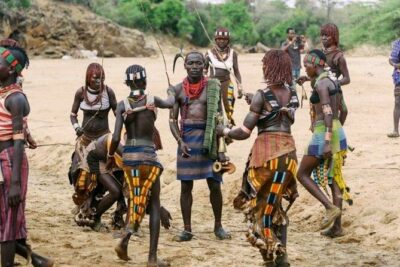

Browse the lists this tour appears in