
Reviewed · OMO VALLEY TRIBE TOURS
6 day Omo ValleyTours
The Omo Valley changes fast. This six-day journey takes you from Addis Ababa into southern Ethiopia to meet Hamar, Karo, Dassanech, Mursi, Konso, and Dorze communities, with markets, village visits, a canoe crossing, and Lake Chamo. I like the wide cultural range packed into one trip, and I like that local guides such as Mickey and Abey have been praised for clear communication and careful service. The main drawback is the hard schedule, with long drives, basic regional travel, and a confusing final flight arrangement that you should confirm before paying.
The price is $899 per person, with accommodation, meals, guides, ground transport, entrance fees, and taxes included. Domestic flights cost extra, so the final bill will be higher. This is not a polished resort holiday. It is a demanding road journey into a remote part of Ethiopia, where the rewards come from contact with local communities and the chance to see places that few visitors reach.
In This Review
- Five things to know before you book
- Why the Omo Valley is worth the effort
- Day 1: Turmi, Hamar villages, and the first market chance
- Day 2: Karo body painting beside the Omo River
- Day 3: Dassanech country and a dugout canoe crossing
- Day 4: Mursi communities, Mago National Park, and Konso
- Day 5: Dorze crafts and food on Guge Mountain
- Day 6: Lake Chamo, the fish market, and Arba Minch
- What the $899 price really covers
- Guides, vehicles, and group size
- Who should book this Omo Valley tour?
- Should you book the six-day Omo Valley route?
- FAQ
- Where does the tour start?
- Where does the tour end?
- Are domestic flights included in the price?
- What meals are included?
- How many people can join the tour?
- Which days are best for tribal markets?
- What is the cancellation policy?
Five things to know before you book
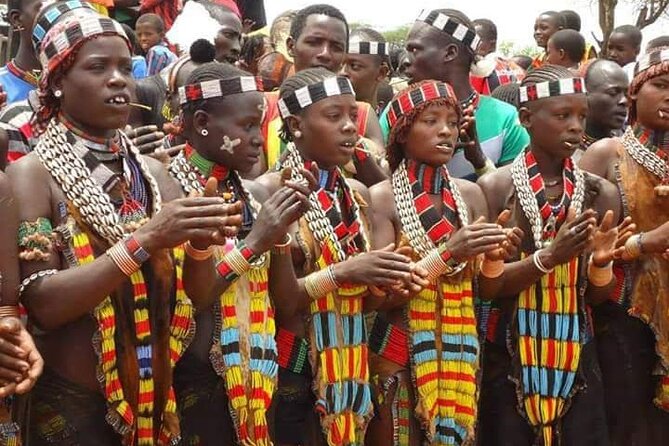
- Six ethnic communities in one route: You visit Hamar, Karo, Dassanech, Mursi, Konso, and Dorze areas, each with distinct customs and artistic traditions.
- Market days shape the trip: Monday, Tuesday, Thursday, and Saturday offer the best chance to visit a tribal market in places such as Jinka, Keyafer, Alduba, or Turmi.
- The Karo visit is highly visual: Body and face painting are central to Karo identity, and you may have the chance to receive your own painted design.
- The route includes real road time: Expect drives of 50 to 150 kilometers on several days, often over rough regional roads.
- Ask about the flight schedule: The plan describes an Arba Minch flight on Day 5, then another Arba Minch airport transfer and flight on Day 6. Confirm which version applies to your booking.
- Service is a strong point: Mickey has been praised for prompt communication and flexible planning, while Abey and Robel are names worth asking about when you discuss your guide.
Why the Omo Valley is worth the effort
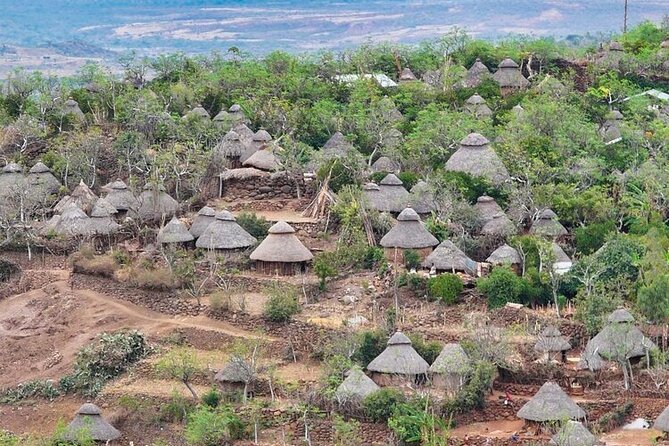
The Omo River Valley is one of Ethiopia’s most unusual travel regions. At least 30 ethno-linguistic groups live within the wider area, and many communities have maintained distinctive customs despite growing contact with the outside world.
You may see elaborate body painting, scarification, clay lip plates, feathered headdresses, traditional weaving, and food made from enset, often called false banana. These are not costume details added for tourists. They are part of how communities express identity, though the act of visiting raises important questions about photography, payment, and respectful behavior.
That is why your guide matters. Ask before taking photographs. Follow instructions at village visits and ceremonies. Do not treat people as scenery. The best part of this journey is not collecting portraits. It is listening, watching daily life, and recognizing that the Omo Valley is home first and a sightseeing destination second.
The route also gives you a useful contrast between communities. Hamar pastoral life, Karo body art, Dassanech river settlements, Mursi customs, Konso village design, and Dorze craft traditions are presented in quick succession. Six days cannot provide a full understanding of each group, but it gives you a strong first look at the region’s variety.
More Omo Valley Tribe Tours in Addis Ababa
- 6 Days Omo Valley Tribes Tours From Addis Ababa
★ 5.0 · 33 reviews - 3 Days Omo Valley Tour
★ 5.0 · 24 reviews - Danakil Depression, Lalibela, Omo Valley and Simien Mountains
★ 5.0 · 23 reviews
Day 1: Turmi, Hamar villages, and the first market chance
Your guide meets you at Jinka’s Baco Airport, then the road runs about 130 kilometers to Turmi. The listed driving time is around two hours, but rural road conditions can affect the day, so keep your plans flexible.
Turmi is a base for visiting nearby Hamar villages. In the late afternoon, you visit a Hamar community, when the cooler light can make the setting especially appealing for photography. The Hamar are known for distinctive clothing, ornament, hairstyles, and ceremonies, although exactly what you see depends on the local schedule.
If your visit falls on Monday, Tuesday, Thursday, or Saturday, you may also reach a market in Jinka, Kako, Keyafer, Alduba, or Turmi. Market visits add useful context because you see buying, selling, socializing, and practical trade rather than a staged village stop.
A Bull Jumping Ceremony or Evangadi dance may be available as an optional activity. These events are not guaranteed, and you should ask how they are arranged and what additional cost applies. A ceremony can be a memorable cultural experience, but it is also a moment when respectful conduct matters most.
You spend the night at Paradise Lodge Turmi. The day is listed at about six hours, though road conditions and village timing may stretch it.
Day 2: Karo body painting beside the Omo River
Day 2 travels about 65 kilometers west from Turmi to meet the Karo, also called Kara, near the Omo River. The listed drive is about one hour each way, but the day lasts around seven hours once the visit, meals, and possible market stop are included.
The Karo are described as the smallest ethnic group in the Omo Valley. Their face and body painting is their most recognizable artistic tradition. Designs made from natural pigments help express beauty, identity, and ceremony.
You may be invited to have your face or body painted in the Karo style. This can be a fun personal experience, but I would ask permission before applying anything and clarify the price beforehand. More importantly, remember that the painting is meaningful to the Karo. Treat it as a cultural encounter, not a novelty prop.
You return to Turmi for lunch and may visit another market if the calendar works. The optional Hamar Bull Jumping Ceremony or Evangadi dance may also be possible. Two nights at Paradise Lodge give you a little breathing room, which is useful because the following days cover much more ground.
Day 3: Dassanech country and a dugout canoe crossing
After breakfast, you leave around 8:30 a.m. for Omo Rate, about 72 kilometers away. This town lies near the Kenyan border and is the gateway to a Dassanech village.
The border setting gives this day a different feel from the Hamar and Karo visits. You first go to the immigration post, then cross the Omo River by dugout canoe. From the river, it is about a 10-minute walk to the village.
The canoe crossing is one of the most distinctive parts of the itinerary, but it also means you should pack carefully. Keep cameras, passports, phones, and other valuables protected from water. The information provided does not specify the canoe operator, safety equipment, or river conditions, so ask your guide about the crossing before setting out.
After returning to Turmi for lunch, you continue to Jinka and spend the night at Eco-Omo Lodge, specifically in rooms in the new building. The full day is listed at around seven hours. This is a lot of movement, with a border-area visit, river crossing, village walk, lunch, and a long transfer.
The Dassanech stop is valuable because it brings you into a community shaped by the Omo River and its proximity to Kenya. You will not have much time for a slow study of the area, but the combination of river travel and village contact makes this more than another roadside stop.
A different sort of day out, same part of Ethiopia:
- Full Day Tour of Addis Ababa with Hotel Pickup and Drop-off
★ 5.0 · 430 reviews - Taste of Ethiopia
★ 5.0 · 406 reviews - Day Trip From Addis Ababa See Historical Monastery,Stunning Nature,Animals,Birds
★ 5.0 · 303 reviews - Addis Ababa: Debre Libanos, Blue Nile Gorge, and Cave Tour
★ 4.5 · 256 reviews
Day 4: Mursi communities, Mago National Park, and Konso
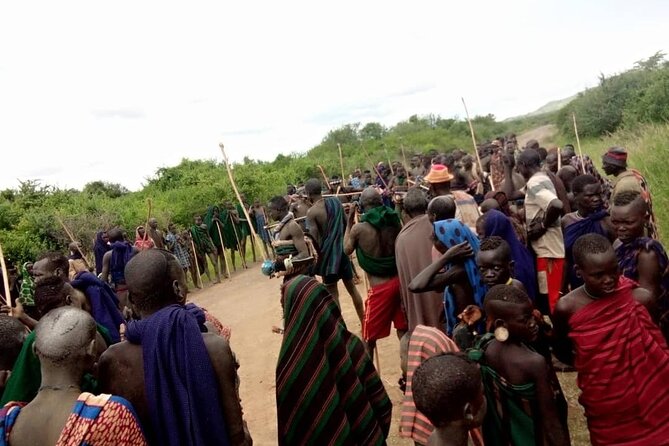
Day 4 begins with a 50-kilometer drive through Mago National Park to visit the Mursi. The Mursi are widely known for women who wear lip plates, a tradition that has attracted outside attention for decades.
This is a place to put your camera away for a moment and let your guide explain what you are seeing. Ask how photographs work, what is considered polite, and how payments are handled. A quick portrait without consent can turn a meaningful visit into an uncomfortable transaction.
After returning to Jinka, the route continues about 150 kilometers to Konso. This is one of the longest road days, listed at around eight hours. The contrast is striking: you begin with a Mursi visit in a protected area and finish by visiting a Konso village.
Konso is known for traditional village organization, farming culture, craft, and carved wooden figures. The schedule does not give a detailed list of the Konso activities, so do not expect a full day there. It is a stop on a demanding transfer day, not a leisurely Konso study tour.
You spend the night at Kanta Lodge in Konso. If long drives wear you down, this is the day to consider carefully. The itinerary covers a great deal of ground, and the attraction is the range of places rather than long stays in each one.
Day 5: Dorze crafts and food on Guge Mountain
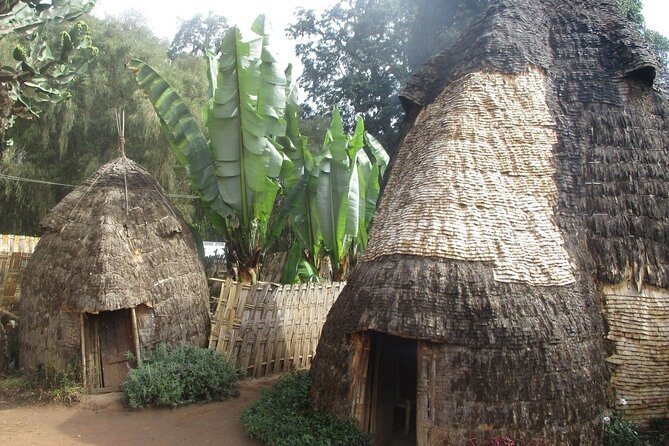
The route continues about 130 kilometers toward the Dorze community, who live on Guge Mountain at roughly 2,400 meters. The higher elevation provides a change from the warmer lowland areas around Turmi and Omo Rate.
Dorze culture is presented through weaving, pottery, and food preparation. You will see how kocho is made from enset, the false banana plant. Food preparation is often one of the most useful ways to understand a community because it connects farming, household work, taste, and local economy.
The schedule allows for lunch before going to Arba Minch Airport for an afternoon flight to Addis Ababa. However, the supplied itinerary also describes a Day 6 in Arba Minch, with a Lake Chamo boat trip and another flight to Addis Ababa. Those details do not fit neatly together.
This is not a minor point. Ask the operator to confirm your exact overnight location, flight date, and whether Day 5 and Day 6 are alternative versions of the final portion. Also ask whether the flight is booked for you or simply arranged separately. Domestic flights are not included in the $899 price.
Day 6: Lake Chamo, the fish market, and Arba Minch
The final day is described as beginning at 8 a.m. with pickup from your Arba Minch hotel. You go to Lake Chamo for a boat trip lasting several hours, with crocodile viewing and a visit to the fish market.
Lake Chamo gives the trip a natural change of pace after several days of village visits and road travel. The fish market offers a look at local trade, while the boat ride gives you time on the water. The exact wildlife sightings are not guaranteed, so approach the crocodile visit as a chance to observe the lake rather than a promise of a particular animal encounter.
After lunch, you return to Arba Minch for a city walk before a 1:30 p.m. transfer to the airport. The day is listed at around seven hours. Again, confirm this schedule if your flight is actually planned for Day 5.
The inclusion of Lake Chamo is a good idea. Without it, the final stretch would be almost entirely transport. It gives you a final activity that is easy to understand and different from the cultural stops earlier in the trip.
What the $899 price really covers

At $899 per person, the package offers solid value if you want a guided Omo Valley route without arranging every road transfer yourself. Included are an air-conditioned vehicle, local guide, accommodation, entrance fees, government taxes, airport or departure tax, six lunches, five breakfasts, and five dinners.
The price also removes much of the uncertainty that comes with moving through a remote region. You have one company coordinating the vehicle, lodges, village visits, and airport transfers. This matters because the itinerary includes several long drives and multiple changes of base.
The main extra cost is domestic airfare. Drinks are also excluded. Since flights are not included, compare the complete price rather than treating $899 as the final total.
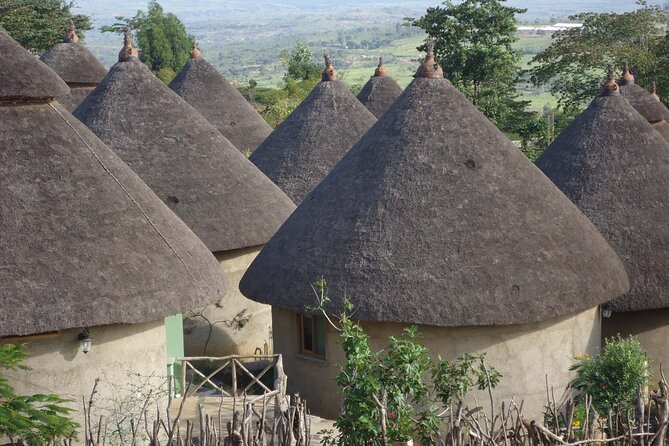
Accommodation is listed at Paradise Lodge Turmi, Eco-Omo Lodge in Jinka, and Kanta Lodge in Konso. The Eco-Omo information specifies rooms in the new building, which is useful to confirm at booking. No detailed room facilities are provided, so ask about power, hot water, internet, and meal arrangements if those matter to you.
Guides, vehicles, and group size
The group can include up to 15 people, though the actual number for your departure is not stated. A group of that size can keep the price manageable, but village visits and photography become less personal. Ask how many people are booked before you commit.
The vehicle is air-conditioned, a welcome feature in a region with long drives and hot lowland conditions. Still, air conditioning does not turn rough roads into smooth ones. Bring water, sun protection, comfortable clothing, and a small bag that stays with you in the vehicle.
Communication is one of the company’s strongest points. Mickey is praised for answering quickly, solving questions, and adjusting plans to suit time and budget. English ability is also specifically praised. Ask whether Mickey will travel with you or manage the booking from Addis Ababa.
Abey and Robel are also names connected with guiding and driving on this route. Since the names and roles may vary by departure, request the name of your guide and driver before arrival. Good communication can make a major difference when the schedule changes.
Who should book this Omo Valley tour?
I would choose this trip if you want a broad first visit to the Omo Valley and are willing to trade comfort for access. It suits people who enjoy cultural encounters, regional food, village visits, photography with permission, and long road journeys.
It is less suitable if you want a slow holiday, dependable timing, luxury lodging, or several quiet days in one place. The itinerary is ambitious. You visit many communities, but most stops are brief, and several days involve serious driving.
You should also be comfortable with an itinerary that can change. Optional ceremonies depend on local timing, market visits depend on the weekday, and the Day 5 and Day 6 flight details need clarification.
The company offers free cancellation up to 24 hours before the local start time for a full refund. Changes or cancellations inside that window are not accepted, so keep the deadline in mind when arranging flights.
Should you book the six-day Omo Valley route?
Book it if your priority is seeing a wide range of southern Ethiopian cultures in a short period, with transport, meals, lodging, and local support arranged for you. The Karo painting tradition, Dassanech canoe crossing, Mursi visit, Dorze food preparation, and Lake Chamo boat trip give the route real variety.
Before booking, get the final flight plan in writing, confirm the group size, ask who will guide you, and check the cost of domestic air travel. I would also ask how village photography and optional ceremonies are handled.
If those points are clear, the $899 package can be a practical way to reach a difficult region. If you want depth rather than coverage, consider requesting a slower customized itinerary from Mickey’s team.
FAQ
Where does the tour start?
The tour starts at Bole Addis Ababa International Airport in Addis Ababa, Ethiopia. The listed start time is 9:00 a.m.
Where does the tour end?
The activity ends back at the meeting point, although the itinerary also describes flights from Arba Minch to Addis Ababa. Confirm the final airport and transfer details before booking.
Are domestic flights included in the price?
No. Domestic flights are not included in the $899 per-person price.
What meals are included?
The package includes six lunches, five breakfasts, and five dinners. Drinks are not included.
How many people can join the tour?
The tour has a maximum group size of 15 people.
Which days are best for tribal markets?
Market visits may be available on Monday, Tuesday, Thursday, or Saturday. Possible market locations include Jinka, Kako, Keyafer, Alduba, and Turmi.
What is the cancellation policy?
You can cancel at least 24 hours before the local start time for a full refund. Cancellations or changes made less than 24 hours before the start are not accepted.
New on the Addis Ababa list
- Yod Abyssinia Cultural Night: Dinner, Music, and Dance★ 5.0 · 7 reviews
- Locally crafted beer and wine tasting and nightlife in Addis tour★ 5.0 · 6 reviews
- Addis Ababa City Tours Full-Day Tours★ 5.0 · 5 reviews
- Stunning Views Wonchi Crater Lake a Private Day Trip★ 5.0 · 3 reviews
- Visiting the wonders of Lalibela in Three (3) days and Two ( 2) nights★ 5.0 · 2 reviews
- Unique Ethiopian Cooking Class and Coffee Ceremony with a Local in Addis Ababa★ 4.5 · 7 reviews
- Tribes of the Ethiopian Omo Valley – 9 Day Tour★ 5.0 · 5 reviews
- Two days Lake Wenchi and Menagesha Forest★ 5.0 · 3 reviews
Omo Valley Tribe Tours, compared.
6 Days Omo Valley Tribes Tours From Addis Ababa
Read our review →
Lalibela, Axum, Danakil and Omo Valley 8 DAYS
Read our review →

3 days around Arbaminch and Konso Adventure Tours Life Time
Read our review →Danakil Depression, Lalibela, Omo Valley and Simien Mountains
Read our review →

Browse the lists this tour appears in