

Reviewed · OMO VALLEY TRIBE TOURS
6 days Omo valley cultural Tour
This is Ethiopia at its most human. The six-day Omo Valley cultural tour connects you with Dorze weavers, Ari potters, Mursi families, Hamer communities, and Karo artists rather than keeping you on a standard sightseeing circuit. I like the small group limit of eight, and I like the strong local focus, with village visits, markets, food, music, and ceremonial traditions at the center. The main drawback is the pace: long road journeys and basic rural conditions require patience and moderate fitness.
You will see remarkable cultural variety in a short time, from Dorze bamboo houses high above the southern plains to settlements beside the Omo River. I also appreciate the operator’s willingness to adjust arrangements when needed, a useful quality in a region where roads, weather, and ceremonies do not always follow a neat schedule. Just clarify what is included beyond the listed breakfasts, dinner, vehicle, guide, and entrance fees before paying.
In This Review
- Key things to know before booking
- Why six days in the Omo Valley works
- Day 1: Dorze bamboo houses above Chencha
- Day 2: Konso terraces and Ari household life
- Day 3: Mursi communities inside Mago National Park
- Day 4: Karo body painting beside the Omo River
- Day 5: More Karo culture, then Jinka’s museum
- Day 6: Addis Ababa, shopping, and a farewell meal
- What the $1,250 price really covers
- Who should book this Omo Valley route
- Should you book the six-day Omo Valley tour?
- FAQ
- How long is the Omo Valley cultural tour?
- Where does the tour start?
- What is the maximum group size?
- What communities are included?
- Are entrance fees included?
- Are meals included?
- Will the tour include a Hamer bull-jumping ceremony?
- What physical condition is required?
- Can I cancel for a full refund?
Key things to know before booking

- A small maximum of eight people keeps village visits more manageable and allows room for questions.
- The route covers several distinct communities, including Dorze, Konso, Ari, Mursi, Hamer, and Karo groups.
- Market days matter, with Key Afer on Thursday and Dimeka on Saturday offering added local activity.
- Ceremonies are not guaranteed, so the Hamer bull-jumping or wedding experience depends on timing and local events.
- The tour is physically moderate, with long drives, rural paths, and full sightseeing days.
- The $1,250 price has useful inclusions, but lunch, personal spending, and some practical details are not listed.
Why six days in the Omo Valley works
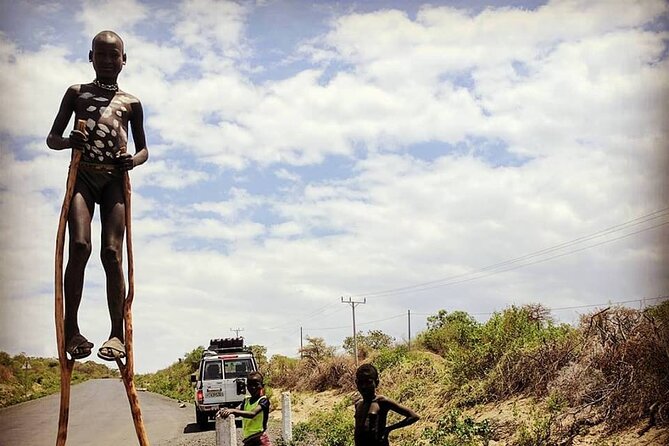
The Omo Valley is not a place for a quick photo stop. Communities are spread across a large area, and the road time is part of the experience, even when it becomes tiring. Over six days, you get a broad look at southern Ethiopia’s cultural variety instead of seeing only one village and returning to Addis Ababa.
The route also moves through very different settings. Chencha and Dorze country are high and cool compared with the lower Omo area. Konso is known for carefully built terraces and stone-walled villages. Farther south, the roads lead toward Mago National Park, Turmi, the Omo River, and communities whose clothing, body decoration, farming, and ceremonies differ sharply from one another.
That range is the tour’s greatest strength. You are not simply collecting names. You can begin to understand how climate, farming, craftwork, and local traditions shape daily life.
The trade-off is comfort. The tour uses an air-conditioned vehicle, but air conditioning does not shorten a rough or lengthy road journey. A small group helps, and the English-speaking guide should make the days easier to follow, but you should still pack lightly, bring water, and expect early starts. Pickup is offered, with the listed start time at 7:30 am.
More Omo Valley Tribe Tours in Addis Ababa
- 6 Days Omo Valley Tribes Tours From Addis Ababa
★ 5.0 · 33 reviews - 3 Days Omo Valley Tour
★ 5.0 · 24 reviews - Danakil Depression, Lalibela, Omo Valley and Simien Mountains
★ 5.0 · 23 reviews
Day 1: Dorze bamboo houses above Chencha
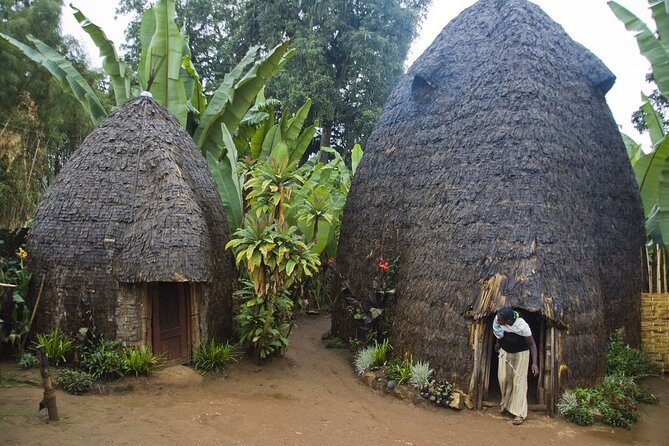
The first day takes you uphill for about an hour to Chencha and the Dorze area. The Dorze belong to the Omotic language group and were once known as warriors. Today, farming and weaving are central to their livelihood.
The houses are the main visual surprise. These tall bamboo structures can reach about twelve meters and have a beehive-like form, including a projecting front section described as an aristocratic nose. Around each home, you may see gardens with enset, sometimes called false banana, along with spices, cabbage, and tobacco.
This is a good opening visit because it links architecture with household economy. The house is not an isolated monument. It sits among crops, gardens, and working spaces, showing how the Dorze use local materials and make the most of their highland setting.
Dorze weaving gives the stop another layer. The community is well known for woven cotton cloth, and the craft remains an important source of income. If textiles interest you, this is one of the tour’s most rewarding stops. Look closely at the patterns and ask your guide to explain how the cloth is made and used.
The visit lasts about three hours, with admission included. It is not an exhausting day on paper, but the uphill drive and walking around a village may be tiring for anyone unused to rural terrain. Wear shoes with a firm sole and bring a light layer, since the highland climate may feel cooler than the southern lowlands.
Day 2: Konso terraces and Ari household life
Konso brings a change of scale. The area is recognized as one of Ethiopia’s UNESCO World Heritage sites, particularly for its stone-walled villages and communal terrace system.
The terraces are not just scenic. They show organized cooperation and long-term farming practice. Stone walls help shape the land for cultivation, and the village design reflects shared work rather than one family acting alone. Your guide can help connect what you see in the fields and walls with the community systems behind them.
Plan about three hours at the Konso Cultural Centre. Admission is included, making this an efficient way to gain background before later village visits. The centre can help you place the southern communities within the wider setting of Ethiopia, where language, farming, clothing, and social customs vary greatly over short distances.
Later, in Jinka, you visit an Ari village. The Ari are the largest group in the middle Omo Valley, and the visit focuses on food preparation and everyday life. Ari women are known for pottery, while skirts made from enset are part of traditional clothing.
This stop is valuable because it is less dependent on a major ceremony. You are looking at ordinary skills and domestic routines, not only dramatic cultural displays. Food preparation, pottery, and plant use can tell you more about daily life than a staged performance.
The Ari visit takes about two hours and has no separate admission fee listed. Keep an open mind about photography and ask permission before taking close portraits. A village visit should be a meeting with people, not a collection of pictures.
Day 3: Mursi communities inside Mago National Park
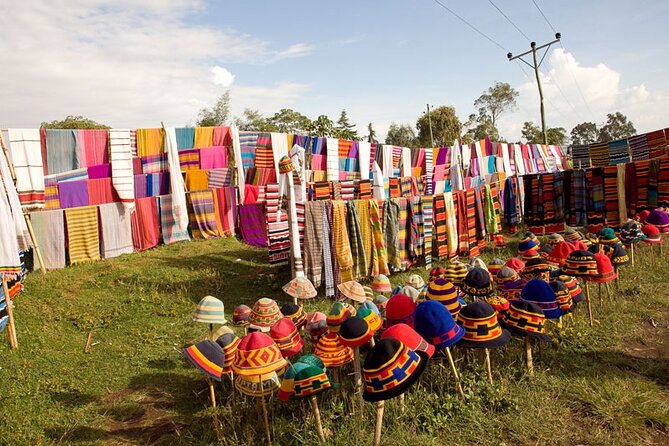
Day three reaches Mago National Park, where the program includes a visit to a Mursi settlement. Allow about four hours for the park visit, with admission included.
The Mursi are widely known for distinctive body adornment, including expanded lower lips and decorated earlobes among some women. Their low dwellings are made from straw and leaves. These details may attract attention, but they are only an entry point. The more respectful approach is to let your guide explain the meaning and context of appearance, housing, and community life.
This can be one of the most emotionally demanding parts of the tour. The setting is remote, and the cultural differences may feel stark. You may also encounter a visit shaped by photography and commercial expectations. Follow your guide’s advice, ask before photographing anyone, and remember that local people are not exhibits.
After Mago National Park, you drive to Turmi, home of the Hamer people. The Hamer are known for distinctive hairstyles and necklaces, with personal decoration carrying social meaning. The program allows about four hours in this part of the day, including a market visit when the timing matches the market schedule.
Key Afer market day is Thursday. Dimeka market day is Saturday. If your dates line up, the market adds color and movement to the route. It is also a practical chance to see local trade and purchase small items, although personal expenses are not included.
The amount of driving on this day is significant. Mago National Park and Turmi are not quick neighboring stops, so you should expect a full day. This is where a good driver matters most. One of the strongest points in the available feedback is the driver’s safe, kind, and helpful manner, including reassurance for a woman traveling alone. That is especially important on long rural roads.
A different sort of day out, same part of Ethiopia:
- Full Day Tour of Addis Ababa with Hotel Pickup and Drop-off
★ 5.0 · 430 reviews - Taste of Ethiopia
★ 5.0 · 406 reviews - Day Trip From Addis Ababa See Historical Monastery,Stunning Nature,Animals,Birds
★ 5.0 · 303 reviews - Addis Ababa: Debre Libanos, Blue Nile Gorge, and Cave Tour
★ 4.5 · 256 reviews
Day 4: Karo body painting beside the Omo River
The Karo visit offers a different view of cultural expression. The Karo people of the Lower Omo region use body painting, scarification, elaborate headdresses, and beadwork in ceremonies and personal presentation.
The planned four-hour excursion includes a guided village visit and time to learn about customs and beliefs. It may also include local activities such as farming or fishing, a traditional meal, and time beside the Omo River. These elements are described as possible parts of the program, not fixed guarantees, so ask your guide what is taking place on your particular day.
The setting matters here. The river is not simply a pretty backdrop. It is tied to farming, fishing, movement, and the lives of communities along its banks. A sunset view can be memorable, but the real value is seeing how artistic choices connect with social identity and ceremony.
Photography needs care. Body paint and headdresses may look striking, but you should not treat them as costumes supplied for visitors. Ask clearly, follow local etiquette, and accept a refusal without argument.
Later, you return to a Hamer village near Turmi. The visit covers housing, music, coffee, and everyday customs. If a bull-jumping ceremony or Hamer wedding is happening, you may attend, but the event depends entirely on local timing. It should never be assumed as part of every departure.
This is one of the tour’s most exciting possibilities, but also one of its uncertain points. A ceremony can make the day unforgettable. If none is scheduled, the village visit still provides useful context about Hamer life without the pressure of a major public event.
Day 5: More Karo culture, then Jinka’s museum

The fifth day returns to Karo country, allowing more time with a community whose population is described as fewer than a thousand people. Karo art and body decoration use symbols, color, and form to express cultural values.
The scheduled visit lasts about six hours and includes the drive toward Jinka. That combination tells you what to expect: much of the day is spent on the road, with the cultural stop fitted into a long transfer. If you prefer slow travel with several nights in one place, this itinerary may feel rushed. If you want a wide introduction to the Omo region, the route is efficient.
On the way to Jinka, the tour may visit Dimeka Market on Saturday. This is a useful scheduling detail. If the dates match, you can see trade taking place in a setting that feels more connected to local routines than a shop designed for sightseeing.
In Jinka, the ethnological museum provides a wider frame for the communities you have encountered. The museum focuses on the nations and nationalities of southern Ethiopia, giving you background that village visits alone cannot provide.
Allow about two hours at the museum. It is a sensible pause after a long day because it shifts attention from road travel and individual encounters to the broader cultural picture.
Day 6: Addis Ababa, shopping, and a farewell meal
The final day returns you to Addis Ababa. The program allows about six hours for shopping and an evening farewell party with a cultural dinner, traditional buffet dishes, and local drinks.
This is a pleasant way to close the trip, especially after several days of rural travel. You can use the shopping time for souvenirs, textiles, or crafts, though the cost of purchases is your responsibility. The farewell meal adds a social finish and gives you one more chance to sample Ethiopian food and drinks.
The plan also includes transfer to the airport for international departure after the farewell party. Confirm your flight timing carefully before booking. The supplied schedule does not give a precise airport transfer time or explain how the return from Jinka to Addis Ababa is arranged, so those details should be settled with Liyu Ethiopia Tours in advance.
What the $1,250 price really covers
At $1,250 per person, the tour is not a shoestring outing, but it covers a demanding six-day route with an English-speaking guide, an air-conditioned vehicle, entrance fees, six breakfasts, and dinner. For a small group visiting remote areas, that package can represent fair value, particularly if transport and guiding are handled well.
The price is less easy to judge because accommodation is not specified in the information provided. Lunches are also not listed, and personal expenses are excluded. You should ask about hotels, internal transport between Addis Ababa and the Omo Valley, drinks, tips, and any village photography fees before confirming.
Group discounts are offered, which may improve the value for families or friends booking together. The maximum group size of eight is another financial advantage in practical terms. You are not paying for a giant coach operation, and the guide has a better chance of answering questions and managing village visits with care.
The operator has also shown flexibility with last-minute changes and individual preferences. That matters in the Omo Valley, where a ceremony, road condition, or weather issue can affect the plan. It does not remove the need to confirm details, but it suggests a more personal operating style than a rigid package.
Who should book this Omo Valley route
I would recommend this tour to you if you want cultural contact, rural scenery, and a broad look at southern Ethiopia in limited time. It suits someone who can handle long drives, early starts, basic conditions, and days that may change when local events do.
It is also a reasonable choice for a solo participant who wants support on difficult roads. The small group and English-speaking guide reduce the burden of arranging transport and village visits alone. A woman traveling solo may appreciate the reassurance about safe driving and helpful staff, though all participants should still discuss personal safety and comfort directly with the operator.
This is not the right fit if you want a relaxed luxury holiday, guaranteed ceremonies, or long hours at each site. The bull-jumping and wedding experiences depend on what is happening locally. The trip is also not designed for visitors seeking only museums and polished attractions. Its appeal lies in seeing working villages, markets, crafts, farming, and ceremonial traditions at close range.
The tour requires moderate physical fitness. You should be comfortable getting in and out of a vehicle, walking around village areas, and spending full days on the move. Pack modest clothing, sturdy shoes, sun protection, and enough personal supplies for rural stretches.
Liyu Ethiopia Tours has earned a perfect rating from three published assessments, with particular praise for careful booking support, flexible changes, professional guiding, and safe driving. That is a small sample, so I would treat it as encouraging rather than conclusive. Still, those are exactly the practical qualities that matter on an Omo Valley trip.
Free cancellation is available up to 24 hours before the start time. Inside that window, the payment is not refunded, and changes are not accepted. The tour also depends on good weather and a minimum number of participants. If either prevents departure, you are offered another date or experience, or a full refund.
Should you book the six-day Omo Valley tour?
Book it if you want a compact, locally guided introduction to several of southern Ethiopia’s distinctive communities and you accept the road time that makes the route possible. The Dorze weaving, Konso terraces, Mursi settlement, Hamer villages, Karo art, markets, and Jinka museum give you a varied six-day program.
Before paying, ask for the accommodation plan, lunch arrangements, Addis Ababa to Omo Valley transport details, expected village fees, and the exact airport transfer schedule. If those answers are clear, the $1,250 price looks reasonable for the small group and wide route. If you need guaranteed ceremonies or a slower pace, choose a longer custom plan instead.
FAQ
How long is the Omo Valley cultural tour?
The tour lasts approximately six days.
Where does the tour start?
The tour is based in Addis Ababa, Ethiopia, with pickup offered. The listed start time is 7:30 am.
What is the maximum group size?
The tour accepts a maximum of eight participants.
What communities are included?
The route includes visits connected with the Dorze, Konso, Ari, Mursi, Hamer, and Karo communities.
Are entrance fees included?
Admission is included for the Dorze Village, Konso Cultural Centre, Mago National Park, and the Karo cultural excursion. Several other stops have no admission fee listed.
Are meals included?
Six breakfasts and dinner are included. Lunches are not listed as included, and personal expenses are excluded.
Will the tour include a Hamer bull-jumping ceremony?
The program says you may attend a bull-jumping ceremony or Hamer wedding if one is taking place. Ceremonies are not guaranteed.
What physical condition is required?
A moderate level of physical fitness is required. The itinerary includes long drives and village visits across rural areas.
Can I cancel for a full refund?
Yes. You can cancel at least 24 hours before the start time for a full refund. Cancellations or changes made within 24 hours are not accepted for a refund.
History-Led Days in Addis Ababa
- Hidden Treasures of Addis Ababa – Food, Culture and History Tour
★ 5.0 · 57 reviews - Northern Ethiopia Historic Route
★ 5.0 · 12 reviews - 5 Days Tour to World Heritage–listed Harrar, Dire Dawa and Awash NATIONAL PARK
★ 4.5 · 10 reviews - DAY TRIP TO THE UNESCO HERITAGE SITE TIYA & Melka Kunture
★ 4.5 · 10 reviews
New on the Addis Ababa list
- Yod Abyssinia Cultural Night: Dinner, Music, and Dance★ 5.0 · 7 reviews
- Locally crafted beer and wine tasting and nightlife in Addis tour★ 5.0 · 6 reviews
- Addis Ababa City Tours Full-Day Tours★ 5.0 · 5 reviews
- Stunning Views Wonchi Crater Lake a Private Day Trip★ 5.0 · 3 reviews
- Visiting the wonders of Lalibela in Three (3) days and Two ( 2) nights★ 5.0 · 2 reviews
- Unique Ethiopian Cooking Class and Coffee Ceremony with a Local in Addis Ababa★ 4.5 · 7 reviews
- Tribes of the Ethiopian Omo Valley – 9 Day Tour★ 5.0 · 5 reviews
- Two days Lake Wenchi and Menagesha Forest★ 5.0 · 3 reviews
Omo Valley Tribe Tours, compared.
6 Days Omo Valley Tribes Tours From Addis Ababa
Read our review →
Lalibela, Axum, Danakil and Omo Valley 8 DAYS
Read our review →

3 days around Arbaminch and Konso Adventure Tours Life Time
Read our review →Danakil Depression, Lalibela, Omo Valley and Simien Mountains
Read our review →

Browse the lists this tour appears in