
Reviewed · OMO VALLEY TRIBE TOURS
Omo Valley 4days 3nights Cultural Tour
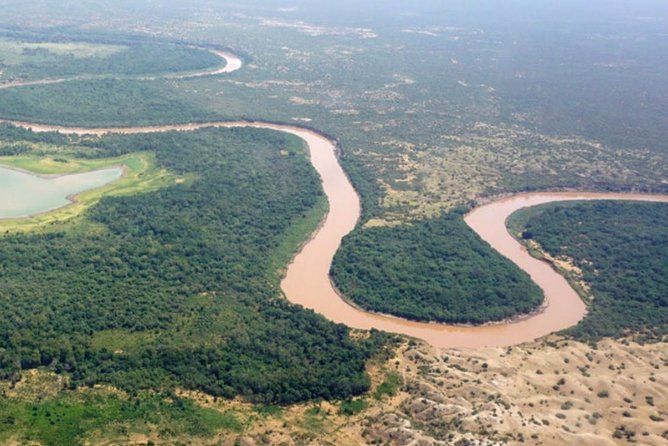
The Omo Valley rewards curious travelers. This four-day trip from Addis Ababa brings you close to the Ari, Mursi, Hamer, Karo, and Dasenech communities, with time for village visits, cultural encounters, and the long roads between them. I like the private format, since your group can travel at its own pace, and I like the mix of Mago National Park, village stops, and time in Jinka and Turmi.
The tour also offers a practical way to reach a remote part of Ethiopia without arranging every transfer yourself. The main caution is time: four days is a brisk introduction, not a slow study of Omo Valley life. You should also budget separately for domestic flights and photography fees, both excluded from the advertised price.
In This Review
- Key points to know before booking
- Why the Omo Valley feels unlike anywhere else
- Day 1: Flying to Jinka and meeting the Ari community
- Day 2: Mago National Park and the Mursi communities
- Day 3: Dasenech country and the Karo visit
- Day 4: Returning to Addis Ababa
- What the private Land Cruiser adds
- How much value do you get for $1,307.70?
- Photography, respect, and the human side of the visit
- Who will enjoy this four-day route?
- Practical details that matter
- Should you book the Omo Valley tour?
- FAQ
- Where does the Omo Valley tour begin?
- How long does the tour last?
- Which communities are included in the route?
- Where do you stay during the tour?
- Is Mago National Park included?
- Are domestic flights included in the price?
- Are photography and camera fees included?
- What meals are included?
- Is this a private tour?
- What is the cancellation policy?
Key points to know before booking
- Five cultural groups in four days: The route introduces you to Ari, Mursi, Hamer, Karo, and Dasenech communities.
- Private travel in a Land Cruiser: Your group travels in an air-conditioned vehicle with a local guide and professional guide support.
- Mago National Park is part of the route: The drive to the Mursi communities passes through the park.
- Two nights in Jinka and one in Turmi: The overnight pattern limits hotel changes while keeping the route moving.
- The itinerary includes rough roads: Day three involves an early journey toward the Omo lowland area, so this is not a restful short break.
- Domestic flights cost extra: The package includes transfers but not the flights between Addis Ababa and Jinka.
Why the Omo Valley feels unlike anywhere else
The Omo Valley is known for its many small cultural groups, each with its own clothing, decoration, ceremonies, and daily customs. Isolation from the rest of Ethiopia helped preserve practices that feel very different from life in Addis Ababa or the country’s northern historic cities.
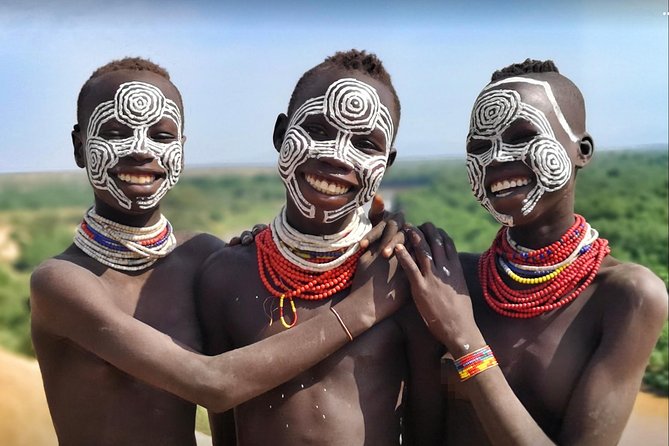
A key part of the experience is artistic expression. Ari women are known for pottery and skirts made from enset, also called the false banana. Jewelry, beads, bracelets, and ear piercings are important parts of personal decoration. In other communities, body painting uses clay and plant pigments to create patterns on the face, arms, chest, and legs.
These details matter because you are not simply driving to a museum display. The cultural expressions described on this route are part of ordinary life, celebration, and identity. At the same time, you should approach each meeting with care. This is a living region, not a staged theme park, and respectful behavior is essential.
The tour also includes the Hamer bull-jumping and Evangadi dancing traditions. The schedule says you will visit Hamer communities and may encounter these customs, but it does not promise that a ceremony will take place during your dates. That distinction is important. Ceremonies follow local timing, not a fixed tourist calendar.
More Omo Valley Tribe Tours in Addis Ababa
- 6 Days Omo Valley Tribes Tours From Addis Ababa
★ 5.0 · 33 reviews - 3 Days Omo Valley Tour
★ 5.0 · 24 reviews - Danakil Depression, Lalibela, Omo Valley and Simien Mountains
★ 5.0 · 23 reviews
Day 1: Flying to Jinka and meeting the Ari community
The trip begins with a 6:00 am pickup at Bole Airport in Addis Ababa. You fly to Jinka, then check into your hotel before visiting the Ari community. Your overnight stay is at Jinka Resort.
The day’s listed stop is Konso Cultural Centre, but the description focuses on the Ari people. Because of that mismatch, I would confirm the exact first-day route with Walk in Ethiopia Tour and Travel before paying. The main cultural focus appears to be the Ari visit rather than a detailed Konso program.
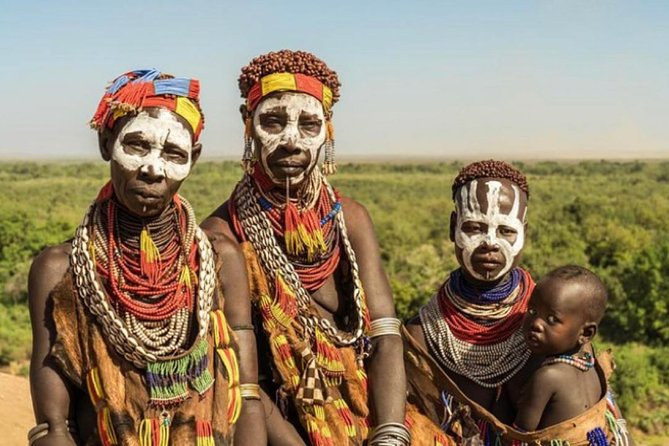
The Ari community is especially interesting for its pottery, enset-based clothing, and personal decoration. Women may wear skirts made from enset fiber and sell pottery. Jewelry can include beads and bracelets around the arms and waist, along with large earrings and other piercings.
I like this as an opening day because it gives you a gentle introduction to the region’s visual language. You begin with clothing, craft, and decoration before the schedule becomes more demanding. The drawback is that the day depends on a flight and a post-flight transfer, so the actual time available for the cultural visit may feel short.
Jinka is used as the base for two nights. That keeps the trip from becoming a nightly hotel shuffle, though the repeated drives out and back add to the road time.
Day 2: Mago National Park and the Mursi communities
Day two starts with a drive from Jinka toward the Mursi communities through Mago National Park. This is one of the tour’s most anticipated days, but also one of its more demanding ones. The road conditions and distance mean you should expect a long excursion rather than a quick morning outing.
The Mursi are widely associated with the large geometric lip plates worn by some women. The practice has deep cultural meaning, and it should be viewed with respect rather than treated as a novelty. Your guide is important here. A good guide can help explain what you are seeing and show you how to behave appropriately during photographs and conversations.
After the Mursi visit, the route continues toward Turmi through small villages. You then meet Hamer communities and spend the night at Buska Lodge.
The Hamer are known for bull jumping and for Evangadi, a dance and celebration connected with community life. The itinerary identifies these traditions, but it does not guarantee a bull-jumping event or dance during the visit. Ask about current local schedules if seeing a ceremony is a major reason for booking.
This day offers a powerful contrast between natural surroundings and human culture. Mago National Park provides the setting, while the village visits give the day its purpose. Still, you should not expect long, quiet hours in one place. The tour covers substantial ground, and the combination of rough roads, village visits, and the transfer to Turmi can leave you tired.
Day 3: Dasenech country and the Karo visit

Day three begins early with a rough-road journey into the Omo lowland area. The route crosses the wide Hamer territory before reaching a village connected with the neighboring Karo people. You then return to Jinka for the night at Jinka Resort.
The schedule names Dasenech Village as the main stop, while the description also highlights the Karo community. These are not interchangeable names, so I would ask the operator to explain exactly which village visits are planned on your departure date. The route may include both areas, but the supplied schedule does not make that fully clear.
The Karo are known for body painting and for distinctive lower-chin adornment, including pierced skin and metal objects. Karo and Hamer people are also associated with bold designs made from clay and locally available plant pigments. These patterns are created for appearance and personal expression, with individuals competing to produce striking designs.
This is likely the most physically tiring day. The early departure and rough road are not minor details. You will spend much of the day in the vehicle, and the return to Jinka means another long transfer after the village visit. For someone eager to see several communities in a short period, that is a fair trade. For someone who prefers a relaxed pace, it may feel rushed.
The return to Jinka does have one benefit: you finish the cultural portion of the trip in a familiar hotel rather than adding another new overnight stop.
A different sort of day out, same part of Ethiopia:
- Full Day Tour of Addis Ababa with Hotel Pickup and Drop-off
★ 5.0 · 430 reviews - Taste of Ethiopia
★ 5.0 · 406 reviews - Day Trip From Addis Ababa See Historical Monastery,Stunning Nature,Animals,Birds
★ 5.0 · 303 reviews - Addis Ababa: Debre Libanos, Blue Nile Gorge, and Cave Tour
★ 4.5 · 256 reviews
Day 4: Returning to Addis Ababa

After breakfast, you transfer to the airport and fly back to Addis Ababa. The schedule allows roughly 12 hours for this final day, which suggests a substantial travel day rather than a morning flight followed by a full afternoon in the capital.
Three breakfasts are included, matching the three nights of the tour. Lunches, dinners, and other meals are not listed as included, so you should confirm the meal arrangement before departure.
The final airport transfer is included, but the domestic flight itself is not. This is one of the most important price details. The advertised cost is $1,307.70 per person, yet your actual total will be higher once you add the Addis Ababa to Jinka flights, the return flight, photography fees, and any meals or personal expenses not covered by the package.
What the private Land Cruiser adds

The tour uses a late-model, air-conditioned Land Cruiser. That is a sensible vehicle for this route. The roads toward the Mursi, Hamer, Karo, and Dasenech areas can be rough, and an air-conditioned four-wheel-drive vehicle is far more useful than a basic city car.
The private arrangement is another strong point. Only your group participates, so you are not tied to the pace of a large coach. You can discuss photography, ask for clarification, and spend more time at a stop if local conditions allow.
The operator assigns a local guide and a professional guide, along with a driver. Several guide names connected with Omo Valley trips appear in the supplied material, including Gashaw, Dr. Turmi, Zemariam, Addis, Bante, Mamushu, and Tedy. One particularly positive account praised Zemariam as both a capable guide and a skilled driver with strong connections in local communities. Another singled out Gashaw for quick replies and careful trip planning, while Dr. Turmi and a driver named Addis were praised for a three-day Omo Valley visit.
Because guide assignments can change, you should request the names of your own guide and driver before departure. That lets you know who will handle cultural explanations, road logistics, and photography questions.
How much value do you get for $1,307.70?

At $1,307.70 per person, this is not a cheap four-day getaway. The value depends on what you are comparing it with. The price covers the private vehicle, guide services, entrance fees for listed destinations, hotel nights, airport transfers, and three breakfasts. It also removes much of the work involved in arranging transport through a remote region.
The private Land Cruiser is a major part of the cost. So are the local guide services and the long transfers between Jinka, Mago National Park, Turmi, and the Omo lowland area. If you tried to organize every road transfer and entrance arrangement yourself, the planning would be more complicated.
Still, the package price is not the final price. International and domestic flights are excluded, as are photography and camera fees. The tour page also does not list lunch, dinner, drinks, or personal purchases as included. Ask for a complete written cost estimate before booking.
The price makes the most sense for a small private group that values convenience and wants several cultural stops in a short window. If you are traveling alone, the per-person amount may feel high. If several people share the private vehicle, the overall arrangement may be easier to justify.
Photography, respect, and the human side of the visit

Photography is a central interest for many people coming to the Omo Valley. The region offers striking clothing, pottery, jewelry, body painting, and ceremonial traditions. But photography fees are specifically excluded, and the schedule does not state how much they cost.
Carry a separate photography budget and ask your guide about local rules before taking pictures. Do not assume that a camera gives you automatic permission. A guide with good community relationships can help you ask properly, explain expectations, and avoid turning a personal encounter into a hurried photo stop.
The cultural descriptions use dramatic details, such as lip plates, metal adornment, and body painting. These can catch your eye, but they should not become the whole story. You are also seeing families, artists, farmers, hosts, and communities with their own priorities. The best experience comes from listening and showing patience.
The supplied material describes the people you meet as friendly and peaceful, and several accounts praise the warm service provided by the guides and drivers. That fits the tour’s strongest quality: personal contact supported by local staff. The quality of that contact will depend heavily on your guide, your attitude, and the time available at each stop.
Who will enjoy this four-day route?
I would recommend this tour to you if you want a focused first introduction to southern Ethiopia and prefer private transport. It suits people who are comfortable with early starts, long drives, rough roads, and a tight schedule.
It also suits photographers, provided you clarify camera fees and local permission rules in advance. The mix of Ari pottery, Hamer clothing and dance traditions, Mursi lip plates, Karo body painting, and village life gives you plenty to observe.
You may want a longer itinerary if your main goal is patient cultural exchange. One account praised a 12-day Omo Valley trip for allowing more time and a better feel for local life. Four days can show you a great deal, but it cannot give each community equal time.
Families and most people who can participate in ordinary road travel should be able to consider the trip, since the operator states that most participants can take part and service animals are allowed. However, the supplied information does not provide detailed mobility guidance for rough roads or village paths, so ask directly if that matters to you.
Practical details that matter
Pickup is offered from Bole Airport in Addis Ababa at 6:00 am. Confirmation is provided when you book, and the tour is private rather than shared with a larger group.
The cancellation rule is simple: you receive a full refund if you cancel at least 24 hours before the experience begins. Cancellations or changes made within 24 hours are not accepted for a refund. Cut-off times follow local Ethiopian time.
Before booking, I would confirm four points:
- The exact first-day stop, since the schedule names Konso Cultural Centre while the description discusses the Ari community.
- Whether Day 3 includes both Dasenech and Karo visits.
- The domestic flight schedule and total flight cost.
- Current photography fees and permission practices in each community.
These questions do not undermine the tour. They help you match the advertised four-day outline with the trip you actually want.
Should you book the Omo Valley tour?
Book it if you want a private, tightly arranged introduction to several Omo Valley communities and you accept that much of the trip takes place on the road. The combination of a local guide, air-conditioned Land Cruiser, included entrance fees, and stays in Jinka and Turmi gives you a practical way to reach an isolated region.
Do not book it expecting a leisurely cultural retreat or guaranteed ceremonies. The schedule is short, the roads are rough, domestic flights cost extra, and the exact village sequence needs clarification.
For a first visit, I like the route. It offers a strong range of cultural encounters in four days, and the guide team has earned praise for personal service, quick communication, driving skill, and local connections. Just go in with realistic expectations, a respectful approach to photography, and enough time and money beyond the advertised package price.
FAQ
Where does the Omo Valley tour begin?
The tour begins at Bole Airport in Addis Ababa, Ethiopia, with pickup at 6:00 am.
How long does the tour last?
The experience lasts approximately four days and includes three nights in Ethiopia’s Omo Valley region.
Which communities are included in the route?
The route describes visits involving the Ari, Mursi, Hamer, Karo, and Dasenech communities.
Where do you stay during the tour?
You stay at Jinka Resort on the first and third nights. The second night is at Buska Lodge in Turmi.
Is Mago National Park included?
Yes. The route to the Mursi communities passes through Mago National Park, and entrance fees for listed destinations are included.
Are domestic flights included in the price?
No. International and domestic flight fees are excluded from the advertised price.
Are photography and camera fees included?
No. Photography and camera fees are not included.
What meals are included?
Three breakfasts are included. The supplied information does not list lunch or dinner as included.
Is this a private tour?
Yes. Only your group participates in the activity.
What is the cancellation policy?
You can receive a full refund if you cancel at least 24 hours before the start time. Cancellations or changes made less than 24 hours before the start time are not refunded or accepted.
History-Led Days in Addis Ababa
- Hidden Treasures of Addis Ababa – Food, Culture and History Tour
★ 5.0 · 57 reviews - Northern Ethiopia Historic Route
★ 5.0 · 12 reviews - 5 Days Tour to World Heritage–listed Harrar, Dire Dawa and Awash NATIONAL PARK
★ 4.5 · 10 reviews - DAY TRIP TO THE UNESCO HERITAGE SITE TIYA & Melka Kunture
★ 4.5 · 10 reviews
New on the Addis Ababa list
- Yod Abyssinia Cultural Night: Dinner, Music, and Dance★ 5.0 · 7 reviews
- Locally crafted beer and wine tasting and nightlife in Addis tour★ 5.0 · 6 reviews
- Addis Ababa City Tours Full-Day Tours★ 5.0 · 5 reviews
- Stunning Views Wonchi Crater Lake a Private Day Trip★ 5.0 · 3 reviews
- Visiting the wonders of Lalibela in Three (3) days and Two ( 2) nights★ 5.0 · 2 reviews
- Unique Ethiopian Cooking Class and Coffee Ceremony with a Local in Addis Ababa★ 4.5 · 7 reviews
- Tribes of the Ethiopian Omo Valley – 9 Day Tour★ 5.0 · 5 reviews
- Two days Lake Wenchi and Menagesha Forest★ 5.0 · 3 reviews
Omo Valley Tribe Tours, compared.
6 Days Omo Valley Tribes Tours From Addis Ababa
Read our review →
Lalibela, Axum, Danakil and Omo Valley 8 DAYS
Read our review →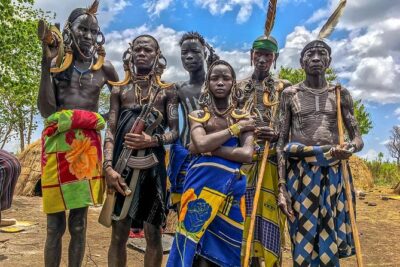

3 days around Arbaminch and Konso Adventure Tours Life Time
Read our review →Danakil Depression, Lalibela, Omo Valley and Simien Mountains
Read our review →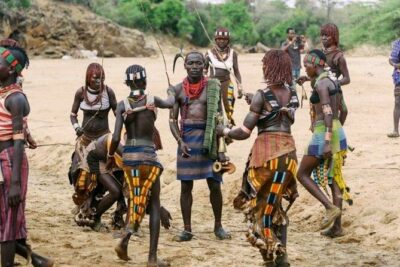

Browse the lists this tour appears in